













ZBD8920D00SS General Electric Dishwasher - Instructions
Keep searches simple. Use keywords, e.g. "leaking", "pump", "broken" or "fit".
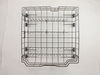
The rack assembly needed replacing
Just removed the prior rack and put the new one in. Much improved design on the wheels and rack seems of better material as well. The rack does not have as many holders as the prior rack dishes and pans do not fit as well.
Parts Used:
-
Mary from Dana Point, CA
-
Difficulty Level:Really Easy
-
Total Repair Time:Less than 15 mins
Was this instruction helpful to you?
Thank you for voting!
Rusted and Wheels falling off
I received the part very quickly. I threw away the old rack and put the new one in it's place. No tools or instructions were necessary. The new rack had all of the wheels and combs included. I did not have to purchase them separately. This is a much better designed part than the original rack. The combs are spread differently to better support plates, and the wheels are combined and enclosed to better support the rack. Also, I feel that this was a good price. Thank you!
Parts Used:
-
Judith from Ventura, CA
-
Difficulty Level:Really Easy
-
Total Repair Time:Less than 15 mins
Was this instruction helpful to you?
Thank you for voting!
lower rack was rusting, and one wheel came off
I took the old rack out of the dishwasher, took the new one out of the box it was shipped in and slid it into place. Works great. Need top one soon, but will wait until there's some extra money to order it!!!! Thanks for everything!!
Parts Used:
-
Edith from Petaluma, CA
-
Difficulty Level:Really Easy
-
Total Repair Time:Less than 15 mins
Was this instruction helpful to you?
Thank you for voting!
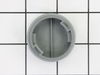
Old rinse aid cap melted by heating element
-
Eric from Stephens City, VA
-
Difficulty Level:Really Easy
-
Total Repair Time:Less than 15 mins
Was this instruction helpful to you?
Thank you for voting!
Loud noise when running
Middle arm bearing used a pair of pliers to unscrew the screw and to re-screw with new bearing in place. NO did not have to disconnect the arm. Lower arm turn counter clockwise to remove (comes off very easy) stick needle nose straight down opening and remove bearing. Use needle nose to place new bearing.
Parts Used:
-
Cono from Bethlehem, GA
-
Difficulty Level:Really Easy
-
Total Repair Time:Less than 15 mins
-
Tools:Pliers
Was this instruction helpful to you?
Thank you for voting!
Replaced lower rack assembly
Simply took out the broken rack and inserted the new one.
Parts Used:
-
Victor from East Northport, NY
-
Difficulty Level:Really Easy
-
Total Repair Time:Less than 15 mins
Was this instruction helpful to you?
Thank you for voting!
Bottom Rack Was Rusted Out And Wheels Broken
Installed new rack assembly and it works fine. Thanks
Parts Used:
-
Carol from Pepperell, MA
-
Difficulty Level:Really Easy
-
Total Repair Time:Less than 15 mins
Was this instruction helpful to you?
Thank you for voting!
Rinse Dispenser Cap melted on heating coil
Opened dishwasher after it completed a wash cycle. Found the rinse dispenser cap had come off during the wash and melted on the heating coil at the bottom of the machine. Pulled cap off of coil, made sure coil was not disturbed. Looked in various sites for cap. Finally found this site where I didn't need to order the whole mechanism and could order just the cap. Received the cap, screwed into the dispenser, fixed. The only problem I had was that there were two possible caps so I picked the one that was the same color as the original one. Project completed. Thanks
Parts Used:
-
Martha from Kingman, AZ
-
Difficulty Level:Really Easy
-
Total Repair Time:Less than 15 mins
Was this instruction helpful to you?
Thank you for voting!
Roller rusted off lower rack
-
Edward from Arlington, VA
-
Difficulty Level:Really Easy
-
Total Repair Time:Less than 15 mins
Was this instruction helpful to you?
Thank you for voting!
Hing arm broke
Removed dish washer from cabinet area and snapped new clip into cable and hook into support.. The time that took the longest was to removed the screws to pull the unit out of the cabinet area.. Very easy fix...
Parts Used:
-
Peter from Davenport, FL
-
Difficulty Level:Really Easy
-
Total Repair Time:15 - 30 mins
-
Tools:Pliers, Screw drivers
Was this instruction helpful to you?
Thank you for voting!
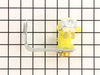
Serious water leak into basement from around a kitchen sink pipe.
Removing two screws holding the bottom trim/sound baffle opened a view of water dripping from the water intake valve at the left front of my Monogram dishwasher. I then turned off the local (under my adjacent sink) separate feed valve for the washer, then opened the (dedicated) breaker for the machine at my breaker panel.
The replacement valve was identical form and fit to the original. It included the replacement mounting bracket integrated with the valve.
Removing two additional screws holding a bigger sound baffle backed with foam gave good access to replace the valve. The foam was fitted to the power box and a few other obstructions, and apparently stuck to something near the top. I ran my hand up separating the foam from the panel and both then came out easily. I reattached the foam to the panel with clear silicon adhesive.
Removing two screws from the front edge of the bracket holding the valve allowed dropping it down for fairly easy access to the clamp holding the flexible house from the valve to the washer. There wasn’t much slack, so I reached the spring clip with a long plier-like device with cups on the working sold as automotive hose clip tool for that purpose. Regular pliers would likely work, with more skin loss from hands.
That action then allowed pulling the valve out from under the machine (feeding slack in the flexible feed I have installed years ago between that valve and the one under my sink. A small adjustable wrench then made easy work of disconnecting the hose brass coupling from the valve.
The right-angle adapter between the valve body and flexible feed hose is apparently specific to the installation, so it had to be removed and attached to the replacement valve. That was facilitated by placing the valves in a large bench vise, clamping the mounting bracket with the right angle adapter up, and using the adjustable wrench again. The old valve had residue from metal pipe thread sealer, so I used some new sealer on the adapter when installing it. Take care. Getting some inside the valve might be a serious problem. Turn the adapter with the adjustable wrench for a snug fit facing the same direction as the plastic nipple for the machine-side hose.
Installation proceeded easily in reverse of the removal process, using a bit of care to fit that foam back around the intended machine projections. I actually used identical thread lattes screws (wider flange) to hold the upper baffle because I misplaced one of the original screws and decided to originals were distorting the mounting slots because the flanges were too small.
I ran the machine through two cycles before replacing the bottom trim, just to assure there were no leaks. Mild panic when the intake valve didn’t operate as soon as I expected, but it must have been some out of phase control operation, because it eventually operated, then operated as expected during the second cycle.
The replacement valve was identical form and fit to the original. It included the replacement mounting bracket integrated with the valve.
Removing two additional screws holding a bigger sound baffle backed with foam gave good access to replace the valve. The foam was fitted to the power box and a few other obstructions, and apparently stuck to something near the top. I ran my hand up separating the foam from the panel and both then came out easily. I reattached the foam to the panel with clear silicon adhesive.
Removing two screws from the front edge of the bracket holding the valve allowed dropping it down for fairly easy access to the clamp holding the flexible house from the valve to the washer. There wasn’t much slack, so I reached the spring clip with a long plier-like device with cups on the working sold as automotive hose clip tool for that purpose. Regular pliers would likely work, with more skin loss from hands.
That action then allowed pulling the valve out from under the machine (feeding slack in the flexible feed I have installed years ago between that valve and the one under my sink. A small adjustable wrench then made easy work of disconnecting the hose brass coupling from the valve.
The right-angle adapter between the valve body and flexible feed hose is apparently specific to the installation, so it had to be removed and attached to the replacement valve. That was facilitated by placing the valves in a large bench vise, clamping the mounting bracket with the right angle adapter up, and using the adjustable wrench again. The old valve had residue from metal pipe thread sealer, so I used some new sealer on the adapter when installing it. Take care. Getting some inside the valve might be a serious problem. Turn the adapter with the adjustable wrench for a snug fit facing the same direction as the plastic nipple for the machine-side hose.
Installation proceeded easily in reverse of the removal process, using a bit of care to fit that foam back around the intended machine projections. I actually used identical thread lattes screws (wider flange) to hold the upper baffle because I misplaced one of the original screws and decided to originals were distorting the mounting slots because the flanges were too small.
I ran the machine through two cycles before replacing the bottom trim, just to assure there were no leaks. Mild panic when the intake valve didn’t operate as soon as I expected, but it must have been some out of phase control operation, because it eventually operated, then operated as expected during the second cycle.
Parts Used:
-
William from Sterling, VA
-
Difficulty Level:Easy
-
Total Repair Time:15 - 30 mins
-
Tools:Nutdriver, Screw drivers, Wrench (Adjustable)
Was this instruction helpful to you?
Thank you for voting!
Soap Dispenser not Opening
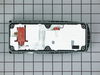
NOTE I have classified this is a DIFFICULT JOB, but NOT because of the mechanics involved [including the electrical connectors UN-plugging and re-plugging, BUT DUE to the ANALYSIS you need to do to determine whether the SOAP DISH PART or the CONTROLLER is at fault. And this ANALYSIS will probably require you to get into the DISHWASHER DOOR twice. Once to do the analysis and then again to replace whatever part you target. Being you will want to continue to use the DISHWASHER by manually dropping the soap door [or just soap] at the appropriate time in the cycle, while awaiting the new part, which means you have re-button up the door and take it apart again when the new part arrives. . Before starting, view PartSelect's VIDEO on replacing the SOAP DISPENSER, but ignore THE STEPS OF REMOVING AND REPLACING THE SOAP DISPENSER.PART, at this time. The analysis starts with MANUALLY trying to activate the mechanical soap door release on the back of the mounted SOAP DISPENSER, with the soap door closed. It should take only ounces of downward pressure [towards the door hinge] on the vertical plastic piece in a channel near the center of the dispenser, to release the soap door. Next if you have access to an OHM METER {or MULTIMETER} or a DC POWER SUPPLY [to test the the activation of the door release] pull the two connectors on the SOAP DISH SOLENOID [a set pointed pliers will be helpful, as outlined in the VIDEO]. If measuring the SOLENOID's resistance it should read roughly 1800 OHMS. If using a DC POWER SUPPLY, you will probably need at least 25 volts DC to trigger the SOLENOID [NOTE I do not have a variable DC POWER SUPPLY to check it out nor do I know the voltage that the DISHWASHER uses]. Do not bother to measure the resistance of CONTROLLER's driving circuitry [the two wires having connectors], as it will read INFINITY, regardless of whether GOOD or BAD, The CONTROLLER apparently uses a RELAY on this circuit, as opposed to some kind of solid state switch. Replug the SOLENOID connectors. Re-buttoned up the DISHWASHER as shown in the VIDEO, assuming you are going to continue using it If you determine no problems in the above tests, then consider it a CONTROLLER pro0blem and you will need to order one. Otherwise you should have found indications of a SOAP DISPENSER PROBLEM. . When the replacement part arrives and you ready to install it, refer again to PartSelect's VIDEO on replacing the Soap Dish Dispenser for a refresher Following the VIDEO completely, if you replacing the DISPENSER. If you are replacing the CONTROLLER, once inside the DOOR, you will need to remove around 6 individual electrical connectors [before doing ANYTHING REMOVE POWER from the DISHWASHER [as instructed in the VIDEO}. These connectors [all but any single wire connectors] are designed to be plugged only one specific way, so when re-plugging NEVER FORCE a connection, The best way to make sure you do not get confused, take a picture of all the connectors -OR- make notes on the looks and orientation of each multi-wire connector. There is one mounting screw on right side of the CONTROLLER. When installing the new CONTROLLER there are mounting EARS on the left side that are first engaged by having the CONTROLLER tilted up on the right side. Replace the mounting screw. Replugged all the connectors using whatever guide you made. Proceed to put the DOOR back together as outlined in the VIDEO.
Parts Used:
-
Lloyd from Mint Hill, NC
-
Difficulty Level:Difficult
-
Total Repair Time:15 - 30 mins
-
Tools:Pliers, Screw drivers
Was this instruction helpful to you?
Thank you for voting!
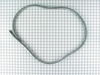
tear in the tub gasket
Pulled out the old gasket and replaced with the new gasket. Inserted the steel spring clip into the ends of the gasket. Repair complete.
Parts Used:
-
Edward from Granite Bay, CA
-
Difficulty Level:Really Easy
-
Total Repair Time:15 - 30 mins
Was this instruction helpful to you?
Thank you for voting!
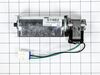
water leak left side of door bottom intermittent
Remove door cover shell by removing screws in inside of door. Unplug harness to control module.Remove outer door shell.Remove four screws at the blower motor. Replace with new motor after disconnecting harness to motor. Reinstall module harness reinstall door shell.
Parts Used:
-
Gary from Willoughby, OH
-
Difficulty Level:Easy
-
Total Repair Time:15 - 30 mins
-
Tools:Screw drivers, Socket set
Was this instruction helpful to you?
Thank you for voting!
Our tub gasket was torn by leaning utensils (a definite design flaw.)
Just have a good look at how the original is installed before removing, then clean the area. The new one was a breeze to install, just line it up and pop it in.
Parts Used:
-
Frances from Goodyear, AZ
-
Difficulty Level:Really Easy
-
Total Repair Time:15 - 30 mins
Was this instruction helpful to you?
Thank you for voting!