












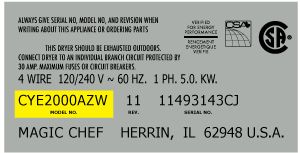

LDG25CS Maytag Dryer - Instructions
Keep searches simple. Use keywords, e.g. "leaking", "pump", "broken" or "fit".
Dryer would not heat up
Just unscrew the front of the dryer the Igniter kit is on the right side of dryer unscrew one bolt then replace with new Igniter kit very easy fix make sure to unplug dryer first that way you don't get a shock by touching exposed wires before putting front panel back on clean out any lint that may be in or around bottom of dryer.
Parts Used:
-
PATRICIA from ANAHEIM, CA
-
Difficulty Level:Easy
-
Total Repair Time:15 - 30 mins
-
Tools:Socket set
4 of 6 people
found this instruction helpful.
Was this instruction helpful to you?
Thank you for voting!
Dryer would not start
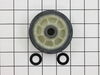
This website is awesome. After imputing my dryer model I was able to select from the list if symptoms my issue...Dryer will not start. From there was percentage of issues that would cause my issue. After determining it was the motor (after 25 years who would have thought that!!!). In this process I discovered other non related issues that i should attend to. So I basically rebuilt the dryer and it worked right away. I am retired military and in the tax preparation/representation business now, so a lot of this was new to me. The detailed instruction and especially the videos provided foolproof methods to complete each of the repairs. It was a little time consuming but very easy to complete. I did gain some new tools and diagnostic equipment that will come in handy in the future. Now I am going to tackle my daughters dishwasher. Thank you Parts Select and Steve (on the videos). John Beazle
Parts Used:

-
John from COHUTTA, GA
-
Difficulty Level:Easy
-
Total Repair Time:More than 2 hours
-
Tools:Nutdriver, Pliers, Screw drivers, Socket set, Wrench set
6 of 12 people
found this instruction helpful.
Was this instruction helpful to you?
Thank you for voting!
After a period of the dryer not being used, the idler pulley wheel froze up on the shaft of the idler pulley arm.
This should have been a simple repair, but turned out to be time consuming and moderately difficult. I hope these instructions will help anyone who encounters the problems described here.
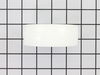
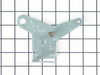
After a period of the dryer not being used, the idler pulley wheel froze on the shaft of the idler pulley arm, so I needed to replace both parts. After mounting the new wheel and two washers on the new arm and securing with a retaining ring, I went to install this assembly by going in through the small access panel at the rear of the dryer. I slid the belt off the old idler pulley wheel and unhooked the spring from the idler pulley arm; the arm was mounted on a sleeve fastened to the motor bracket by one screw. All that should have been necessary was to back out that screw and replace the old idler pulley assembly with the new one.
That is where the trouble started. Backing out the screw with a socket driver, I found it would go a few turns, then start to bind. I tried turning it in and out to get the threads to engage, but it kept binding. Eventually I gave the screw a hard turn, and then it would turn freely but not move in or out.
Looking on the internet for advice, I found a video that asserts for another model Maytag dryer using the same type of mounting for the idler arm, that there is a design flaw. You can find the video by searching for “Maytag dryer idler pulley defect”. According to the video, the sheet metal screw used to mount the idler pulley arm can gradually loosen due to the pressure and vibration, and begins to “waggle” which eventually damages the threads. I believe this is what happened to my dryer. The video suggests replacing the sheet metal screw with a machine screw and nut for a more durable union.
So now I understood how the screw could be stripped just sitting in the dryer, but that didn’t help me get the screw out. Working through the rear access panel, I tried pulling on the screw head with several types of pliers, pushing the point from behind with a piece of wood while turning the head with a socket driver; eventually I was able to use a pry bar under the screw head and sleeve to apply pressure while turning the head, and with that method the screw backed out. With the screw removed, it could be seen that the threads in the middle part of the thread length were almost completely worn away.
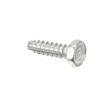
The screw sleeve got somewhat deformed in this process so I ordered a new one, along with an exact replacement sheet metal screw, hoping the threads in the hole were still intact. With the old idler pulley arm now removed, I could transfer the old idler bracket spacer to the new idler pulley arm. When the ordered parts arrived and I tried to mount the idler pulley arm, the new screw would go in only a couple of turns before binding. Rather than risk winding up in the same situation by forcing the screw, I decided to use a machine screw and nut instead.
The original sheet metal screw was a #10. A machine screw the same size would not fit through the hole, and I could not fit my drill into the dryer cabinet in a position to enlarge the hole, so I used a #8 machine screw with a nut and lock washer. First I put some grease on the contact areas of the screw sleeve and idler bracket spacer, then inserted the machine screw through the hole and put the lock washer and nut on the other side of the mounting. The space around the nut is very limited, and most of my tools were too large to hold the nut while the screw was tightened. It was too small for a socket or adjustable wrench, and the clearance from the exhaust duct was too small for the handles of most tools. Eventually, I found a needle nose pliers with short handles that did the job. A thin open end wrench might also work. Then I reconnected the spring and belt to the idler pulley assembly, and closed the access panel. So far the dryer works, but if the #8 screw turns out to be not strong enough, I could get an extension for my drill and enlarge the hole to fit a #10 machine screw and nut.
Looking back on the job, the most difficult part of this repair was removing the damaged screw. This and several other steps might have been a lot easier if I had removed the motor bracket (where the idler pulley arm is mounted) from the dryer and worked outside the cabinet. Part Select has an excellent video “Replacing the Drive Motor” that shows how to do this. It would be a lot of disassembly work, but for someone with good assembly skills could be easier in the long run.
Hopefully most folks out there who replace the idler pulley arm on a dryer will find an easier situation than I did. But for any who have to deal with a stripped mounting screw, I hope this summary will help you resolve it.
After a period of the dryer not being used, the idler pulley wheel froze on the shaft of the idler pulley arm, so I needed to replace both parts. After mounting the new wheel and two washers on the new arm and securing with a retaining ring, I went to install this assembly by going in through the small access panel at the rear of the dryer. I slid the belt off the old idler pulley wheel and unhooked the spring from the idler pulley arm; the arm was mounted on a sleeve fastened to the motor bracket by one screw. All that should have been necessary was to back out that screw and replace the old idler pulley assembly with the new one.
That is where the trouble started. Backing out the screw with a socket driver, I found it would go a few turns, then start to bind. I tried turning it in and out to get the threads to engage, but it kept binding. Eventually I gave the screw a hard turn, and then it would turn freely but not move in or out.
Looking on the internet for advice, I found a video that asserts for another model Maytag dryer using the same type of mounting for the idler arm, that there is a design flaw. You can find the video by searching for “Maytag dryer idler pulley defect”. According to the video, the sheet metal screw used to mount the idler pulley arm can gradually loosen due to the pressure and vibration, and begins to “waggle” which eventually damages the threads. I believe this is what happened to my dryer. The video suggests replacing the sheet metal screw with a machine screw and nut for a more durable union.
So now I understood how the screw could be stripped just sitting in the dryer, but that didn’t help me get the screw out. Working through the rear access panel, I tried pulling on the screw head with several types of pliers, pushing the point from behind with a piece of wood while turning the head with a socket driver; eventually I was able to use a pry bar under the screw head and sleeve to apply pressure while turning the head, and with that method the screw backed out. With the screw removed, it could be seen that the threads in the middle part of the thread length were almost completely worn away.
The screw sleeve got somewhat deformed in this process so I ordered a new one, along with an exact replacement sheet metal screw, hoping the threads in the hole were still intact. With the old idler pulley arm now removed, I could transfer the old idler bracket spacer to the new idler pulley arm. When the ordered parts arrived and I tried to mount the idler pulley arm, the new screw would go in only a couple of turns before binding. Rather than risk winding up in the same situation by forcing the screw, I decided to use a machine screw and nut instead.
The original sheet metal screw was a #10. A machine screw the same size would not fit through the hole, and I could not fit my drill into the dryer cabinet in a position to enlarge the hole, so I used a #8 machine screw with a nut and lock washer. First I put some grease on the contact areas of the screw sleeve and idler bracket spacer, then inserted the machine screw through the hole and put the lock washer and nut on the other side of the mounting. The space around the nut is very limited, and most of my tools were too large to hold the nut while the screw was tightened. It was too small for a socket or adjustable wrench, and the clearance from the exhaust duct was too small for the handles of most tools. Eventually, I found a needle nose pliers with short handles that did the job. A thin open end wrench might also work. Then I reconnected the spring and belt to the idler pulley assembly, and closed the access panel. So far the dryer works, but if the #8 screw turns out to be not strong enough, I could get an extension for my drill and enlarge the hole to fit a #10 machine screw and nut.
Looking back on the job, the most difficult part of this repair was removing the damaged screw. This and several other steps might have been a lot easier if I had removed the motor bracket (where the idler pulley arm is mounted) from the dryer and worked outside the cabinet. Part Select has an excellent video “Replacing the Drive Motor” that shows how to do this. It would be a lot of disassembly work, but for someone with good assembly skills could be easier in the long run.
Hopefully most folks out there who replace the idler pulley arm on a dryer will find an easier situation than I did. But for any who have to deal with a stripped mounting screw, I hope this summary will help you resolve it.
Parts Used:

-
Alan from BETHESDA, MD
-
Difficulty Level:A Bit Difficult
-
Total Repair Time:More than 2 hours
-
Tools:Nutdriver, Pliers, Screw drivers, Socket set
3 of 3 people
found this instruction helpful.
Was this instruction helpful to you?
Thank you for voting!
Idler pulley arm mounting screw stripped
This should have been a simple repair, but turned out to be time consuming and moderately difficult. I hope these instructions will help anyone who encounters the problems described here.
After a period of the dryer not being used, the idler pulley wheel froze on the shaft of the idler pulley arm, so I needed to replace both parts. After mounting the new wheel and two washers on the new arm and securing with a retaining ring, I went to install this assembly by going in through the small access panel at the rear of the dryer. I slid the belt off the old idler pulley wheel and unhooked the spring from the idler pulley arm; the arm was mounted on a sleeve fastened to the motor bracket by one screw. All that should have been necessary was to back out that screw and replace the old idler pulley assembly with the new one.
That is where the trouble started. Backing out the screw with a socket driver, I found it would go a few turns, then start to bind. I tried turning it in and out to get the threads to engage, but it kept binding. Eventually I gave the screw a hard turn, and then it would turn freely but not move in or out.
Looking on the internet for advice, I found a video that asserts for another model Maytag dryer using the same type of mounting for the idler arm, that there is a design flaw. You can find the video by searching for “Maytag dryer idler pulley defect”. According to the video, the sheet metal screw used to mount the idler pulley arm can gradually loosen due to the pressure and vibration, and begins to “waggle” which eventually damages the threads. I believe this is what happened to my dryer. The video suggests replacing the sheet metal screw with a machine screw and nut for a more durable union.
So now I understood how the screw could be stripped just sitting in the dryer, but that didn’t help me get the screw out. Working through the rear access panel, I tried pulling on the screw head with several types of pliers, pushing the point from behind with a piece of wood while turning the head with a socket driver; eventually I was able to use a pry bar under the screw head and sleeve to apply pressure while turning the head, and with that method the screw backed out. With the screw removed, it could be seen that the threads in the middle part of the thread length were almost completely worn away.
The screw sleeve got somewhat deformed in this process so I ordered a new one, along with an exact replacement sheet metal screw, hoping the threads in the hole were still intact. With the old idler pulley arm now removed, I could transfer the old idler bracket spacer to the new idler pulley arm. When the ordered parts arrived and I tried to mount the idler pulley arm, the new screw would go in only a couple of turns before binding. Rather than risk winding up in the same situation by forcing the screw, I decided to use a machine screw and nut instead.
The original sheet metal screw was a #10. A machine screw the same size would not fit through the hole, and I could not fit my drill into the dryer cabinet in a position to enlarge the hole, so I used a #8 machine screw with a nut and lock washer. First I put some grease on the contact areas of the screw sleeve and idler bracket spacer, then inserted the machine screw through the hole and put the lock washer and nut on the other side of the mounting. The space around the nut is very limited, and most of my tools were too large to hold the nut while the screw was tightened. It was too small for a socket or adjustable wrench, and the clearance from the exhaust duct was too small for the handles of most tools. Eventually, I found a needle nose pliers with short handles that did the job. A thin open end wrench might also work. Then I reconnected the spring and belt to the idler pulley assembly, and closed the access panel. So far the dryer works, but if the #8 screw turns out to be not strong enough, I could get an extension for my drill and enlarge the hole to fit a #10 machine screw and nut.
Looking back on the job, the most difficult part of this repair was removing the damaged screw. This and several other steps might have been a lot easier if I had removed the motor bracket (where the idler pulley arm is mounted) from the dryer and worked outside the cabinet. Part Select has an excellent video “Replacing the Drive Motor” that shows how to do this. It would be a lot of disassembly work, but for someone with good assembly skills could be easier in the long run.
Hopefully most folks out there who replace the idler pulley arm on a dryer will find an easier situation than I did. But for any who have to deal with a stripped mounting screw, I hope this summary will help you resolve it.
After a period of the dryer not being used, the idler pulley wheel froze on the shaft of the idler pulley arm, so I needed to replace both parts. After mounting the new wheel and two washers on the new arm and securing with a retaining ring, I went to install this assembly by going in through the small access panel at the rear of the dryer. I slid the belt off the old idler pulley wheel and unhooked the spring from the idler pulley arm; the arm was mounted on a sleeve fastened to the motor bracket by one screw. All that should have been necessary was to back out that screw and replace the old idler pulley assembly with the new one.
That is where the trouble started. Backing out the screw with a socket driver, I found it would go a few turns, then start to bind. I tried turning it in and out to get the threads to engage, but it kept binding. Eventually I gave the screw a hard turn, and then it would turn freely but not move in or out.
Looking on the internet for advice, I found a video that asserts for another model Maytag dryer using the same type of mounting for the idler arm, that there is a design flaw. You can find the video by searching for “Maytag dryer idler pulley defect”. According to the video, the sheet metal screw used to mount the idler pulley arm can gradually loosen due to the pressure and vibration, and begins to “waggle” which eventually damages the threads. I believe this is what happened to my dryer. The video suggests replacing the sheet metal screw with a machine screw and nut for a more durable union.
So now I understood how the screw could be stripped just sitting in the dryer, but that didn’t help me get the screw out. Working through the rear access panel, I tried pulling on the screw head with several types of pliers, pushing the point from behind with a piece of wood while turning the head with a socket driver; eventually I was able to use a pry bar under the screw head and sleeve to apply pressure while turning the head, and with that method the screw backed out. With the screw removed, it could be seen that the threads in the middle part of the thread length were almost completely worn away.
The screw sleeve got somewhat deformed in this process so I ordered a new one, along with an exact replacement sheet metal screw, hoping the threads in the hole were still intact. With the old idler pulley arm now removed, I could transfer the old idler bracket spacer to the new idler pulley arm. When the ordered parts arrived and I tried to mount the idler pulley arm, the new screw would go in only a couple of turns before binding. Rather than risk winding up in the same situation by forcing the screw, I decided to use a machine screw and nut instead.
The original sheet metal screw was a #10. A machine screw the same size would not fit through the hole, and I could not fit my drill into the dryer cabinet in a position to enlarge the hole, so I used a #8 machine screw with a nut and lock washer. First I put some grease on the contact areas of the screw sleeve and idler bracket spacer, then inserted the machine screw through the hole and put the lock washer and nut on the other side of the mounting. The space around the nut is very limited, and most of my tools were too large to hold the nut while the screw was tightened. It was too small for a socket or adjustable wrench, and the clearance from the exhaust duct was too small for the handles of most tools. Eventually, I found a needle nose pliers with short handles that did the job. A thin open end wrench might also work. Then I reconnected the spring and belt to the idler pulley assembly, and closed the access panel. So far the dryer works, but if the #8 screw turns out to be not strong enough, I could get an extension for my drill and enlarge the hole to fit a #10 machine screw and nut.
Looking back on the job, the most difficult part of this repair was removing the damaged screw. This and several other steps might have been a lot easier if I had removed the motor bracket (where the idler pulley arm is mounted) from the dryer and worked outside the cabinet. Part Select has an excellent video “Replacing the Drive Motor” that shows how to do this. It would be a lot of disassembly work, but for someone with good assembly skills could be easier in the long run.
Hopefully most folks out there who replace the idler pulley arm on a dryer will find an easier situation than I did. But for any who have to deal with a stripped mounting screw, I hope this summary will help you resolve it.
Parts Used:
-
Alan from BETHESDA, MD
-
Difficulty Level:A Bit Difficult
-
Total Repair Time:More than 2 hours
-
Tools:Nutdriver, Pliers, Screw drivers, Socket set
3 of 3 people
found this instruction helpful.
Was this instruction helpful to you?
Thank you for voting!
Replaced door switch
Door switch was very easy to replace as it simply snaps in for the outside and you just clip on the two control wires that already have clips on them.
Parts Used:
-
Joseph from Colts Neck, NJ
-
Difficulty Level:Really Easy
-
Total Repair Time:15 - 30 mins
-
Tools:Screw drivers
5 of 9 people
found this instruction helpful.
Was this instruction helpful to you?
Thank you for voting!
drum support roller had come apst from bearing and was making a squealing noise when dryer was running
first i removed the screws holding back cover. Then I remeved nut from tumbler roller shaft. Then I slid shaft from roller .I removed roller then replaced with new one. Installed new shaft then replaced back cover. recieved parts from parts direct very promptly & they were the right parts the first time thanks very much
Parts Used:
-
David from Calvert City, KY
-
Difficulty Level:Really Easy
-
Total Repair Time:15 - 30 mins
-
Tools:Nutdriver, Pliers, Wrench set
3 of 3 people
found this instruction helpful.
Was this instruction helpful to you?
Thank you for voting!
Not enough heating to dry clothes.
My Maytag gas dryer model MDG7600AWW is about 12 years old. Everything else works fine except it takes 4-5 drying cycles instead of 1 to completely dry my clothes properly. The flat igniter was simply cracked but not broken so it only worked some times. My gas dryer igniter and the 2 ignition coils work hand in hand so I replaced all 3 parts. The ignition coils provide a solid and consistent power supply to the igniter for proper burner tube function. Disconnect power cord from wall outlet. Shut off gas supply by turning the wall gas valve off. Remove 2 small philips screws to detach front panel door from dryer frame. Remove 2 additional philips screws on left front side panel inner door frame. Gently pull front dryer panel off beginning at top and put it aside. Igniter and the 2 ignition coils are plainly visible and easily accessible at bottom right corner of dryer. Igniter is attached to the burner tube and facing into the heater housing assembly. The 2 ignition coils are attached just above the gas valve on the rear of the burner tube. The ignition coils are simply attached to the rear of the heater tube with one bracket using 2 small philips screws. First, disconnect igniter plug wire harness. Next, I recommend using a small open end applicable size wrench (5/16 perhaps) to remove attaching igniter screw. A small 1/4 ratchet with applicable socket size may also be used. Handle the igniter only from the white ceramic part when installing. You don't have to completely remove the igniter screw from the burner tube. The igniter has a white ceramic horse shoe shape slot in which the attaching screw goes through for tightening to the burner tube. Just unscrew generously for removal and replacement of the igniter. Do NOT over tighten igniter screw as the white ceramic plate may break from over torqing. Reconnect igniter wire plug harness. The igniter part I used was PartSelect Number PS373025. Next, remove the ignition coil bracket by unscrewing the 2 small philips screws from rear of the heater tube frame. Remove only 1 ignition coil at a time by removing the wire plug harness and simply lifting upward. One coil will have 2 prongs while the other has 3 prongs so you can't go wrong when reconnecting the wire plug harnesses. I used the PartSelect 'M' Series New Style Coil Kit (2 coils included)which was PartSelect Number PS334310. Replace the front dryer panel back. Attach the front door to the panel and dryer frame using the 2 philips screws. Attach the 2 left side inner door front panel philips screws to dryer frame. Turn on the wall gas valve. Reconnect power cord to wall outlet.
Parts Used:
-
Horacio from Houston, TX
-
Difficulty Level:Really Easy
-
Total Repair Time:15 - 30 mins
-
Tools:Screw drivers, Socket set, Wrench set
3 of 4 people
found this instruction helpful.
Was this instruction helpful to you?
Thank you for voting!
Button to start dryer
Per instructions I printed off online: took off door, then the front panel. Pulled out the old switch/button, connected the new switch/button, made sure the new button was working; put the panel back on then the door and DONE!
Parts Used:
-
Loretta E. from Miamisburg, OH
-
Difficulty Level:Easy
-
Total Repair Time:Less than 15 mins
-
Tools:Screw drivers
4 of 7 people
found this instruction helpful.
Was this instruction helpful to you?
Thank you for voting!
dryer filter screen broken
I didn't think it would fit as it looked bigger then the old one, I called the service department and they were very helpful. They made note of the fact that I had called with questions in case I had to call again, but it worked, and no one laughed at me. It was very nice of them. Thank you for all the help
Parts Used:
-
suzanne from Ottawa, IL
-
Difficulty Level:Really Easy
-
Total Repair Time:Less than 15 mins
3 of 4 people
found this instruction helpful.
Was this instruction helpful to you?
Thank you for voting!
Squeaking noise
I had replaced belt, but the noise continued. Ordered new rollers and washer. Removed the front panel by tipping the dryer back against the wall and removing two screws at the bottom of the panel. Tipping the dryer makes it easy to remove the front panel. Removed the front drum support by removing four (4) screws. I was then able to just move the drum enough to have access to the rollers. Didn't even have to remove the belt. Replaced the rollers. Needed special pliers to remove and replace the retaining rings. Put the drum back into position and mounted the front drum support. Tightened four screws and then put the front panel back on. Plugged it in and tested it. Problem solved. Took about 35 minutes. Thanks
Parts Used:

-
Charles from Daphne, AL
-
Difficulty Level:Easy
-
Total Repair Time:30 - 60 mins
-
Tools:Pliers, Screw drivers, Socket set
3 of 4 people
found this instruction helpful.
Was this instruction helpful to you?
Thank you for voting!
Squealling clothes dryer.
Undid two screws in lower front of dryer and popped off front. Removed screws holding lint screen duct and brackets supporting tumbler and removed duct and tumbler quite easily. Pulled, cleaned and oiled rear rollers, replaced front glides, and thoroughly cleaned exhaust duct of lint. Put new belt into position on the roller before sliding tumbler back in, then pulled belt over tumbler as it went in. Be careful to follow belt path directions correctly.
Key to this repair was obtaining the parts so easily from Parts Select.com. Ordered at 2pm and had them 2pm the following day. Unbelievable! These machines are relatively simple to keep running when the parts are available so easily. Thanks for great service.
Key to this repair was obtaining the parts so easily from Parts Select.com. Ordered at 2pm and had them 2pm the following day. Unbelievable! These machines are relatively simple to keep running when the parts are available so easily. Thanks for great service.
Parts Used:
-
Stephen from Port Jefferson, NY
-
Difficulty Level:Easy
-
Total Repair Time:1- 2 hours
-
Tools:Screw drivers, Socket set, Wrench set
3 of 4 people
found this instruction helpful.
Was this instruction helpful to you?
Thank you for voting!
One of the roller shafts was worn
Replaced both rollers,shafts, bearings and snap rings.
Parts Used:
-
William from Springfield, OH
-
Difficulty Level:Really Easy
-
Total Repair Time:15 - 30 mins
-
Tools:Nutdriver, Screw drivers
3 of 4 people
found this instruction helpful.
Was this instruction helpful to you?
Thank you for voting!
Dryer not heating....Had to be igniter or solonoid
Upon receipt of part, just loosened 1 fastener, slid igniter forward and out....unclipped wire connection and replaced... Could not have been easier. Be careful not to overtighten fastener when replacing. Description and pictures made for very easy selection.
Parts Used:
-
Jeffrey from Glenshaw, PA
-
Difficulty Level:Really Easy
-
Total Repair Time:15 - 30 mins
-
Tools:Wrench (Adjustable)
3 of 4 people
found this instruction helpful.
Was this instruction helpful to you?
Thank you for voting!
When the dryer grumbles check the blower wheel too.
If your dryer is making a rumbling noise, change the blower wheel. It's plastic and the heating and cooling cycles causes the keyway in the plastic to give out and the wheel just spins causing the noise and the slower dry time. The other parts I replaced see below. Like many other repairs, remove screws below dryer door. Mark all wires and locations for re-assembly. Next remove front tumbler/lint screen assembly (4 sheet metal screws 2/L 2/R. Work belt off back of tumbler and remove. Use flathead screw driver to release tabs that hold felts on both front and back tumble supports. Make sure you know rotation of tumbler and install new felts so the overlap goes in direction of spin. Use a drum stick or 3/8 ratchet extension, something dull and flat to press tabs back down on felts. A screwdriver could slip off and tear cloth. Next drill out heads of the rivets on the glides and remove teflon glide and cork backer. Make sure all rivet material is removed front and back. Install new cork and glide. Rivet one side back in, then the other. Repeat on 2nd glide. Re-assemble dryer. Super smooth, super quiet.
Parts Used:
-
Chris from MArietta, GA
-
Difficulty Level:Easy
-
Total Repair Time:30 - 60 mins
-
Tools:Nutdriver, Screw drivers
3 of 4 people
found this instruction helpful.
Was this instruction helpful to you?
Thank you for voting!
A lot of screeching noise while tumbling
It took me a lot longer to plan the repair and decide to do it than to do the actual work, knowing what I know now, and having the parts, it would take less than half an hour. As there are no repair manuals available, it took one of these reports to give me the confidence I needed to proceed.
I first found out how to open the front (only two screews on the underneath part of the front cover) and opened it to hear the noise, (just put the cover to one side while still connected to the door switch),,,,, sprayed some WD40 all over the place and the noise went away temporarily (DO NOT DO THIS as the oil will burn off on top of heater unit and smell and smoke). I replaced the roller that the drum sits on (above the heating unit) to the right of the drum and the belt. You need a special tool that fits into the little holes in the ring retainer, I got it at Lowe's ($20 +/-). It is a Channellock plier that opens when you squeeze, you have to change the points (comes with it).
So, here is the squence: remove the front panel, disconnect the swhitch (it took some pulling), set aside; remove front drum assembly (only four screws looking at you) and it comes right out; the Drum is light and comes right out as well, it just sits in a dry channel. The belt will fall off.... take the retainer ring off the roller with the special tool... remove roller and replace with new washers (one on either side) replace the ring retainer (recommend getting new one) with same tool. If you remove the small panel in the back of the washer it is very eassy to replace the belt.... I did replace it although the old one looked almost new .. instructions and a diagram come with the parts you buy here by the way... which they should say... place belt on drum per instructions (solid side down), put belt inside the chanell on drum (it will climb to the correct position by itself) put on drum front cover to hold drum in place, and then sting belt on pulley from the back of the dryer. (diagram comes with belt otherwise look at it before taking off the drum) Replace front panel (after reconnecting switch) and you are off (if you want to test without the front panel you have to touch the switch wires to each other (use tape) and do not do plugged in...
After much anxiety but not that much work the dryer runs great and is as quiet as new.... I took the parts off before ordering by the way.... the order came within three days... I am happy to have PartSelect.com .. Maytag had not clue this model even existed.... Thanks
I first found out how to open the front (only two screews on the underneath part of the front cover) and opened it to hear the noise, (just put the cover to one side while still connected to the door switch),,,,, sprayed some WD40 all over the place and the noise went away temporarily (DO NOT DO THIS as the oil will burn off on top of heater unit and smell and smoke). I replaced the roller that the drum sits on (above the heating unit) to the right of the drum and the belt. You need a special tool that fits into the little holes in the ring retainer, I got it at Lowe's ($20 +/-). It is a Channellock plier that opens when you squeeze, you have to change the points (comes with it).
So, here is the squence: remove the front panel, disconnect the swhitch (it took some pulling), set aside; remove front drum assembly (only four screws looking at you) and it comes right out; the Drum is light and comes right out as well, it just sits in a dry channel. The belt will fall off.... take the retainer ring off the roller with the special tool... remove roller and replace with new washers (one on either side) replace the ring retainer (recommend getting new one) with same tool. If you remove the small panel in the back of the washer it is very eassy to replace the belt.... I did replace it although the old one looked almost new .. instructions and a diagram come with the parts you buy here by the way... which they should say... place belt on drum per instructions (solid side down), put belt inside the chanell on drum (it will climb to the correct position by itself) put on drum front cover to hold drum in place, and then sting belt on pulley from the back of the dryer. (diagram comes with belt otherwise look at it before taking off the drum) Replace front panel (after reconnecting switch) and you are off (if you want to test without the front panel you have to touch the switch wires to each other (use tape) and do not do plugged in...
After much anxiety but not that much work the dryer runs great and is as quiet as new.... I took the parts off before ordering by the way.... the order came within three days... I am happy to have PartSelect.com .. Maytag had not clue this model even existed.... Thanks
Parts Used:
-
Roy from Yardley, PA
-
Difficulty Level:Easy
-
Total Repair Time:1- 2 hours
-
Tools:Nutdriver, Screw drivers
2 of 2 people
found this instruction helpful.
Was this instruction helpful to you?
Thank you for voting!