













DE309 Maytag Dryer - Instructions
Keep searches simple. Use keywords, e.g. "leaking", "pump", "broken" or "fit".
Idler pulley arm mounting screw stripped
This should have been a simple repair, but turned out to be time consuming and moderately difficult. I hope these instructions will help anyone who encounters the problems described here.
After a period of the dryer not being used, the idler pulley wheel froze on the shaft of the idler pulley arm, so I needed to replace both parts. After mounting the new wheel and two washers on the new arm and securing with a retaining ring, I went to install this assembly by going in through the small access panel at the rear of the dryer. I slid the belt off the old idler pulley wheel and unhooked the spring from the idler pulley arm; the arm was mounted on a sleeve fastened to the motor bracket by one screw. All that should have been necessary was to back out that screw and replace the old idler pulley assembly with the new one.
That is where the trouble started. Backing out the screw with a socket driver, I found it would go a few turns, then start to bind. I tried turning it in and out to get the threads to engage, but it kept binding. Eventually I gave the screw a hard turn, and then it would turn freely but not move in or out.
Looking on the internet for advice, I found a video that asserts for another model Maytag dryer using the same type of mounting for the idler arm, that there is a design flaw. You can find the video by searching for “Maytag dryer idler pulley defect”. According to the video, the sheet metal screw used to mount the idler pulley arm can gradually loosen due to the pressure and vibration, and begins to “waggle” which eventually damages the threads. I believe this is what happened to my dryer. The video suggests replacing the sheet metal screw with a machine screw and nut for a more durable union.
So now I understood how the screw could be stripped just sitting in the dryer, but that didn’t help me get the screw out. Working through the rear access panel, I tried pulling on the screw head with several types of pliers, pushing the point from behind with a piece of wood while turning the head with a socket driver; eventually I was able to use a pry bar under the screw head and sleeve to apply pressure while turning the head, and with that method the screw backed out. With the screw removed, it could be seen that the threads in the middle part of the thread length were almost completely worn away.
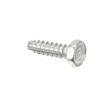
The screw sleeve got somewhat deformed in this process so I ordered a new one, along with an exact replacement sheet metal screw, hoping the threads in the hole were still intact. With the old idler pulley arm now removed, I could transfer the old idler bracket spacer to the new idler pulley arm. When the ordered parts arrived and I tried to mount the idler pulley arm, the new screw would go in only a couple of turns before binding. Rather than risk winding up in the same situation by forcing the screw, I decided to use a machine screw and nut instead.
The original sheet metal screw was a #10. A machine screw the same size would not fit through the hole, and I could not fit my drill into the dryer cabinet in a position to enlarge the hole, so I used a #8 machine screw with a nut and lock washer. First I put some grease on the contact areas of the screw sleeve and idler bracket spacer, then inserted the machine screw through the hole and put the lock washer and nut on the other side of the mounting. The space around the nut is very limited, and most of my tools were too large to hold the nut while the screw was tightened. It was too small for a socket or adjustable wrench, and the clearance from the exhaust duct was too small for the handles of most tools. Eventually, I found a needle nose pliers with short handles that did the job. A thin open end wrench might also work. Then I reconnected the spring and belt to the idler pulley assembly, and closed the access panel. So far the dryer works, but if the #8 screw turns out to be not strong enough, I could get an extension for my drill and enlarge the hole to fit a #10 machine screw and nut.
Looking back on the job, the most difficult part of this repair was removing the damaged screw. This and several other steps might have been a lot easier if I had removed the motor bracket (where the idler pulley arm is mounted) from the dryer and worked outside the cabinet. Part Select has an excellent video “Replacing the Drive Motor” that shows how to do this. It would be a lot of disassembly work, but for someone with good assembly skills could be easier in the long run.
Hopefully most folks out there who replace the idler pulley arm on a dryer will find an easier situation than I did. But for any who have to deal with a stripped mounting screw, I hope this summary will help you resolve it.
After a period of the dryer not being used, the idler pulley wheel froze on the shaft of the idler pulley arm, so I needed to replace both parts. After mounting the new wheel and two washers on the new arm and securing with a retaining ring, I went to install this assembly by going in through the small access panel at the rear of the dryer. I slid the belt off the old idler pulley wheel and unhooked the spring from the idler pulley arm; the arm was mounted on a sleeve fastened to the motor bracket by one screw. All that should have been necessary was to back out that screw and replace the old idler pulley assembly with the new one.
That is where the trouble started. Backing out the screw with a socket driver, I found it would go a few turns, then start to bind. I tried turning it in and out to get the threads to engage, but it kept binding. Eventually I gave the screw a hard turn, and then it would turn freely but not move in or out.
Looking on the internet for advice, I found a video that asserts for another model Maytag dryer using the same type of mounting for the idler arm, that there is a design flaw. You can find the video by searching for “Maytag dryer idler pulley defect”. According to the video, the sheet metal screw used to mount the idler pulley arm can gradually loosen due to the pressure and vibration, and begins to “waggle” which eventually damages the threads. I believe this is what happened to my dryer. The video suggests replacing the sheet metal screw with a machine screw and nut for a more durable union.
So now I understood how the screw could be stripped just sitting in the dryer, but that didn’t help me get the screw out. Working through the rear access panel, I tried pulling on the screw head with several types of pliers, pushing the point from behind with a piece of wood while turning the head with a socket driver; eventually I was able to use a pry bar under the screw head and sleeve to apply pressure while turning the head, and with that method the screw backed out. With the screw removed, it could be seen that the threads in the middle part of the thread length were almost completely worn away.
The screw sleeve got somewhat deformed in this process so I ordered a new one, along with an exact replacement sheet metal screw, hoping the threads in the hole were still intact. With the old idler pulley arm now removed, I could transfer the old idler bracket spacer to the new idler pulley arm. When the ordered parts arrived and I tried to mount the idler pulley arm, the new screw would go in only a couple of turns before binding. Rather than risk winding up in the same situation by forcing the screw, I decided to use a machine screw and nut instead.
The original sheet metal screw was a #10. A machine screw the same size would not fit through the hole, and I could not fit my drill into the dryer cabinet in a position to enlarge the hole, so I used a #8 machine screw with a nut and lock washer. First I put some grease on the contact areas of the screw sleeve and idler bracket spacer, then inserted the machine screw through the hole and put the lock washer and nut on the other side of the mounting. The space around the nut is very limited, and most of my tools were too large to hold the nut while the screw was tightened. It was too small for a socket or adjustable wrench, and the clearance from the exhaust duct was too small for the handles of most tools. Eventually, I found a needle nose pliers with short handles that did the job. A thin open end wrench might also work. Then I reconnected the spring and belt to the idler pulley assembly, and closed the access panel. So far the dryer works, but if the #8 screw turns out to be not strong enough, I could get an extension for my drill and enlarge the hole to fit a #10 machine screw and nut.
Looking back on the job, the most difficult part of this repair was removing the damaged screw. This and several other steps might have been a lot easier if I had removed the motor bracket (where the idler pulley arm is mounted) from the dryer and worked outside the cabinet. Part Select has an excellent video “Replacing the Drive Motor” that shows how to do this. It would be a lot of disassembly work, but for someone with good assembly skills could be easier in the long run.
Hopefully most folks out there who replace the idler pulley arm on a dryer will find an easier situation than I did. But for any who have to deal with a stripped mounting screw, I hope this summary will help you resolve it.
Parts Used:
-
Alan from BETHESDA, MD
-
Difficulty Level:A Bit Difficult
-
Total Repair Time:More than 2 hours
-
Tools:Nutdriver, Pliers, Screw drivers, Socket set
3 of 3 people
found this instruction helpful.
Was this instruction helpful to you?
Thank you for voting!
After a period of the dryer not being used, the idler pulley wheel froze up on the shaft of the idler pulley arm.
This should have been a simple repair, but turned out to be time consuming and moderately difficult. I hope these instructions will help anyone who encounters the problems described here.
After a period of the dryer not being used, the idler pulley wheel froze on the shaft of the idler pulley arm, so I needed to replace both parts. After mounting the new wheel and two washers on the new arm and securing with a retaining ring, I went to install this assembly by going in through the small access panel at the rear of the dryer. I slid the belt off the old idler pulley wheel and unhooked the spring from the idler pulley arm; the arm was mounted on a sleeve fastened to the motor bracket by one screw. All that should have been necessary was to back out that screw and replace the old idler pulley assembly with the new one.
That is where the trouble started. Backing out the screw with a socket driver, I found it would go a few turns, then start to bind. I tried turning it in and out to get the threads to engage, but it kept binding. Eventually I gave the screw a hard turn, and then it would turn freely but not move in or out.
Looking on the internet for advice, I found a video that asserts for another model Maytag dryer using the same type of mounting for the idler arm, that there is a design flaw. You can find the video by searching for “Maytag dryer idler pulley defect”. According to the video, the sheet metal screw used to mount the idler pulley arm can gradually loosen due to the pressure and vibration, and begins to “waggle” which eventually damages the threads. I believe this is what happened to my dryer. The video suggests replacing the sheet metal screw with a machine screw and nut for a more durable union.
So now I understood how the screw could be stripped just sitting in the dryer, but that didn’t help me get the screw out. Working through the rear access panel, I tried pulling on the screw head with several types of pliers, pushing the point from behind with a piece of wood while turning the head with a socket driver; eventually I was able to use a pry bar under the screw head and sleeve to apply pressure while turning the head, and with that method the screw backed out. With the screw removed, it could be seen that the threads in the middle part of the thread length were almost completely worn away.
The screw sleeve got somewhat deformed in this process so I ordered a new one, along with an exact replacement sheet metal screw, hoping the threads in the hole were still intact. With the old idler pulley arm now removed, I could transfer the old idler bracket spacer to the new idler pulley arm. When the ordered parts arrived and I tried to mount the idler pulley arm, the new screw would go in only a couple of turns before binding. Rather than risk winding up in the same situation by forcing the screw, I decided to use a machine screw and nut instead.
The original sheet metal screw was a #10. A machine screw the same size would not fit through the hole, and I could not fit my drill into the dryer cabinet in a position to enlarge the hole, so I used a #8 machine screw with a nut and lock washer. First I put some grease on the contact areas of the screw sleeve and idler bracket spacer, then inserted the machine screw through the hole and put the lock washer and nut on the other side of the mounting. The space around the nut is very limited, and most of my tools were too large to hold the nut while the screw was tightened. It was too small for a socket or adjustable wrench, and the clearance from the exhaust duct was too small for the handles of most tools. Eventually, I found a needle nose pliers with short handles that did the job. A thin open end wrench might also work. Then I reconnected the spring and belt to the idler pulley assembly, and closed the access panel. So far the dryer works, but if the #8 screw turns out to be not strong enough, I could get an extension for my drill and enlarge the hole to fit a #10 machine screw and nut.
Looking back on the job, the most difficult part of this repair was removing the damaged screw. This and several other steps might have been a lot easier if I had removed the motor bracket (where the idler pulley arm is mounted) from the dryer and worked outside the cabinet. Part Select has an excellent video “Replacing the Drive Motor” that shows how to do this. It would be a lot of disassembly work, but for someone with good assembly skills could be easier in the long run.
Hopefully most folks out there who replace the idler pulley arm on a dryer will find an easier situation than I did. But for any who have to deal with a stripped mounting screw, I hope this summary will help you resolve it.
After a period of the dryer not being used, the idler pulley wheel froze on the shaft of the idler pulley arm, so I needed to replace both parts. After mounting the new wheel and two washers on the new arm and securing with a retaining ring, I went to install this assembly by going in through the small access panel at the rear of the dryer. I slid the belt off the old idler pulley wheel and unhooked the spring from the idler pulley arm; the arm was mounted on a sleeve fastened to the motor bracket by one screw. All that should have been necessary was to back out that screw and replace the old idler pulley assembly with the new one.
That is where the trouble started. Backing out the screw with a socket driver, I found it would go a few turns, then start to bind. I tried turning it in and out to get the threads to engage, but it kept binding. Eventually I gave the screw a hard turn, and then it would turn freely but not move in or out.
Looking on the internet for advice, I found a video that asserts for another model Maytag dryer using the same type of mounting for the idler arm, that there is a design flaw. You can find the video by searching for “Maytag dryer idler pulley defect”. According to the video, the sheet metal screw used to mount the idler pulley arm can gradually loosen due to the pressure and vibration, and begins to “waggle” which eventually damages the threads. I believe this is what happened to my dryer. The video suggests replacing the sheet metal screw with a machine screw and nut for a more durable union.
So now I understood how the screw could be stripped just sitting in the dryer, but that didn’t help me get the screw out. Working through the rear access panel, I tried pulling on the screw head with several types of pliers, pushing the point from behind with a piece of wood while turning the head with a socket driver; eventually I was able to use a pry bar under the screw head and sleeve to apply pressure while turning the head, and with that method the screw backed out. With the screw removed, it could be seen that the threads in the middle part of the thread length were almost completely worn away.
The screw sleeve got somewhat deformed in this process so I ordered a new one, along with an exact replacement sheet metal screw, hoping the threads in the hole were still intact. With the old idler pulley arm now removed, I could transfer the old idler bracket spacer to the new idler pulley arm. When the ordered parts arrived and I tried to mount the idler pulley arm, the new screw would go in only a couple of turns before binding. Rather than risk winding up in the same situation by forcing the screw, I decided to use a machine screw and nut instead.
The original sheet metal screw was a #10. A machine screw the same size would not fit through the hole, and I could not fit my drill into the dryer cabinet in a position to enlarge the hole, so I used a #8 machine screw with a nut and lock washer. First I put some grease on the contact areas of the screw sleeve and idler bracket spacer, then inserted the machine screw through the hole and put the lock washer and nut on the other side of the mounting. The space around the nut is very limited, and most of my tools were too large to hold the nut while the screw was tightened. It was too small for a socket or adjustable wrench, and the clearance from the exhaust duct was too small for the handles of most tools. Eventually, I found a needle nose pliers with short handles that did the job. A thin open end wrench might also work. Then I reconnected the spring and belt to the idler pulley assembly, and closed the access panel. So far the dryer works, but if the #8 screw turns out to be not strong enough, I could get an extension for my drill and enlarge the hole to fit a #10 machine screw and nut.
Looking back on the job, the most difficult part of this repair was removing the damaged screw. This and several other steps might have been a lot easier if I had removed the motor bracket (where the idler pulley arm is mounted) from the dryer and worked outside the cabinet. Part Select has an excellent video “Replacing the Drive Motor” that shows how to do this. It would be a lot of disassembly work, but for someone with good assembly skills could be easier in the long run.
Hopefully most folks out there who replace the idler pulley arm on a dryer will find an easier situation than I did. But for any who have to deal with a stripped mounting screw, I hope this summary will help you resolve it.
Parts Used:

-
Alan from BETHESDA, MD
-
Difficulty Level:A Bit Difficult
-
Total Repair Time:More than 2 hours
-
Tools:Nutdriver, Pliers, Screw drivers, Socket set
3 of 3 people
found this instruction helpful.
Was this instruction helpful to you?
Thank you for voting!
One of the roller shafts was worn
Replaced both rollers,shafts, bearings and snap rings.
Parts Used:


-
William from Springfield, OH
-
Difficulty Level:Really Easy
-
Total Repair Time:15 - 30 mins
-
Tools:Nutdriver, Screw drivers
3 of 4 people
found this instruction helpful.
Was this instruction helpful to you?
Thank you for voting!
Squeaking noise
I had replaced belt, but the noise continued. Ordered new rollers and washer. Removed the front panel by tipping the dryer back against the wall and removing two screws at the bottom of the panel. Tipping the dryer makes it easy to remove the front panel. Removed the front drum support by removing four (4) screws. I was then able to just move the drum enough to have access to the rollers. Didn't even have to remove the belt. Replaced the rollers. Needed special pliers to remove and replace the retaining rings. Put the drum back into position and mounted the front drum support. Tightened four screws and then put the front panel back on. Plugged it in and tested it. Problem solved. Took about 35 minutes. Thanks
Parts Used:
-
Charles from Daphne, AL
-
Difficulty Level:Easy
-
Total Repair Time:30 - 60 mins
-
Tools:Pliers, Screw drivers, Socket set
3 of 4 people
found this instruction helpful.
Was this instruction helpful to you?
Thank you for voting!
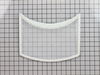
dryer filter screen broken
I didn't think it would fit as it looked bigger then the old one, I called the service department and they were very helpful. They made note of the fact that I had called with questions in case I had to call again, but it worked, and no one laughed at me. It was very nice of them. Thank you for all the help
Parts Used:
-
suzanne from Ottawa, IL
-
Difficulty Level:Really Easy
-
Total Repair Time:Less than 15 mins
3 of 4 people
found this instruction helpful.
Was this instruction helpful to you?
Thank you for voting!
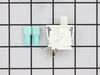
Button to start dryer
Per instructions I printed off online: took off door, then the front panel. Pulled out the old switch/button, connected the new switch/button, made sure the new button was working; put the panel back on then the door and DONE!
Parts Used:
-
Loretta E. from Miamisburg, OH
-
Difficulty Level:Easy
-
Total Repair Time:Less than 15 mins
-
Tools:Screw drivers
4 of 7 people
found this instruction helpful.
Was this instruction helpful to you?
Thank you for voting!
Replacing the heating unit
I removed the front 2 screws witha phillips shorty due to there proximity to the floor. I removed the heater plate the wiring and the heating element in about 10 minutes, the only issue I had was sue to the fact that the heater is 2 pieces and not totally cylindrical it was kind of a pain to get it back into the hole on the back side, I ended up having to form it better into a circle so that I could get it in. After that the rest putting it back together was no big deal. The unit now works great.
Parts Used:

-
James from Franklin, TN
-
Difficulty Level:Easy
-
Total Repair Time:15 - 30 mins
-
Tools:Nutdriver, Pliers
3 of 4 people
found this instruction helpful.
Was this instruction helpful to you?
Thank you for voting!
Squealling clothes dryer.
Undid two screws in lower front of dryer and popped off front. Removed screws holding lint screen duct and brackets supporting tumbler and removed duct and tumbler quite easily. Pulled, cleaned and oiled rear rollers, replaced front glides, and thoroughly cleaned exhaust duct of lint. Put new belt into position on the roller before sliding tumbler back in, then pulled belt over tumbler as it went in. Be careful to follow belt path directions correctly.
Key to this repair was obtaining the parts so easily from Parts Select.com. Ordered at 2pm and had them 2pm the following day. Unbelievable! These machines are relatively simple to keep running when the parts are available so easily. Thanks for great service.
Key to this repair was obtaining the parts so easily from Parts Select.com. Ordered at 2pm and had them 2pm the following day. Unbelievable! These machines are relatively simple to keep running when the parts are available so easily. Thanks for great service.
Parts Used:
-
Stephen from Port Jefferson, NY
-
Difficulty Level:Easy
-
Total Repair Time:1- 2 hours
-
Tools:Screw drivers, Socket set, Wrench set
3 of 4 people
found this instruction helpful.
Was this instruction helpful to you?
Thank you for voting!
electric dryer had no heat
I removed the cover from the control panel, took out the schematic, removed the rear cover by the motor, followed the schematic, powered the heater by taking the blue hot leg wire off the right side of the switch and touching it to the black lead for the heater on the left side, and I could hear the heater power on. Since bypassing the motor start switch powered the heater, I ordered the part. When it came, I installed it in about 5 minutes and the dryer worked perfectly.
Parts Used:

-
David from Lower Burrell, PA
-
Difficulty Level:A Bit Difficult
-
Total Repair Time:1- 2 hours
-
Tools:Nutdriver, Screw drivers
3 of 4 people
found this instruction helpful.
Was this instruction helpful to you?
Thank you for voting!
dryer would keep running and never dry close. No heat.
Unplugged the dryer, Very important, there is voltage on on of the wires to the heater.
I first removed the 2 screws on the lower part of the front cover and rotated this out of the way, no need to disconnect any wires. removed 2 small screws that hold the heater assy. cover plate and the one screw in the front bottom of the heater assy. I then removed the one screw at the top back of the heater. this completely frees the heater assy.
I then removed the push on wire from the thermistor and the other wire from the lug and I transferred the thermistor to the new unit. Now it is time to reverse the process making sure the entire circumference of the heater assy goes into the hole in the back. This can be a little tricky if the new assy is out of round. Just work it in, it will fit. Very easy, only about 20 min from start to finish...
I first removed the 2 screws on the lower part of the front cover and rotated this out of the way, no need to disconnect any wires. removed 2 small screws that hold the heater assy. cover plate and the one screw in the front bottom of the heater assy. I then removed the one screw at the top back of the heater. this completely frees the heater assy.
I then removed the push on wire from the thermistor and the other wire from the lug and I transferred the thermistor to the new unit. Now it is time to reverse the process making sure the entire circumference of the heater assy goes into the hole in the back. This can be a little tricky if the new assy is out of round. Just work it in, it will fit. Very easy, only about 20 min from start to finish...
Parts Used:
-
Rodney from Lewisburg, WV
-
Difficulty Level:Easy
-
Total Repair Time:15 - 30 mins
-
Tools:Nutdriver, Screw drivers, Wrench (Adjustable)
2 of 2 people
found this instruction helpful.
Was this instruction helpful to you?
Thank you for voting!
Rattling noise and slow drying.
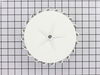
Turn off circuit breaker or unplug. Remove two screws 4 inches from bottom front panel of cabinet with stubby phillips head. Pull panel towards you about 30 degrees; then wiggle it down, to free two steel spring clips holding it to cabinet. Pull off red and yellow wire from door switch. Now set front panel aside. Blower assembly is facing you at lower left. Open the housing by removing six small screws from cover and one attached to dryer base. Remove spring clip from end of shaft. (A circlip pliers helps to prevent it from springing off somewhere.). Squeeze spring retainer surrounding blower wheel shaft with regular pliers, and wiggle the blower off. Replace in reverse order. Be sure insulation around blower wheel housing seats properly into front panel. This keeps the hot air flowing up past the lint trap.
Easy job, about half hour. Mine took longer, because I had removed the belt and drum, thinking the noise came from bad drum support rollers. It was just the plastic blower wheel shaft seat, which had worn itself round. Cost $20 (including shipping) and my 29-year old Maytag is as good as new--at least for now.
Easy job, about half hour. Mine took longer, because I had removed the belt and drum, thinking the noise came from bad drum support rollers. It was just the plastic blower wheel shaft seat, which had worn itself round. Cost $20 (including shipping) and my 29-year old Maytag is as good as new--at least for now.
Parts Used:
-
Laurence from Leesburg, VA
-
Difficulty Level:Easy
-
Total Repair Time:15 - 30 mins
-
Tools:Pliers, Screw drivers, Socket set
2 of 2 people
found this instruction helpful.
Was this instruction helpful to you?
Thank you for voting!
Rumbling when dryer was running and also for about 5 seconds after dryer stopped
Removed the two lower screws holding front of dryer assembly in place and "unhinged" it and stood it up on floor. Then I unclipped the two wire leads on inside of dryer door assembly and moved assembly completely out of work area. Next I removed the four screws holding the tumbler frame in place and removed that frame from the work area. Now you can access the blower wheel "frame" and remove 5 or 6 hex screws to get that off and out of your way. You DO NOT have to remove the dryer drum and/or drum belt to complete this repair, so save yourself some work and leave it in place!! Once the blower wheel frame is off, use pliers and a flatheaded screwdriver to get the small outer retaining clip off, and then just pliers to get the wheel retaining ring off the wheel shaft. Put on the new blower wheel, use pliers to replace the aforementioned wheel retaining ring, and then the small outer retaining clip...VIOLA! You're finished! Dryer will run like new with a smooth purr instead of that dreaded rumbling sound.
Parts Used:
-
Stephen from Gibraltar, MI
-
Difficulty Level:Really Easy
-
Total Repair Time:15 - 30 mins
-
Tools:Pliers, Screw drivers, Socket set, Wrench set
2 of 2 people
found this instruction helpful.
Was this instruction helpful to you?
Thank you for voting!
Dryer making strange thumping noise
Removed back panel of machine which exposed badly worn idler pulley. Have had problem before on another dryer so I was sure what problem was before I started. Removed snap washer and cloth washer and then bad pulley.(It was very worn and wobbly).Cleaned shaft with small piece of emery paper and put two drops of oil on shaft and replaced old pulley with new one.Put back washer and snap washer.Drive belt had slipped away from its proper position so I had to remove the front panel of the dryer to place the belt back and realign it on the drum and around the new pulley and the motor drive shaft. Not really that difficult.....Machine now runs like it's brand new.....
Parts Used:
-
William from New Bern, NC
-
Difficulty Level:Easy
-
Total Repair Time:15 - 30 mins
-
Tools:Pliers, Screw drivers
3 of 5 people
found this instruction helpful.
Was this instruction helpful to you?
Thank you for voting!
Old lint filter was worn out
No tools required, just insert the new lint filter in place of the old one. My dryer is about 20 years old. I think I was lucky to even be able to find a replacement lint filter.
Parts Used:
-
Ellen from Sharon, MA
-
Difficulty Level:Really Easy
-
Total Repair Time:Less than 15 mins
2 of 2 people
found this instruction helpful.
Was this instruction helpful to you?
Thank you for voting!
The door latch had broken, and it was time for a new lint filter.
The directions for the door latch kit told you to take the front of the washer apart to remove the old latch. But in my case the latch was broken in such a way that was not necessary. The new part just popped into place! No more fridge magnets holding the door closed!!!
And the new lint filter is great, the old one was so gunked up with old lint it was becoming difficult to clean.
I don't really know how old my dryer is, I purchased it used about 3 years ago.
And the new lint filter is great, the old one was so gunked up with old lint it was becoming difficult to clean.
I don't really know how old my dryer is, I purchased it used about 3 years ago.
Parts Used:
-
Joanna from Mantua, OH
-
Difficulty Level:Really Easy
-
Total Repair Time:Less than 15 mins
-
Tools:Screw drivers
2 of 2 people
found this instruction helpful.
Was this instruction helpful to you?
Thank you for voting!