













GSW9559LW0 Whirlpool Washer - Instructions
Keep searches simple. Use keywords, e.g. "leaking", "pump", "broken" or "fit".
No movement from Basket & agitator
The job looked intimidating but turned out to be very easy.
First take off the water pump by removing the two clips that hold it in place. Place a shallow pan under the pump to catch the water that is in the pump and hoses. Open the hose clamps with a pair of pliers or channel locks (better) and slide the hoses off of the water pump.
The motor comes off next. Unplug the electrical connector from the motor and two wires from the capacitor. Remove the two screws holding the clamps in place and then pop off the two clamps. You will need to hold up the motor with one hand while you remove the clamps or it will fall to the floor once the clamps are removed.
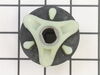
One piece of the coupling assemble will be attached to the motor and the other will be attached to the gearcase drive shaft. If you want to clean up the mess created by the shredded rubber center piece of the coupling assembly you will have to take off the motor mounting plate. It is held on by two bolts and removing it makes installing the coupling easier but probably not necessary.
Push the back half of the coupling on to the gearcase drive shaft until the shaft is flush with the face of the coupling. Install the new rubber center piece on to the coupling then re-install the motor mounting plate. Install the other half of the coupling on to the motor shaft and lift the motor up to the coupling. You have to rotate the motor shaft by spinning the fan blades until the coupling lines up so you can slide it into the other half of the coupling. Then just reattach the motor, connectors and water pump in the reverse order of disassembly.
First take off the water pump by removing the two clips that hold it in place. Place a shallow pan under the pump to catch the water that is in the pump and hoses. Open the hose clamps with a pair of pliers or channel locks (better) and slide the hoses off of the water pump.
The motor comes off next. Unplug the electrical connector from the motor and two wires from the capacitor. Remove the two screws holding the clamps in place and then pop off the two clamps. You will need to hold up the motor with one hand while you remove the clamps or it will fall to the floor once the clamps are removed.
One piece of the coupling assemble will be attached to the motor and the other will be attached to the gearcase drive shaft. If you want to clean up the mess created by the shredded rubber center piece of the coupling assembly you will have to take off the motor mounting plate. It is held on by two bolts and removing it makes installing the coupling easier but probably not necessary.
Push the back half of the coupling on to the gearcase drive shaft until the shaft is flush with the face of the coupling. Install the new rubber center piece on to the coupling then re-install the motor mounting plate. Install the other half of the coupling on to the motor shaft and lift the motor up to the coupling. You have to rotate the motor shaft by spinning the fan blades until the coupling lines up so you can slide it into the other half of the coupling. Then just reattach the motor, connectors and water pump in the reverse order of disassembly.
Parts Used:
-
Jeff from Wayne, NJ
-
Difficulty Level:Easy
-
Total Repair Time:30 - 60 mins
-
Tools:Pliers, Screw drivers, Socket set
1121 of 1223 people
found this instruction helpful.
Was this instruction helpful to you?
Thank you for voting!
washer wouldn't agitate
First pry off the cap of the agitator. Then using a socket remove the bolt that holds the plastic cup in place. Remove this cup by prying it loose from the two tabs that hold it in place. Once this cup is removed you can get to the broken cogs.
Slip the new cogs into the underside of the cup, and slide the cup back down in the agitator housing using the slots on the side for a guide. (You may want to remove the entire agitator and assemble everything upside down, then flip it all back over to mount, so the cogs don't fall out).
Tighten the bolt, snap the cap back in place on top of the agitator and your'e done. Easy repair.
Slip the new cogs into the underside of the cup, and slide the cup back down in the agitator housing using the slots on the side for a guide. (You may want to remove the entire agitator and assemble everything upside down, then flip it all back over to mount, so the cogs don't fall out).
Tighten the bolt, snap the cap back in place on top of the agitator and your'e done. Easy repair.
Parts Used:

-
mike from Kent, WA
-
Difficulty Level:Easy
-
Total Repair Time:15 - 30 mins
-
Tools:Screw drivers, Socket set
952 of 1053 people
found this instruction helpful.
Was this instruction helpful to you?
Thank you for voting!
Upper portion of agitator, no longer pushing clothing down.
The instructions came with the repair kit, it was fairly simple and straight foward.
One bolt held the entire agitator unit in the washer, as well as held the upper and lower halves together. Once that nut was removed the two halves seperated and the plastic clutch pieces could easily be replaced wtih the new onces in the repair kit.
Very easy do-it-yourself repair! Took about 20 minutes because I was being cautious. Next time I could do it in 5 minutes.
One bolt held the entire agitator unit in the washer, as well as held the upper and lower halves together. Once that nut was removed the two halves seperated and the plastic clutch pieces could easily be replaced wtih the new onces in the repair kit.
Very easy do-it-yourself repair! Took about 20 minutes because I was being cautious. Next time I could do it in 5 minutes.
Parts Used:
-
Matt from Pawtucket, RI
-
Difficulty Level:Easy
-
Total Repair Time:15 - 30 mins
-
Tools:Pliers, Socket set
801 of 840 people
found this instruction helpful.
Was this instruction helpful to you?
Thank you for voting!
Washer not agitating
On top of the agitator is a flat cap that is held in place by the friction of an o-ring, there are no fasteners. I would imagine one could get under the lip with a small screwdriver or butter knife to pop it off but I chose simply using my fingernails so as to not disfigure the cap. Under the cap you will find the head of the only bolt that holds the assembly together it is a 7/16 head and because it is in a 4" deep well your will need a 6" extension for your ratchet. Once the bolt is out the top of the agitator, the assembly with the cogs removes by hand. Set the assembly upside down on the counter, slide the black plastic ring off, pull the cogs out with your fingertips, install the new cogs put a new black ring on and set the assembly back in the agitator. Reinstall bolt. As the bolt is down in a tube, you cannot set it in place with your fingers and it will fall out of the socket. To hold the bolt in the socket during positioning you can either put a gob of Vaseline on the bolt head to hold it in the socket or form a small piece of paper over the bolt head and set it into the socket, the friction of the paper will hold the bolt into the socket. Took me less then 10 minutes, good luck
Parts Used:
-
Craig from Polk City, FL
-
Difficulty Level:Really Easy
-
Total Repair Time:Less than 15 mins
-
Tools:Socket set
643 of 681 people
found this instruction helpful.
Was this instruction helpful to you?
Thank you for voting!
Water pump leaking when machine used.
The hardest part of this job was pulling the machine away from the wall so the hoses could be disconnected and the machine flipped onto it's back. Putting the machine on it's back does two things. It drains the water left in the bottom of the tub so it won't pour out onto the motor when the old pump is removed, and gives the necessary access to the pump. Once the machine is on it's back you remove the hose clamps with a pair of pliers and disconnect the hoses. The pump is secured to the motor with a pair of spring steel retaining clips which are easily popped off by hand. Once the clips are removed, the pump is in your hand. Put the new pump in place, replace the retaining clips and hoses, and you're done. This has to have been the easiest repair I've ever done. I wish cleaning gutters was this easy.
Parts Used:

-
Tom from Granby, MA
-
Difficulty Level:Really Easy
-
Total Repair Time:Less than 15 mins
-
Tools:Pliers
594 of 637 people
found this instruction helpful.
Was this instruction helpful to you?
Thank you for voting!
Would not agita.
It was a blessing that I ordered the kit, because I thought it only needed the rubber seal and the four dogs. But because the seal and dogs cost less than the shipping I decided to order the kit and its good I did because the nochage on the basket sleeve was broke off. The blessing is that the sleeve was in the kit, sp it took 5 sec to slip it on along with the rest of the kit, and after about 15 min my wife was back to work. Thanks for saving me time and money without this web site I would have bought another brand new washer, thanks. Lennis from NC.
Parts Used:

-
Lennis from Jacksonville, NC
-
Difficulty Level:Really Easy
-
Total Repair Time:15 - 30 mins
-
Tools:Socket set
547 of 558 people
found this instruction helpful.
Was this instruction helpful to you?
Thank you for voting!
Washer made a loud banging noise at end of spin cycle, leaked water and agitator seemed loose
After entering the model number of your appliance you will be taken to a page where all of the parts are displayed by sections. On that page about in the middle there is a heading called "Find Part By Symptom." I figured out from there which symptom the washer had and read what other people were saying and how they made the repairs. Basically I had three problem areas, Noise, Leaking and a problem with the agitator. I focused on the loud noise first and decided I needed to replace the clutch/brake assemblies. I found the clutch parts page and on that page there was a video on how to make this repair. This video is all you need to gain access to all moving parts located under the cabinet. Which ever part you are replacing, I recommend watching this video! After removing the console, back panel and cabinet then laying the machine on its back just as seen on the video, I had access to the water pump, motor, transmission and related clutch/brake parts. As it turned out I did not need the clutch/brake assembly but as a precaution and because the parts were cheap, I replaced the motor coupling, water pump and tub wear pads. I decided to replace the agitator assembly because of several worn parts associated with the dog ears/drive shaft ETC. I put the machine back upright and took off the top cap on the agitator, then there is an inner cap with seal that gives access to the 7/16" bolt you must remove to remove the agitator. However once the agitator was removed I noticed metal shavings and play in the shaft. I used a spanner wrench to remove the spanner nut. I removed the Plastic Tub Ring (has several clips around the outer tub), then removed the inner washer tub to replace the Drive Block. Replacing the Drive Block stopped the loud noise at the end of the spin cycle. Now just reverse the order to put the machine back together and your done. For my situation it was best to take the machine apart and decide which parts I needed before ordering to minimize errors. These machines are made very cheaply and are designed to brake at some point in time and it is very easy to determine which parts are worn because most are made of plastic. In this process I also noticed where my leaks (did I say Leaks) were coming from. There were two hose clamps installed improperly from the factory, so check all clamps, hoses ETC. and you should be good to go.
Parts Used:

-
Dexter from Milwaukie, OR
-
Difficulty Level:Easy
-
Total Repair Time:1- 2 hours
-
Tools:Nutdriver, Pliers, Screw drivers, Socket set
487 of 572 people
found this instruction helpful.
Was this instruction helpful to you?
Thank you for voting!
Washer tub slammed into washer body during spin cycle
If you load a washing machine unevenly, it will spin out of balance. But our washer seemed to make noise during the spin cycle regardless of how the load was distributed. I suspected that the suspension or balancing springs were getting tired, and ordered a replacement set.
First I disconnected the washer from the water and power supply, then I laid it on its back.
The tub rested on the back of the washer, making two of the three suspension springs relax, and they were pretty easy to pull out with pliers. After the first two were out, I had to support the tub with a couple 2x4s to relax the third suspension spring.
Installation was the reverse of removal - install the lower suspension spring, remove the 2x4s, then install the two other suspension springs.
The tub balancing spring was easy to replace, and probably wasn't the cause of the problem.
With $25 in parts and about 15 minutes, my washer spins much more quietly.
First I disconnected the washer from the water and power supply, then I laid it on its back.
The tub rested on the back of the washer, making two of the three suspension springs relax, and they were pretty easy to pull out with pliers. After the first two were out, I had to support the tub with a couple 2x4s to relax the third suspension spring.
Installation was the reverse of removal - install the lower suspension spring, remove the 2x4s, then install the two other suspension springs.
The tub balancing spring was easy to replace, and probably wasn't the cause of the problem.
With $25 in parts and about 15 minutes, my washer spins much more quietly.
Parts Used:

-
Brian from Seattle, WA
-
Difficulty Level:Easy
-
Total Repair Time:15 - 30 mins
-
Tools:Pliers, Screw drivers
377 of 415 people
found this instruction helpful.
Was this instruction helpful to you?
Thank you for voting!
top half of agitator did not move during wash cycle
pull off softner dispenser, pop off agitator cap by inserting straight screw driver into small slot, remove bolt inside agitator with socket wrench and long extension, pull agitator straight up off shaft, place agitator on floor, with feet holding bottom half pull top half apart from bottom half by pulling straight up, note direction of old cogs remove and replace with new, reassemble
Parts Used:
-
dennis from new stanton, PA
-
Difficulty Level:Really Easy
-
Total Repair Time:Less than 15 mins
-
Tools:Socket set
284 of 333 people
found this instruction helpful.
Was this instruction helpful to you?
Thank you for voting!
Broken Coupling
Very easy -
1. Removed hoses from the pump
2. Removed Wiring harness from the motor
3. Unscrewed saftey screws from both clamps which hold the motor against the motor bracket.
4. Using a screw driver I easily removed/pryed the clamps from the motor.
5. I then removed the broken plastic coupler from the motor shaft and installed the new one coupler.
6. I did the same thing on the clutch side.
7. I set the Rubber coupler in clutch side.
8. Put motor back on until couplers joined together.
9. Placed Brackets back on Motor (patience here).
10. screwed back saftey screws on clamps.
11. connected hoses back.
Thats it... 45 minutes at most .. Save me from having to buy a new easher. I was convinced I was going to have too until I peeked underneatch the washer and saw the rubber coupler on the ground...
1. Removed hoses from the pump
2. Removed Wiring harness from the motor
3. Unscrewed saftey screws from both clamps which hold the motor against the motor bracket.
4. Using a screw driver I easily removed/pryed the clamps from the motor.
5. I then removed the broken plastic coupler from the motor shaft and installed the new one coupler.
6. I did the same thing on the clutch side.
7. I set the Rubber coupler in clutch side.
8. Put motor back on until couplers joined together.
9. Placed Brackets back on Motor (patience here).
10. screwed back saftey screws on clamps.
11. connected hoses back.
Thats it... 45 minutes at most .. Save me from having to buy a new easher. I was convinced I was going to have too until I peeked underneatch the washer and saw the rubber coupler on the ground...
Parts Used:
-
Hugo from Frisco, TX
-
Difficulty Level:Really Easy
-
Total Repair Time:30 - 60 mins
-
Tools:Pliers, Screw drivers, Socket set
220 of 233 people
found this instruction helpful.
Was this instruction helpful to you?
Thank you for voting!
Machine rocking about like crazy on spin
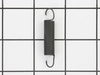
Took some online research to figure out how to get the cabinet off. Once inside I fitted the wear pads which were a breeze to remove using a knife blade to pry them up and removing them using the screwdriver. The springs were replaced one by one using strong fingers. The machine went through the spin cycle without any rocking or self-destruct noises.
Parts Used:
-
john from middle river, MD
-
Difficulty Level:A Bit Difficult
-
Total Repair Time:15 - 30 mins
-
Tools:Screw drivers
156 of 179 people
found this instruction helpful.
Was this instruction helpful to you?
Thank you for voting!
Gearcase oil leak
To replace gearcase seals, first disconnect the power cord. Turn off water supply and remove water inlet hoses at washer (safety first). You may want to have a bucket available to catch water that will drain out of the hot/cold and drain hoses. Next, remove top agitator cap, seal and (7/16”) bolt (see diagrams on PartSelect). This will allow the top agitator and cogs to be removed. Grab the bottom agitator and rock it back and forth until it can be removed.
Suggestion: now is a good time to remove and clean the old soap and junk from drain holes in the top agitator and any junk that may be under the lower agitator.
Lay the washer on its right side. You will now have access to the motor, pump, hoses clutch and gearcase. Place a couple of 2X4X(5?) blocks under the tub to support it. Remove the electrical connector from the motor (this is clipped into place) and the two wires that go to the capacitor on the motor.(TIP: don’t put your finger across these terminals, SHOCK HAZARD) Remove the hose clamps and hoses, the two screws (5/16”) on each strap that holds the motor in place, you may have to use a screw driver to pop the straps off the motor. Remove the motor and pump by pushing the tub to the left and move the motor and pump to the right to clear the coupling. If you have not replaced the drive coupling, now would be a good time to order and replace. With the motor out of the way, remove the three (½”) bolts holding the gearcase to the chassis and pull to remove gearcase and shaft. If you are only replacing the drive shaft seal, you do not need to open the gearcase case. Stand the gearcase so the input shaft is facing up, or what fluid is left in the gearcase will come out. One question I see a lot is how do you remove the seal. One, buy a real expensive tool that you will only use once, or take a screwdriver with about a ¼” blade, stick it between the shaft and the seal, gently leverage the seal out while going around the shaft. After the seal is removed, oil can be added thru the seal hole. Understand that different oils are designed for different applications. That said, I used 90 weight gear oil from the local auto parts store, you can add it thru the seal hole. To install the seal, lightly tape it into the seal cavity, then use a socket that is close to the diameter of the seal and gently drive it in.
If you have to replace the top case seal, it will require you to take the gearcase apart. The advantage of this is, if you have an older washer, you can clean out the contaminated oil and sludge and check for wear on the parts, and replace as needed from PartSelect. Here’s a suggestion: if you have a digital camera, take pictures, this will really help when you put things back together.
Now look at the diagram that is provide by PartSelect, remove the clutch, remove the bolts on the top cover, try to keep it level or you may have a mess on your hands. Lift the cover up over the shaft. I found the top case seal very stubborn to remove. Using a small screwdriver, get between the case and the seal and gently pry it out. Replace the seal, again, by using a socket and gently taping into place. There is also a seal at the top of the drive gear that you may want to replace to keep the oil from going up into the clutch. Now its time to clean all of the years of gunk out of the case and gears. When you are ready, fill the bottom half of the gearcase with oil, about half a quart. To seal the case, I used a ultra blue silicone gasket sealer in a tube from my local auto parts store or sealant can be purchased from PartSelect. I used it on the top half of the gearcase case. Slide the top case over the shaft and evenly tighten the bolts. Reinstall the clutch to the gearcase shaft and install into the washer. I found that the motor bearings needed to be lubed, so I used white lithium grease in an aerosol can. Reinstall motor and don’t forget to put the electrical plug back into the motor and the wires that go to the capacitor and pump h
Suggestion: now is a good time to remove and clean the old soap and junk from drain holes in the top agitator and any junk that may be under the lower agitator.
Lay the washer on its right side. You will now have access to the motor, pump, hoses clutch and gearcase. Place a couple of 2X4X(5?) blocks under the tub to support it. Remove the electrical connector from the motor (this is clipped into place) and the two wires that go to the capacitor on the motor.(TIP: don’t put your finger across these terminals, SHOCK HAZARD) Remove the hose clamps and hoses, the two screws (5/16”) on each strap that holds the motor in place, you may have to use a screw driver to pop the straps off the motor. Remove the motor and pump by pushing the tub to the left and move the motor and pump to the right to clear the coupling. If you have not replaced the drive coupling, now would be a good time to order and replace. With the motor out of the way, remove the three (½”) bolts holding the gearcase to the chassis and pull to remove gearcase and shaft. If you are only replacing the drive shaft seal, you do not need to open the gearcase case. Stand the gearcase so the input shaft is facing up, or what fluid is left in the gearcase will come out. One question I see a lot is how do you remove the seal. One, buy a real expensive tool that you will only use once, or take a screwdriver with about a ¼” blade, stick it between the shaft and the seal, gently leverage the seal out while going around the shaft. After the seal is removed, oil can be added thru the seal hole. Understand that different oils are designed for different applications. That said, I used 90 weight gear oil from the local auto parts store, you can add it thru the seal hole. To install the seal, lightly tape it into the seal cavity, then use a socket that is close to the diameter of the seal and gently drive it in.
If you have to replace the top case seal, it will require you to take the gearcase apart. The advantage of this is, if you have an older washer, you can clean out the contaminated oil and sludge and check for wear on the parts, and replace as needed from PartSelect. Here’s a suggestion: if you have a digital camera, take pictures, this will really help when you put things back together.
Now look at the diagram that is provide by PartSelect, remove the clutch, remove the bolts on the top cover, try to keep it level or you may have a mess on your hands. Lift the cover up over the shaft. I found the top case seal very stubborn to remove. Using a small screwdriver, get between the case and the seal and gently pry it out. Replace the seal, again, by using a socket and gently taping into place. There is also a seal at the top of the drive gear that you may want to replace to keep the oil from going up into the clutch. Now its time to clean all of the years of gunk out of the case and gears. When you are ready, fill the bottom half of the gearcase with oil, about half a quart. To seal the case, I used a ultra blue silicone gasket sealer in a tube from my local auto parts store or sealant can be purchased from PartSelect. I used it on the top half of the gearcase case. Slide the top case over the shaft and evenly tighten the bolts. Reinstall the clutch to the gearcase shaft and install into the washer. I found that the motor bearings needed to be lubed, so I used white lithium grease in an aerosol can. Reinstall motor and don’t forget to put the electrical plug back into the motor and the wires that go to the capacitor and pump h
Parts Used:


-
Greg from Hemet, CA
-
Difficulty Level:Easy
-
Total Repair Time:1- 2 hours
-
Tools:Pliers, Screw drivers, Socket set
149 of 165 people
found this instruction helpful.
Was this instruction helpful to you?
Thank you for voting!
Water leaking on floor
I removed the two spring clips that hold the pump and two wire spring clips that hold the hoses. Then I had to pry the pump off the shaft (it was frozen with rust). Then I cleaned the shaft with sandpaper and installed the new pump (which, by the way, came the next day, thank you very much) which made my wife very happy, and I thank you for that , too.
Parts Used:
-
Stanley from Warwick, RI
-
Difficulty Level:Really Easy
-
Total Repair Time:15 - 30 mins
-
Tools:Pliers, Screw drivers
107 of 117 people
found this instruction helpful.
Was this instruction helpful to you?
Thank you for voting!
washing machine not agitating
wife complained about washing machine making bad noise and she said it was not spinning. So being the good husband that I am, after she yelled at me 8-10 times I stopped what I was doing and sure enough she was right , the washing machine wasn't working correctly. Started testing the agitator by spinning it back and forth. it would only catch on the dogs every once in a while. the washer is only 3 years old, thought maybe one of the kids toys or lint was interferring with the dogs, pulled this dispenser off the top and then another plastic cap with a black o-ring off and found the agitator and dogs gears worn down and chipped. think it was a 3/8" socket I used, but you need a long extension to get to it. Part was labelled well and it was very easy to order. problem I had was when the new parts came in I had ordered the agitator repair kit ($16) and the thrust spacer ($5). Well it's not that $5 is alot of money but the spacer I had was worn and I was in there anyway so why not. The agitator repair kit comes with a thrust spacer but it was not shown on the otherwise very detailed pictures. So it would cost more for me to pay the shipping to return the unused part than not. the agitator repair kit description reads "This nine piece agitator repair kit comes with a two and a half inch cam, a thrust spacer, and four dogs (agitator dogs) but the thrust spacer is not shown. You could say I was 30% more into parts cost and make it sound worse. Had I been an actual repair man instead of a home do it yourself kind of person, probably would have known to call and speak with a rep vice going at it online solo. anyway, 5 minutes and the washer was back up, wife was happy, and I was able to continue with what i was originally doing.
Parts Used:
-
clark from paris, TN
-
Difficulty Level:Really Easy
-
Total Repair Time:Less than 15 mins
-
Tools:Nutdriver, Screw drivers
100 of 107 people
found this instruction helpful.
Was this instruction helpful to you?
Thank you for voting!
Tub wouldn't turn, but motor would allow it to drain.
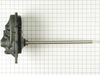
I took the two screws for the control panel out and tilted it up and back. Then remove the two metal clips which held the outer panel to the back panel. After disconnecting the power and water I tipped the washer on its back. I had to remove two clips to take the water pump off of the motor, then removed the two screws and clips which held in the motor. After removing the motor, I found the coupler was bad. To remove the gearcase, I took out the softener dispenser and removed one bolt to take out the agitator. Under the agitator was a clip. Three bolts held the gearcase to the frame. After removing them, the gearcase pulled straight out the bottom. Replacement was just a reverse process, with the addition of a light coat of grease to the gearcase shaft.
Parts Used:
-
Troy from Storm Lake, IA
-
Difficulty Level:Easy
-
Total Repair Time:30 - 60 mins
-
Tools:Nutdriver, Pliers, Screw drivers, Socket set
110 of 138 people
found this instruction helpful.
Was this instruction helpful to you?
Thank you for voting!