













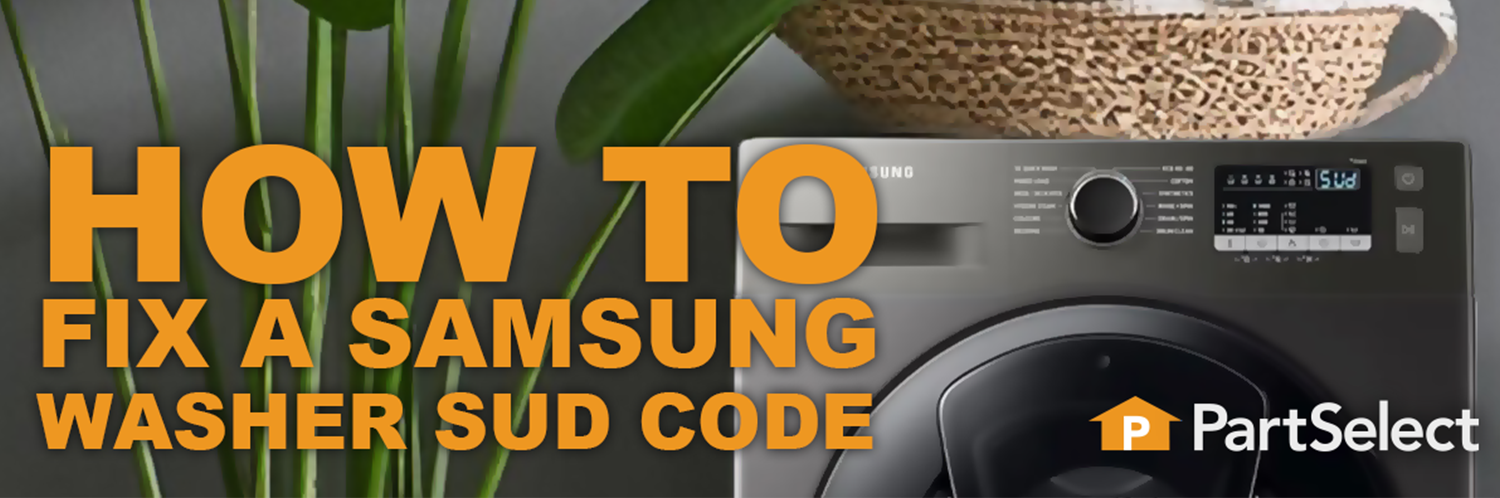
How to Fix a Samsung Washer SUD Error Code
We associate the thought of bubbles with cleanliness, but when it comes to soap suds in your washing machine, less is more. Using too much detergent in your washer can actually do more harm than good, leaving you with residue buildup, musty smells, and frustrating error codes. If your Samsung washer is displaying any variation of the word suds (it might look like SUD, 5UD, SUd, 5Ud, Sd, 5d, SUdS, or 5Ud5) you likely used too much detergent, or the wrong type for your machine. In this article, we’ll explain why this error code happens, how to clear it from your washer, and how to prevent it from happening again.
What Does the SUD Error Code Mean on a Samsung Washer?
Depending on your model of Samsung washer, you may see one of many variations for this error code. An uppercase “S” and the number “5 “ will look similar on a digital display, and the letter “d” may be in upper or lower case. So you may see any of the following codes: SUD, 5UD, SUd, 5Ud, Sd, 5d, SUdS, or 5Ud5. These all mean the same thing, which is an excessive suds error. When this occurs, your washer will stop to let the suds dissipate before it continues through the wash cycle.
How to Clear a SUD Error Code on a Samsung Washer
Clearing the physical suds and foam from your washer and clearing the SUD error code from your display will require two different processes.
How to Clear the SUD Error Code:
To clear the code from your washer display, you’ll want to perform a power cycle. This simply means turning the washer off, and back on again. Unplug your washer, then wait a few minutes for any residual power to discharge from the machine. When you plug the washer back in again, the SUD error code should no longer be displayed.
How to Clear the Soap Suds:
- To get the excess suds out of your washer, you’ll first want to remove any laundry from the machine.
- Run a rinse cycle, but do not add any more detergent. You can, however, add vinegar to help break down the foam.
- Repeat rinse cycles as needed, until all the suds have rinsed clear of the machine.
Common Causes of a SUD Error Code on a Samsung Washer
The most likely reason your washer will get a SUD error code is due to incorrect detergent use, but there are a couple of parts that may be to blame. Here are the most common causes for the error code and the way to fix or prevent the issues from happening again.
Using Too Much Detergent
A front-load, high efficiency washer uses much less water than a top-load machine does. If you have switched from a top-load to front-load washer, but haven’t updated your detergent habits, you are likely using too much. Since the front-load uses less water, too much detergent will result in excess suds giving you the SUD error code. While we may think that more soap means cleaner laundry, the opposite is actually true. Using too much detergent will actually leave you with a buildup of residue on both your machine and your clothing, as the high efficiency machine isn’t using enough water to rinse out all the extra detergent. Read your owner’s manual and the label on your detergent bottle and only pour in the appropriate quantity for the size of load you’re washing.
Using The Wrong Kind of Detergent
Your front-load Samsung washer uses detergent that’s made for high efficiency machines, as it creates less suds and is designed to clean thoroughly with less water. If you are still using regular detergent, it’s going to create too much foam in your washer. Look for the “HE” or high efficiency label on the detergent bottle to ensure it’s the right type for your washer.
Drain Pump Filter is Clogged
A front-load Samsung washer will have a filter for the drain pump, which helps prevent lint and other debris from damaging the pump. Filters to be cleaned regularly to work efficiently, so if you’ve never done this before, it is likely clogged. A clogged filter can prevent your washer from draining properly, which may result in seeing the SUD error code.
How to Inspect the Drain Pump Filter
- Start by disconnecting the power to your washer and then remove the filter cover found at the bottom of the front panel.
- Place a towel down beneath the cover, along with a container to catch any water that might be left in the machine. Pull out the drain tube and remove the stopper. Let any water drain from the machine into the container. Place the stopper and drain tube back into the housing.
- Remove the filter by twisting it counterclockwise and pulling it out. Inspect the filter for any signs of damage. If the filter is too damaged, it will need to be replaced with a new drain pump filter.
- If the filter is clogged but not damaged, it can be cleaned and reused. Clean it off by running it under the sink and using a soft bristle brush, like a toothbrush, to remove any debris.
- Reinstall the filter by placing it back into the slot and turning clockwise to lock it in place.
How to Replace a Drain Pump Filter on a Samsung Washer
Replacing a damaged drain pump filter is as simple as twisting out and discarding the old filter and inserting a new one in its place. We don’t recommend running the machine without the filter while you wait for the new one to arrive, as this filter protects the drain pump from debris. Replacing a damaged drain pump is a much more costly and inconvenient repair!
Pressure Switch is Faulty
In a washer, the pressure switch is used to communicate with the control board, letting it know when to add or remove (drain) water from the machine. If you've frequently been using too much detergent in your washer, the sensor may be gummed up with residue and not communicating properly. If you’ve resolved the above possible causes, but are still getting a SUD error code, cleaning or replacing the switch may help.
How to Inspect the Pressure Switch
- Start by disconnecting power to your washer, then locate the pressure switch (you can reference your user manual for the exact location in your Samsung washer). This may require you to remove some panels of your washer to access.
- Next, remove the tubes and wire harness from the pressure switch, so that it can be tested with a multimeter. You may want to take a photo before disconnecting to ensure you replace the part correctly.
- You will be testing the switch for continuity, and the multimeter should either make an audible “beep” or read 0 ohms to indicate the switch is good.
- If the part has failed and will need to be replaced with a new pressure switch.
How to Replace a Pressure Switch on a Samsung Washer
- Refer to the photo you took during the inspection of the switch, and connect the new pressure switch to the wire harness.
- Clip the switch back into place on the machine and connect the air pressure tubes to the switch.
- Reassemble any panels that were removed to access the pressure switch.
- Reconnect the power supply to the washer and you’ll be all done.
How to Prevent SUD Error Code on a Samsung Washer
The SUD error code typically doesn’t require servicing or repairing your washer, but if it happens frequently, it will eventually cause damage that may be costly to fix. By following the manufacturer's guidelines for proper detergent use, you can prevent the SUD error code from returning in the future and reduce the amount of residue that builds up in your machine. This will help to keep your washer from becoming musty and moldy, make it easier to perform routine cleaning, and ensures that your laundry is fresh and clean after every load. When error codes happen or parts fail, you can rely on PartSelect to have the repair guides and genuine OEM Samsung parts you need to get your washer back up and running again!


Discover how to reset your Samsung washer and resolve problems like recurri...

Your washer will display a 5d/Sd/Sud code when there's an excess of soap or...
Spring is here, and we are cleaning up all our appliances! A washer is supp...