













SE9900 Maytag Washer Dryer Combo - Instructions
Keep searches simple. Use keywords, e.g. "leaking", "pump", "broken" or "fit".
Motor needed replacing (even though it was only 8 years old!)
In addition to the other helpful suggestions:
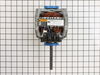
The key to replacing the motor is to remove the motor while it is still clipped in to the bracket (after removing the blower assembly, of course.) Don't remove the tumbler and belt thinking it will give you clear access to the rear clip, because it won't.
Removing the bracket is not complicated. There are two screws that are fairly easy to access and keep the bracket in place (refer to parts diagram for location); when the screws are removed, out comes the motor assembly (after disconnecting the wires, of course.) This is the only way to get access to the two clips that hold the motor to the bracket.
As for those pesky clips, I was able to use a flat screwdriver in one hand and vice grips in the other to pry off the clips. After a few tries, working on one end of the clip, I was able to apply quite a lot of downward pressure without braking the end of the clip. If anyone has another suggestion....
Putting the clips back on was much easier. First, remount the motor to the bracket, making sure to rotate the motor to the 2 o'clock position so you can re-attach the ground wire (or else you'll have to unclip the motor again, like I did!) Then re-attach the clip on one side. With the clip aligned properly, bear down with a flat screw driver on the other end of the clip. A swift knock with a hammer on the top of the screwdriver will easily re-attach the clip. Repeat with the second clip.
If you proceed carefully and patiently, this job can be accomplished without specialized tools or expertise.
The key to replacing the motor is to remove the motor while it is still clipped in to the bracket (after removing the blower assembly, of course.) Don't remove the tumbler and belt thinking it will give you clear access to the rear clip, because it won't.
Removing the bracket is not complicated. There are two screws that are fairly easy to access and keep the bracket in place (refer to parts diagram for location); when the screws are removed, out comes the motor assembly (after disconnecting the wires, of course.) This is the only way to get access to the two clips that hold the motor to the bracket.
As for those pesky clips, I was able to use a flat screwdriver in one hand and vice grips in the other to pry off the clips. After a few tries, working on one end of the clip, I was able to apply quite a lot of downward pressure without braking the end of the clip. If anyone has another suggestion....
Putting the clips back on was much easier. First, remount the motor to the bracket, making sure to rotate the motor to the 2 o'clock position so you can re-attach the ground wire (or else you'll have to unclip the motor again, like I did!) Then re-attach the clip on one side. With the clip aligned properly, bear down with a flat screw driver on the other end of the clip. A swift knock with a hammer on the top of the screwdriver will easily re-attach the clip. Repeat with the second clip.
If you proceed carefully and patiently, this job can be accomplished without specialized tools or expertise.
Parts Used:
-
ian from new york, NY
-
Difficulty Level:A Bit Difficult
-
Total Repair Time:More than 2 hours
-
Tools:Pliers, Screw drivers, Socket set
9 of 11 people
found this instruction helpful.
Was this instruction helpful to you?
Thank you for voting!
Noise in dryer
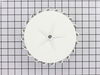
How to disassemble the dryer has been covered in past repair stories. I will add a make shift repair that will get you up and running until you get your replacement blower wheel. We repair gas dryers for a living and this repair works and some machines are still running for two years. Remove the blower wheel. Cut a piece of plumber strap of similar sized metal to about 3/16" x 1/2". Hold it with vise grips and then heat it with a torch. When it is hot melt it into the hole in the blower wheel. This will give you a flat spot in the shaft hole that will keep the blower from spinning on the motor shaft. Some trial and error fitting is involved. If you do it carefully the blower wheel will fit very nicely and will not vibrate or make noise.
Parts Used:
-
Joseph from Hampton bays, NY
-
Difficulty Level:Easy
-
Total Repair Time:30 - 60 mins
-
Tools:Nutdriver, Pliers, Screw drivers, Socket set, Wrench set
8 of 8 people
found this instruction helpful.
Was this instruction helpful to you?
Thank you for voting!
Floor floded when washer started.
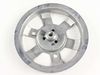
Thirty year old Maytag washer. Remove two screws at bottom of front panel with Philips screw driver. Hinge panel up to disconnect front panel from top of machine. Tilt washer back against wall to gain access to pulley at underside of washer. Then remove Philips head screw from bottom of center shaft. Remove bevel washer with screw. Remove stop block from end of center shaft and wind the pulley off center shaft. Clean center shaft of any debris and lightly coat with grease. Install belt on new pulley and motor, wind new pulley on center shaft. Replace stop block, washer, screw, and front cover.
Parts Used:
-
Keith from Big Sur, CA
-
Difficulty Level:Easy
-
Total Repair Time:15 - 30 mins
-
Tools:Screw drivers
9 of 12 people
found this instruction helpful.
Was this instruction helpful to you?
Thank you for voting!
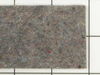
My Blower wheel had broken at the center where it attached to the axle. It made a rattling sound and no air was being blown into the drum to dry the clothes. There was also a loud skidding sound that turned out to be due to a worn felt seal.
I took off the front of the dryer with the screws at the bottom. I removed what wires would easily come off and took a picture to remember where they go. Then I took of the front panel and had to take off the cover for the blower wheel. Some screws were difficult to reach because they were in a very tight space. I used a combination of needle nose pliers and a hex screw bit to loose hared to reach hex screws.
For the felt seal on the front panel, I used a flathead screwdriver to remove the old seal and replace the new seal. The most tricky thing was making sure the seal was laying right along the drum when putting the front panel back on. Once back together, the skidding sound disappeared.
Replacing the blower wheel is pretty easy once I got past the difficult screws holding the cover down. I used snap ring pliers to remove the snap ring then put the new blower wheel on and put it all back together. I found that the tip diameter of the snap ring pliers needed to be less than 0.05'' to fit into the snap ring holes of both the snap rings for the roller wheels and the blower wheel.
For the felt seal on the front panel, I used a flathead screwdriver to remove the old seal and replace the new seal. The most tricky thing was making sure the seal was laying right along the drum when putting the front panel back on. Once back together, the skidding sound disappeared.
Replacing the blower wheel is pretty easy once I got past the difficult screws holding the cover down. I used snap ring pliers to remove the snap ring then put the new blower wheel on and put it all back together. I found that the tip diameter of the snap ring pliers needed to be less than 0.05'' to fit into the snap ring holes of both the snap rings for the roller wheels and the blower wheel.
Parts Used:
-
Spencer from COLUMBIA, SC
-
Difficulty Level:Easy
-
Total Repair Time:30 - 60 mins
-
Tools:Pliers, Screw drivers, Socket set
7 of 7 people
found this instruction helpful.
Was this instruction helpful to you?
Thank you for voting!
Small puddle of water on floor after water drains out.
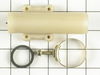
I first removed the 2 screws at the bottom of the front panel. The front panel then pulls up and off. I then removed 2 hex head screws with a small socket, which kept the top attached to the two side panels. I then lifted the top and kept it propped up. I removed the internal drain hose from the siphon break on the inside of the back panel. I removed the 4 screws on the back panel that keeps the siphon break in place. I removed it and screwed in the new one. I re-attached the drain hose to the new part. I partially filled the tub and watched it drain with the lid still upright. No more leaks. The rubber seal in the siphon break had rotted.
Parts Used:
-
James from Lakewood, CA
-
Difficulty Level:Easy
-
Total Repair Time:30 - 60 mins
-
Tools:Screw drivers, Socket set
9 of 13 people
found this instruction helpful.
Was this instruction helpful to you?
Thank you for voting!
Washing machine was leaking water from the bottom.
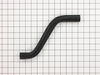
Hardest part was figuring out how to access the internals (not through the back or the top) It turns out there are two screws on the lower front of the machine, not easily found, which when removed allow the front panel of the machine to swing to front and out of the way allowing full access to the internals from the front. The water was comming from one of two water pump hoses. The hose was held in place with 1" hose clamps and was easily changed out.
Parts Used:
-
Pedro from Portland, TX
-
Difficulty Level:A Bit Difficult
-
Total Repair Time:30 - 60 mins
-
Tools:Pliers, Screw drivers
7 of 7 people
found this instruction helpful.
Was this instruction helpful to you?
Thank you for voting!
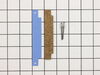
Noisy and thumping drum
I set the dryer on its back to make alignment of the front drum guide cover easy to reinstall in the seal after completion. I removed the 2 screws at the bottom front then removed the white and yellow wires to the interlock switch and set the front cover aside. I then removed the 4 nut screws holding the front drum cover and removed. On the back side there are two teflon and cork "bearings". I had ordered two even though only one was worn down to metal. On each one I then removed the two rivets by drilling them out. Then I placed the corks into the bearing slots with a little glue then inserted the teflon into the slots and riveted them into place with the rivets that came with the kit. I replaced the drum cover, connected the switch and screwed the dryer front cover back on. I set the dryer back up. Connected the vent hose and turned the dryer on. Beautiful sweet smooth and quiet operation. I had replaced the front and back drum seals a few months ago and saw the teflon was missing but did not have the kits at that time. With a complete job I would recommend replacing the front and rear drum seals and the two teflon/cork bearing kits at the same time.
Parts Used:
-
Barry from League City, TX
-
Difficulty Level:Really Easy
-
Total Repair Time:1- 2 hours
-
Tools:Nutdriver, Screw drivers
7 of 7 people
found this instruction helpful.
Was this instruction helpful to you?
Thank you for voting!
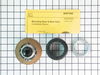
washer was leaking when water level got about 4 inches in tub
It was fairly easy, start out by using a screwdriver and push down and out on the front cover and remove it. Take out the 2 small bolts that hold the top cover down to the sides and lift the top cover up and lean it back out of your way. On the bottom side of the agitator there is a small bolt that holds it down, loosen that bolt and pull the agitator out. The hardest part of the entire jod was to use a small chisel and hammer to take off the nut that holds the assembly down.Remember it has reverse threads,you have to use a chisel to back it off and use some WD40 to help remove the calsium build up that is around it. Once you get that large nut off, there is a set screw on the side of the assembly that you have to loosen up before you can take it off, it's a "star driver" head and not a allen wrench set screw.Just take your time and look at your new part and compare it with the old one and take your time and remember how you take the old part off,and you will not have any problem putting the new one on. This was the first time I ever worked on a washing machine, and by checking out the parts first and comparing everything,even someone that might not have much mechanical skills can change this out. My washer works fine and not a drop of water leaks anymore.One thing I did learn, if you change this part out and put it back together and try it out and it makes a funny sound and you smell something like its burning, you might did what I did. I thought I had it to tight, but I put the large nut on before I put the tub back on!!! The agitator was holding the tub down, but it could not spin in spin cycle.... Good luck with you repairs, you can do it.
Parts Used:
-
Brian from Bush, LA
-
Difficulty Level:Easy
-
Total Repair Time:1- 2 hours
-
Tools:Screw drivers, Socket set
7 of 7 people
found this instruction helpful.
Was this instruction helpful to you?
Thank you for voting!
My dryer - which is about 20 years old - was starting to make some rubbing/scraping sounds from the drum area.
This was pretty much as easy as most other folks had described on this site.
1. Removed the two screws at the front bottom that are holding on the fromt panel, and then lift up and remove the panel.
2. Disconnect the door-open-safety-switch, remembering which color of wire goes on which connection.
3. Remove the four screws (two on each side) on the front bracket that supports the drum and tthat contains the front glides.
4. Remove support bracket and lint trap, letting the drum rest gently on the stuff underneath.
5. Remove the screws holding the lint trap to the support bracket. (My model had five screws.) Remove lint trap from support bracket.
6. Drill out the two pop rivets on each of the two glides, noting the orientation of the teflon pad and mounting strip.
7. Secure - and here is where I had a little problem - new glides in place with pop rivets. (I hadn't use a rivet gun in a while, so I messed up the first pop rivet and had to go to the hardware store to get a replacement. I didn't hold the pop rivet in all the way while I was accuating the gun!)
8. Reverse the process for assembly, and you are all done.
It's simple.
1. Removed the two screws at the front bottom that are holding on the fromt panel, and then lift up and remove the panel.
2. Disconnect the door-open-safety-switch, remembering which color of wire goes on which connection.
3. Remove the four screws (two on each side) on the front bracket that supports the drum and tthat contains the front glides.
4. Remove support bracket and lint trap, letting the drum rest gently on the stuff underneath.
5. Remove the screws holding the lint trap to the support bracket. (My model had five screws.) Remove lint trap from support bracket.
6. Drill out the two pop rivets on each of the two glides, noting the orientation of the teflon pad and mounting strip.
7. Secure - and here is where I had a little problem - new glides in place with pop rivets. (I hadn't use a rivet gun in a while, so I messed up the first pop rivet and had to go to the hardware store to get a replacement. I didn't hold the pop rivet in all the way while I was accuating the gun!)
8. Reverse the process for assembly, and you are all done.
It's simple.
Parts Used:
-
Richard from Loretto, MN
-
Difficulty Level:Really Easy
-
Total Repair Time:1- 2 hours
-
Tools:Nutdriver, Screw drivers
7 of 7 people
found this instruction helpful.
Was this instruction helpful to you?
Thank you for voting!
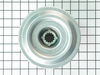
Washer made screeching sound during spin cycle. Also, the clothes were still very wet at end of spin cycle.
I used two vise grip wrenches in place of specialized tool that is no longer available. I put the vice grip wrenches on the brake assembly and hit them alternately with a hammer. I also used penetrating oil.
Note, the parts package stated made in USA but the bearings had China stamped on them.
Note, the parts package stated made in USA but the bearings had China stamped on them.
Parts Used:

-
Edward from EUCLID, OH
-
Difficulty Level:Difficult
-
Total Repair Time:More than 2 hours
-
Tools:Nutdriver, Pliers, Screw drivers, Socket set, Wrench (Adjustable), Wrench set
7 of 8 people
found this instruction helpful.
Was this instruction helpful to you?
Thank you for voting!
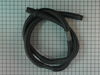
Hose had a split in it
took off front of washer , took off hose clamp removed old hose . replaced with new hose clamped back on put on front cover ran washer check for any leakes. done and done
Parts Used:
-
Chris from Hoffman Estates, IL
-
Difficulty Level:Really Easy
-
Total Repair Time:15 - 30 mins
-
Tools:Nutdriver, Screw drivers
8 of 11 people
found this instruction helpful.
Was this instruction helpful to you?
Thank you for voting!
water leaking from machine during spin cycle
I initially could not figure out how to open the machine so I checked the internet for a repair manual. After getting it open I found the source of the problem. The siphon break was missing the diaphragm and was spitting water when the tub was draining. I did not know what a siphon break was or did. I am non mechanically inclined. So I sealed the top of the siphon break with a sandwich bag and a zip tie, put in a load and went to work. I now know what the siphon break does after it ran all day filling and draining for over 8 hrs. That is when I found this site, ordered the part and received it the next day as promised. It took about 10 minutes to put the part in and close the washer back up. It has been a week now and the garage is almost dry . HA , and my wife wanted a new washer ! This part and delivery was under $25. A new machine around $800 if I am lucky. The ability for me to be smug as long as she never finds out about the sandwich bag incident, PRICELESS !
Parts Used:
-
Franz from Woodcrest, CA
-
Difficulty Level:Easy
-
Total Repair Time:Less than 15 mins
-
Tools:Nutdriver, Screw drivers, Socket set
7 of 8 people
found this instruction helpful.
Was this instruction helpful to you?
Thank you for voting!
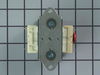
Controller board display showed error F for both dryers on running mode but it wouldn't accept any command; went into the set up and here display showed F5. C
The difficult part was to find what component was bad. Maytag does not sell the manual for this machine any more. We could not figure out what the problem was until we decided to check the voltage on the board and compare it to a second machine that we have. The second machine showed different readings so we decided to compare voltages on the transformer (main) that is at the bottom of the machine. There is a Primary (110 volts) and two secondaries; one which output is about 26 VAC and the other is above 10 VAC. The bad transformer had no output in one of the secondaries. Replacing the transformer was pretty simple. Make sure to disconnect the machine please before doing the repair.
Parts Used:
-
Luis from Naperville, IL
-
Difficulty Level:Easy
-
Total Repair Time:15 - 30 mins
-
Tools:Pliers, Screw drivers
7 of 8 people
found this instruction helpful.
Was this instruction helpful to you?
Thank you for voting!
Latch was broken over 15 years
Old latch and door striker were pried out with a flat blade screwdriver. New components popped right in. Repair was less than two minutes.
Parts Used:

-
Ken from Rochester, NY
-
Difficulty Level:Really Easy
-
Total Repair Time:Less than 15 mins
-
Tools:Screw drivers
7 of 8 people
found this instruction helpful.
Was this instruction helpful to you?
Thank you for voting!
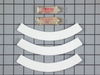
Washer was shaking and not balanced
The instructions were clear. Did every step. Did 2 loads so far and everything works like new.
Parts Used:
-
Dean from New Lenox, IL
-
Difficulty Level:A Bit Difficult
-
Total Repair Time:More than 2 hours
-
Tools:Nutdriver, Pliers, Screw drivers, Socket set, Wrench set
8 of 12 people
found this instruction helpful.
Was this instruction helpful to you?
Thank you for voting!