













CDU650AWB Crosley Dishwasher - Instructions
Keep searches simple. Use keywords, e.g. "leaking", "pump", "broken" or "fit".
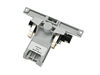
Dishwasher would not run because door would not lock
Removed screws on inside of door and replaced door latch, put screws back in and everything has worked fine.
Parts Used:
-
richard from NAPLES, FL
-
Difficulty Level:Really Easy
-
Total Repair Time:15 - 30 mins
-
Tools:Screw drivers
8 of 14 people
found this instruction helpful.
Was this instruction helpful to you?
Thank you for voting!
original basket fell apart
threw out the broken and put in a fantastically improved new one. very easy (would have done it sooner if I'd known it was that simple to find it online and order it) thanks
Parts Used:

-
D from Villas, NJ
-
Difficulty Level:Really Easy
-
Total Repair Time:Less than 15 mins
5 of 5 people
found this instruction helpful.
Was this instruction helpful to you?
Thank you for voting!
The latch broke on my dishwasher
Who ever assembled the parts for shipment, put the latch on backwards and it was extremely hard to take the latch off of the main part. Now matter how hard I tried, I was unable to re-attach the latch until I used a file on the plastic insert to file off the inside edges until they fit. It does work now, but it could have been made much easier if they had simply positioned the latch in the correct position in the first place.
Parts Used:
-
Paul from STAFFORD, VA
-
Difficulty Level:Difficult
-
Total Repair Time:More than 2 hours
-
Tools:Screw drivers
8 of 14 people
found this instruction helpful.
Was this instruction helpful to you?
Thank you for voting!
door handle and latch broke
Remove all interior door panel screws with a torx head screwdriver (drill). Pull the interior panel up from the door far enough to access the switch assembly. Pull it out and remove the 2 electrical connectors from the old switch (using a small screw driver as a pry bar if needed). Remove the old switch and handle (that may be broken off and still in the door). Push the electrical connectors onto the new switch assembly, making sure the handle is down toward the opening and the connectors are on the same side as they came off of the old switch. Align the mounting screw holes of the switch with the threaded holes on either side of the switch. Push the interior panel back together and align the two holes with the switch holes (those 2 screws go through the door panel and the switch assembly). Replace the remaining interior panel screws. Done!
Parts Used:
-
George from FINDLAY, OH
-
Difficulty Level:Very Easy
-
Total Repair Time:Less than 15 mins
-
Tools:Screw drivers
8 of 14 people
found this instruction helpful.
Was this instruction helpful to you?
Thank you for voting!
Diswasher door would not latch properly. Plastic handle broken.
Received the entire latch/switch assembly rather than just the plastic latch handle. This was a pleasant surprise, especially for the price. The latch assembly was clearly a better designed and more robust assembly than the original.
Removed the inside panel of the door by removing the dozen or so TORX screws.
Pulled the inside panel away from the outside door panel (gently, cables attached) to gain access to the latch/switch assembly. A second set of hands was helpful for this and some following steps.
At that point the latch assembly was free mechanically from the door, but there were two wiring harnesses attached to the latch assembly via plug connectors to the two microswitches on the latch assembly. It looked like it was going to be easy to unplug the harness from the switches, but I could not do it. Never did figure out how to do it.
Removed the two microswitches (with harnesses attached) from the 'old' latch assembly by pulling back the plastic tab that holds each switch in place. At that point the rest of the latch assembly was completely free from the machine.
Removed the two microswitches from the 'new' latch assembly using the same method as above. This step requires care as the plastic parts and switches can be damaged.
Put in place the two 'old' microswitches with wiring harnesses attached on each side of the 'new' latch assembly. These snap in place. This requires care, as above, and the second set of hands to hold away the inside door panel.
Put the latch/switch assembly in place in the door, and put the inside door panel back in place.
Re-installed the TORX screws holding the inside door panel - and latch assembly - to the door.
I kept the 'new' microswitches because one day the 'old' switches may fail. If that happens and I want to replace the microswitches, I still don't know how I will remove the switches from the wiring harness. I guess I'll figure that out if the time comes.
Except for the difficulties disconnecting the microswitches from the harnesses, this was an easy and straightforward job. The latching of the door seems more positive, now, and the machine is working fine.
Removed the inside panel of the door by removing the dozen or so TORX screws.
Pulled the inside panel away from the outside door panel (gently, cables attached) to gain access to the latch/switch assembly. A second set of hands was helpful for this and some following steps.
At that point the latch assembly was free mechanically from the door, but there were two wiring harnesses attached to the latch assembly via plug connectors to the two microswitches on the latch assembly. It looked like it was going to be easy to unplug the harness from the switches, but I could not do it. Never did figure out how to do it.
Removed the two microswitches (with harnesses attached) from the 'old' latch assembly by pulling back the plastic tab that holds each switch in place. At that point the rest of the latch assembly was completely free from the machine.
Removed the two microswitches from the 'new' latch assembly using the same method as above. This step requires care as the plastic parts and switches can be damaged.
Put in place the two 'old' microswitches with wiring harnesses attached on each side of the 'new' latch assembly. These snap in place. This requires care, as above, and the second set of hands to hold away the inside door panel.
Put the latch/switch assembly in place in the door, and put the inside door panel back in place.
Re-installed the TORX screws holding the inside door panel - and latch assembly - to the door.
I kept the 'new' microswitches because one day the 'old' switches may fail. If that happens and I want to replace the microswitches, I still don't know how I will remove the switches from the wiring harness. I guess I'll figure that out if the time comes.
Except for the difficulties disconnecting the microswitches from the harnesses, this was an easy and straightforward job. The latching of the door seems more positive, now, and the machine is working fine.
Parts Used:
-
Richard from Simpsonville, SC
-
Difficulty Level:A Bit Difficult
-
Total Repair Time:30 - 60 mins
-
Tools:Screw drivers
5 of 6 people
found this instruction helpful.
Was this instruction helpful to you?
Thank you for voting!
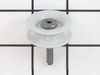
wheel axle broke on one of the 4 wheels that supports the top rack
I followed the directions in the dishwasher manual how to remove the top rack of the dishwasher, basically removing the stops on each side, and I set the rack on the counter. I replaced both sides even though one had not yet broken. To replace the part, 5 screws had to be removed; I used an allen wrench. The replacement location of the part was pretty obvious once the screws were removed. The inside of the plastic piece that was opened in the process of removing the defective part was dirty so I took some time to clean that out before attaching the new part. The actual unscrewing and attaching the new part probably took 10 or 15 minutes per side. It took a few tries to get the height adjusting lever to move freely before I tightened the screws. The rack works great now.
Parts Used:
-
Helen from Camas, WA
-
Difficulty Level:Easy
-
Total Repair Time:30 - 60 mins
6 of 9 people
found this instruction helpful.
Was this instruction helpful to you?
Thank you for voting!
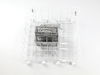
Silverware basket had broken through on the bottom and silverware would not stay in. Handle was tricky to put on. Bottom rack one of the adjustable racks had broken.
Basically took out of box and put in dishwasher.
Parts Used:
-
Suzanne from Jackson, TN
-
Difficulty Level:Really Easy
-
Total Repair Time:Less than 15 mins
-
Tools:Screw drivers
9 of 18 people
found this instruction helpful.
Was this instruction helpful to you?
Thank you for voting!
Dishwasher leak from door seal
Door gasket fit in like a champ! No special tools required - just scissors to trim off the excess ends. Unfortunately this didn't correct the leak. The leak was caused by a Home Inspector who ran the dishwasher without soap. The soap has a defoamer in it. If you run the dishwasher without soap the water mixes with the surfactant in the jet dry and causes foam which results in a door leak. The foam also causes the pump to cavitate which is not healthy for the pump.
Parts Used:

-
Ronald from Chester Springs, PA
-
Difficulty Level:Really Easy
-
Total Repair Time:Less than 15 mins
5 of 6 people
found this instruction helpful.
Was this instruction helpful to you?
Thank you for voting!
Handle brock at latch hinge
A common theme you'll see thoughout the repair stories;
1. many broken handles at the hinge
2. TURN THE POWER OFF.
This assembly comes with the microswitches (which is not a bad idea to replace since they are electromechanical and will eventually fail). My only recommendation is to buy a couple of these handle assemblies because they WILL fail. I'm on my 3rd!
1. many broken handles at the hinge
2. TURN THE POWER OFF.
This assembly comes with the microswitches (which is not a bad idea to replace since they are electromechanical and will eventually fail). My only recommendation is to buy a couple of these handle assemblies because they WILL fail. I'm on my 3rd!
Parts Used:
-
Alan from Austintown, OH
-
Difficulty Level:Easy
-
Total Repair Time:Less than 15 mins
-
Tools:Pliers, Screw drivers
5 of 6 people
found this instruction helpful.
Was this instruction helpful to you?
Thank you for voting!
Top washer arm kept falling off
Snapped out the old retainer, snapped in the new. Then snapped in the washer arm. Done. Works great.
Parts Used:

-
Gary from Owego, NY
-
Difficulty Level:Really Easy
-
Total Repair Time:Less than 15 mins
-
Tools:Screw drivers
5 of 6 people
found this instruction helpful.
Was this instruction helpful to you?
Thank you for voting!
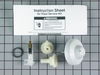
Water would not go to dishwashe
Took the dishwaher apart. Found out the float was damaged. Replaced the float and the float switch. Put back together
Parts Used:
-
ROY from MERKEL, TX
-
Difficulty Level:Easy
-
Total Repair Time:15 - 30 mins
-
Tools:Nutdriver, Screw drivers, Socket set
9 of 18 people
found this instruction helpful.
Was this instruction helpful to you?
Thank you for voting!
Dishwasher was leaking during wash cycle out the front door
Replaced the door gasket, inner foam strip and the bottom seals on the door. Unfortunately I broke the plastic door latch handle in the process and had to purchase a complete latch assembly too.
Parts Used:

-
John from Holllis, NH
-
Difficulty Level:A Bit Difficult
-
Total Repair Time:More than 2 hours
-
Tools:Screw drivers
5 of 6 people
found this instruction helpful.
Was this instruction helpful to you?
Thank you for voting!
humidity would seep out absorbing into the granite above
remove old seal, put in new - my 10 yr old could do it. Note - there is a white mark on the back of the seal indicating the middle so you can line it up when installing the new seal - makes it easier.
Parts Used:
-
Eric from Overland Park, KS
-
Difficulty Level:Really Easy
-
Total Repair Time:Less than 15 mins
5 of 6 people
found this instruction helpful.
Was this instruction helpful to you?
Thank you for voting!
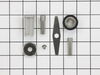
Dishwasher filled normally with water and seemed to be cycling normally, but after cycle complete, no washing had occurred.
I first listened carefully and noticed that during cycling, the electric motors could be heard starting, stopping, and apparently running normally during both wash and emptying cycles. However, no water was being pumped around during the wash cycles, while emptying (which uses a different motor) worked normally throughout all cycles. Thus it seemed to me that the electronic programming was working correctly in turning both motors on and off as necessary. So I figured somehow the wash motor impella was not turning and pumping water, despite the fact that the motor was indeed running correctly. So I removed all the plastic housings, the screwed on impella, and the metal chopper at the base of dishwasher. Then I was able to easily pry the old plastic chopper sleeve right off of the electric motor shaft (normally it is screwed on and cannot be pryed off). Since the plastic threads inside the chopper sleeve were completely stripped, the motor shaft would turn but the impella would slip on the shaft and not be driven. The replacement sleeve was much better constructed (metal not plastic). It could be easily screwed on to the motor's driveshaft after lifting the old rubber seal and gently holding the motor shaft with a pliers (carefull to avoid scratching the shaft). I removed the old rubber seal nd replaced it with the new one from the kit, right over the newly installed metal chopper sleeve. Next, I easily centered the metal chopper sleeve and pressed in the new seal after reinstalling the plastic/metal chopper screen, using the temporary jig included in the kit. Then the jig was discarded and the impella simply screwed onto the chopper sleeve (using the appropriately threaded hold-down screw provided in the kit). Finally, the rest of the plastic hardware is screwed in place. Waahhlaa...now impella is motor driven again and blows water hard into the dishwasher during the wash and rinse cycles. Total cost of job to do-it-yourself, $29.50 including shipping (which only took three working days). Estimated job if down by appliance repairman, $140 (assuming the repairman didn't first erroneously blame the problem on faulty electronics then charge you hundreds of $$'s to replace circuits which were not broken to begin with, only to find the dishwasher still not washing/rinsing after his expensive electronic circuit replacements. The actually mechanical fix was cheap and simple. Truthfully, there is no excuse for Jenn Aire to ever use a plastic Chopper Sleeve in their dishwashers to begin with.......carefully planned obsolesence if you ask me. Oh well, it works perfect now. I doubt if even the four marbles my 4 year old had tried earlier to wash in my dishwasher (stripping out the original chopper sleeve) would do any damage to the metal replacement. However, I don't plan on testing my hunch. A simple fix, but a slightly challenging diagnosis which relied on a keen sense of hearing and a quiet workplace. Seems many people in these blogs have had the very same problem with their Jenn Air/Maytag dishwashers, and have made the same diagnosis and the same simple fix. Thank you mucho, PartSelect.
Parts Used:
-
Kenneth from Brandon, MS
-
Difficulty Level:Easy
-
Total Repair Time:30 - 60 mins
-
Tools:Pliers, Screw drivers
4 of 4 people
found this instruction helpful.
Was this instruction helpful to you?
Thank you for voting!
Broken dishwasher door handle (opener)
Unplug the power cable. Remove 11 torx fasteners holding the inner door panel. Remove two sets of wires from old opener and install the new door opener assembly. Replace all the screws. About 10 minutes with a power driver.
Parts Used:
-
Michael from The Colony, TX
-
Difficulty Level:Really Easy
-
Total Repair Time:Less than 15 mins
4 of 4 people
found this instruction helpful.
Was this instruction helpful to you?
Thank you for voting!