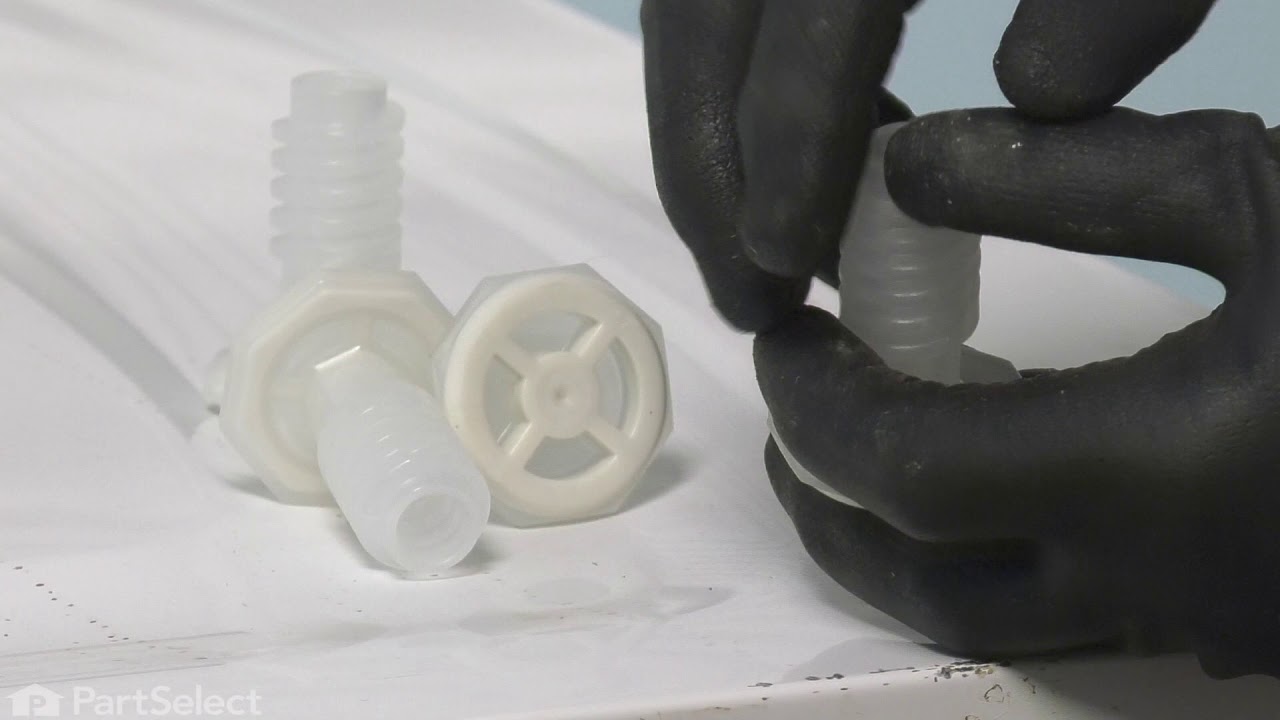
This basket drive hub kit is a vital component in select washing machines, designed to connect the wash basket to the central drive shaft, enabling proper rotation during wash and spin cycles. It plays a key role in transferring motion from the motor to the basket, ensuring effective agitation and spinning. Constructed from durable materi...Read moreals, the kit typically includes the drive hub, a retainer, and installation instructions. Common symptoms of a worn or damaged hub include failure to agitate, slow or no spinning, excessive wobbling, and unusual noise during operation. Replacing this part is a common DIY solution and can restore the washer’s performance. Installation requires basic tools and moderate repair experience.
This is lid lock designed for use within various washing machines. This lid lock, also known as a latch assembly, is used to secure the lid of your washing machine during the washing cycle. If your washing machine is experiencing issues starting or if the lid is not securing, this lid lock assembly likely needs to be replaced. This lid lo...Read moreck attaches underneath the top portion of your washer and its wire harness connects to the rear of the appliance. To replace this assembly, you will need a screwdriver, flathead screwdriver or putty knife, and wrench. This lid lock is an OEM part that is sold individually and does not come with any other parts or accessories.
This is a lid strike for various models of top-load washing machines. Lid strikes are designed to engage with the lid switch and communicate to the control board that the washer can start. If your washing machine is having issues starting, or if the lid strike for your washer is visibly damaged it will need to be replaced. Replacing this ...Read morewashing machine lid strike is simple and only requires a screwdriver. This lid strike is made almost entirely of durable white plastic and features two holes on either side for securing with screws. This lid strike is an OEM part and is not sold with any other parts or accessories, such as the necessary screws.
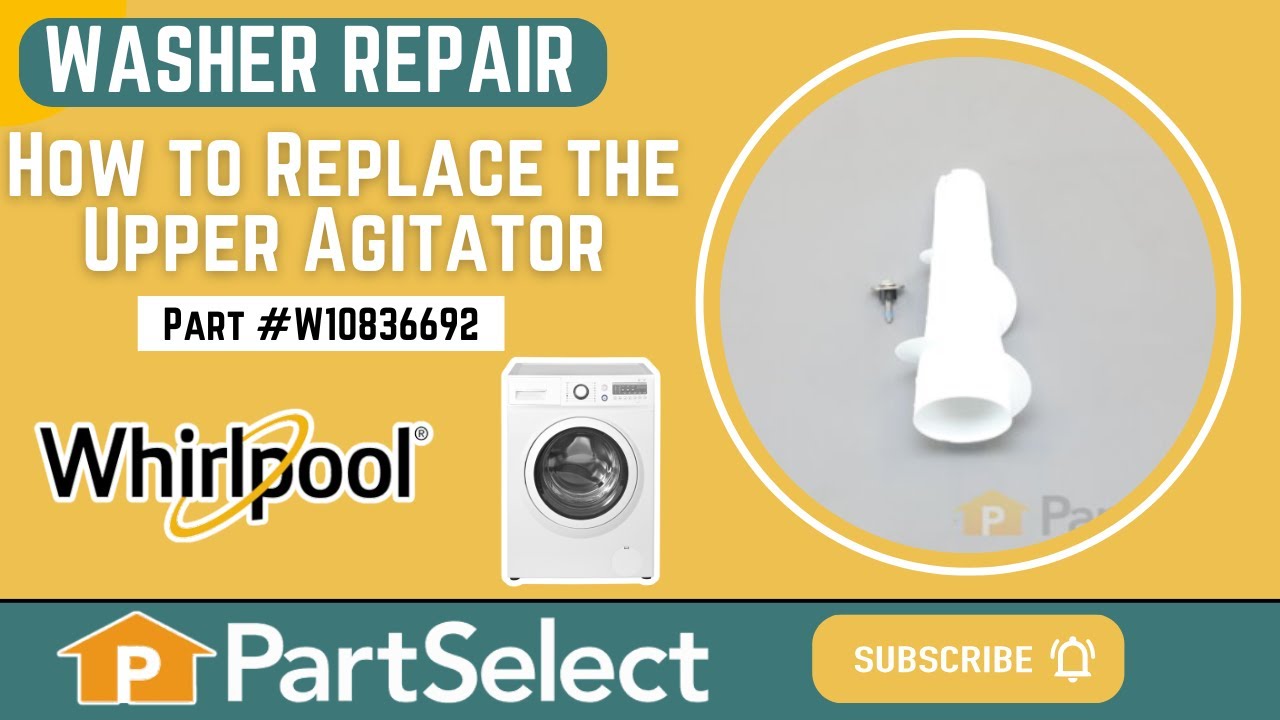
This agitator is for washers.
Agitator rotates back and forth to move the clothes inside the tub to clean the load.
Unplug the washer before installing this part. Wear work gloves to protect your hands.
Ask our experts a question about this model and we'll get back to you as soon as possible!
We may have answered a similar question already! Search questions and answers left by others using simple keywords like "fit", "broken", "easy", or "quality" to find questions that match.
Search filter:
Clear Filter
Your search term must have 3 or more characters.
Sort by:
Prev
1
2
Next
Sorry, we couldn't find any existing answers that matched.Try using some different or simpler keywords, or submit your new question by using the "Ask a Question" button above!
Dorothy - For model number 11022342511
March 5, 2024
Hi, machine makes a really loud noise during rinse cycle? Any ideas why? Thanks!
Hi Dorothy, thank you for contacting us. Based on our understanding of the issue, we would suggest replacing the drive pulley, part number PS10057144, to solve the problem. We hope that helps!
Upon filling, the unit stays in "sensing" mode an extraordinary amount of time. Then you hear a motor running (but nothing happening) for maybe 30 sec. Agitator moves once or twice. Motor noise (nothing happening) for a few seconds, ending with a very loud, sharp grinding of a gear engaging. Slight pause, then the agitator does a normal cycle. Would also like to know where I could find a model-specific repair manual that lists a sequence-by-sequence diagram to help with diagnosis and repair steps.
Hello Dave, Thank you for your inquiry. Researching your model, the parts that can cause this issue are the lid lock assembly, the water inlet valve, the drive motor, the gearcase, the shift actuator and the control board. Check the parts for any visible damage, and you can also test with a multimeter as well. Sadly, we do not have access to a model-specific repair manual, this may be something you can get directly from the manufacturer, however. Good luck with your repair.
My Kenmore Series 300 Washing machine makes a loud noise during its spin cycle.
I’ve had this washer for about 8-9 years and it recently started doing this.
Hi Thomas, thank you for reaching out. The bearings in the washer's drum can wear out over time, causing noise during the spin cycle. They come attached to the gear case, part number PS16220910. You may need to replace it to fix the issue. We hope this solves your problem!
Hello John, thank you for contacting us. The issue is probably related to a faulty drive hub kit, part number PS6012095, and a damaged agitator assembly, part number PS11727882. Please reach out to customer service if you need help placing an order. Glad to be of help!
When started, the water fills, sensing light flashes then nothing more happens. What's the cause?
Hi Toolmann, thank you for contacting us. Based on the description that you have provided, we would recommend checking the shift actuator, part number PS16221077. We hope this sorts out your problem!
See how others fixed this model. Time, tools, difficulty, and steps that lead to victory!View More
Search repair tips from other customers using simple keywords like "replace", "fit", "remove", "inspect". DIY doesn't mean you have to do it alone!
Search filter:
Clear Filter
Your search term must have 3 or more characters.
Hub had warn its grooved teeth off and washer wouldnt agitate
66 of 93 peoplefound this instruction helpful.
Allison from RICHFORD, NY
Easy
15 - 30 mins
Screw drivers
ordered hub and it shipped quickly. I was able to put the hub in place and screw the screws in. you want to tighten them down slowly and go around to each screw tightening a little at a time so you don't break the hub. as you tighten the screws down the hub slides down flush. its impossible to just push the hub on with your hand. Buttoned
... Read more it back up and got caught up on laundry. good day when the washer is fixed.
Read less
Was this helpful?
Thank you for voting!
Waher would not spin and made noise
25 of 29 peoplefound this instruction helpful.
Andrew from SYLVANIA, OH
Very Easy
Less than 15 mins
Screw drivers, Wrench (Adjustable)
Removed center cap, loosened center nut, pry lightly up on center plate and tap center nut. Center plate comes loose, remove nut, remove center plate. Pry lock clip out and remove, remove screw with electric impact (screw drive will work, but slower), remove drive hub. Install new drive hub (be sure to check screw hole alignment), install
... Read more and tighten screws (be sure to follow a skip pattern and bring it down even), install lock clip, install center plate, install and tighten nut, replace center cap. Done!
Read less
Was this helpful?
Thank you for voting!
washer not agitating
22 of 23 peoplefound this instruction helpful.
David from EAST AMHERST, NY
Easy
15 - 30 mins
Socket set
This was a learning experience but it appears to have worked out in the end. Our 3 1/2 year old washer was not agitating much and I attributed that to a loose bolt. I would tighten the bolt and it would work ok for a load or two and then stop agitating. I would find that the bolt was loose again. I took a number of steps to try to get
... Read more the bolt to stay on tight - threadlock, a new bolt, more threadlock, and applying progressively more force on the bolt, with no better results. Yet the repair guys on you tube were saying the bolt only needs to be snug, not super tight - something was amiss. I even went so far as to secure the basket with a rope so I could use two hands on the socket wrench (please don't do this). But when I tried the washer again there was no agitation at all! I observed the agitation output in manual test mode and the bolt was turning in lock step with the shaft but the agitator wasn't turning at all. That's when I suspected that the problem was actually a worn lower agitator. Trouble was that now I couldn't seem to get the bolt off. Turning the wrench caused the shaft itself to rotate so I couldn't loosen the bolt from the shaft. I thought I broke the washer. Then I considered that maybe the shaft was rotating because the washer was in an agitation mode when I turned it off. I went back into manual test mode, made the washer spin, then turned it off. Fortunately, this worked. The shaft was again stationary and, albeit with great difficulty, I got the bolt off.
I removed the agitator, and as a pro would have figured out long before, the ridges inside the top of the lower agitator were almost completely worn down. I realized then that the contact between these ridges and the splines on the shaft is what is supposed to cause the lower agitator to move with the shaft. The purpose of the bolt is just to keep the agitator in the correct position and from coming off the shaft. I had been trying to compensate for the worn agitator ridges by over-tightening the bolt, creating some contact at the top of the shaft. This would work for a little while, then the agitator would start slipping, and the slipping agitator was acting just like a wrench loosening the bolt (until my stupid rope trick, that is.)
So I ordered a new agitator (only the lower agitator was bad, but the price of an entire agitator isn't a lot more than just the lower part and I was reading that the upper agitator parts will wear over time) and another new bolt (because my repeated attempts to over-tighten the first one I ordered had split the rubber gasket apart and worn the bolt head).
The new agitator fit snugly on the splines of the shaft so I sensed no need to use excessive force on the bolt. Just an easy one-handed snug tightening with the socket wrench, using the other hand to hold the lower agitator. The washer is now working again.



 My Orders