













Lawn Mower Engine Misfires
About this repair:
- Rated as REALLY EASY
- 4 step by step videos
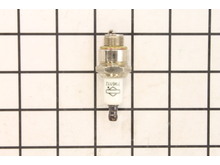
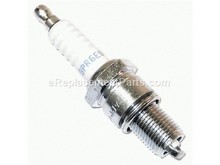
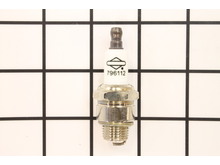
Spark Plug
The spark plug in your lawn mower is what helps gets the engine running, and keeps it running. The spark it provides is what ignites the fuel air mixture in your engine.
Over time this part might become corroded with residue. When this happens it might not produce a spark anymore, or the spark it provides is not strong enough to ignite the fuel- air mixture. When the spark plug is corroded, dirty, or worn you will notice that your lawn mower engine will be hard to start, runs rough, or stalls after a while. This is why as part of regular lawn mower maintenance you should be inspecting and replacing the spark plug.
If your engine is misfiring, turn off your lawn mower and let things cool down before you start investigating. This should take roughly 20 to 30 minutes. After things have cooled, remove the spark plug and look for signs of wear and corrosion.
The electrode is the tip where the spark is produced. If it is bent, cracked, eroded, or really worn you should replace the spark plug. However, if it is just dirty or has some soot- like buildup you can clean it.
To clean a lawn mower spark plug you can use a wire brush, a toothbrush, or in certain cases, very fine sandpaper. Just use those tools to scrub away the buildup, and then use a rag or paper towel to wipe it clean when you are finished.
If you have already cleaned your spark plug a couple of times previously, we suggest replacement. Each time you clean it the spark plug is worn down a bit, plus each lawn mower spark plug has a lifespan of 25 to 50 hours of operation. Obviously, this can vary depending on the engine, and the operating conditions, but replacing your sparkplug in a yearly tune- up is always recommended best practice to keep your lawn mower engine operating at peak performance.
If you have cleaned or replaced the spark plug and the issue persists, that is an indication another part is causing this problem.
Engine
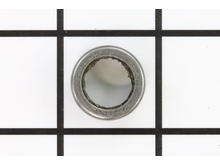
If the timing in your lawn mower engine is off that could be what is causing the misfire. The timing of the spark, and the fuel- air mixture must line up for the engine to run properly. The valves opening and closing need to occur at the exact right moment for the spark to be effective. Meaning if the spark fires too early or too late it could cause a lawn mower engine to be hard to start, or it can misfire.
Due to the fact there are so many mechanical parts within an engine this can happen in a number of ways. Over time the use and wear of these parts can lead to timing issues. Common culprits are timing belts that are loose or worn, or flywheel keys that are sheared, or a flywheel that is loose.
If this is happening after you have completed other repairs, there may be issues with reassembly. If that is the case you might want to retrace your steps and ensure everything is in place, and secured accordingly.


Valves
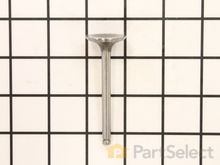
Most lawn mowers are single piston engines, and in engines each piston has two valves that help maintain the function of this system. Each valve has a specific job, one is an intake valve that controls the flow of fuel and air into the cylinder. The other is an exhaust valve that releases the leftover gases after combustion. The timing of this operation is precise and important; it is what keeps the engine running smoothly. If the valve timing is even slightly off you will notice your engine start to run rough, or even backfires. When the timing for the combustion process is off your engine will misfire.
The root cause of valve-related timing issues could be that your valve is bent, or has significant carbon buildup. Getting to the bottom of this is more in-depth than a basic investigation. This is why we recommend that before you go down this road you inspect the rocker arm for the valve stem, and the valve spring. You can visually inspect these parts without needing to take the head off.
Most mowers have a valve cover on the top of the head, this is often secured to the mower with four bolts. You will start by removing these bolts and taking off the cover, which will give you access to two valves, two rocker arms, two valve springs, and two push rods. Once you have access to these parts you will be looking for any obvious damage or issues. Loose rocker arms, a bent push rod, or a spring that has lost tension. If you find any issues here, this could be what is causing the timing issues, and it can be solved without needing to remove the valves or head.
Valve lash is the gap between the tip of the valve and the rocker arm when the valve is in the closed position. It is very important that there is sufficient gap here because as metal heats up it expands. The valve lash ensures that the valve is able to close even after the engine heats up. Conversely, if the gap is too big and things are loose, the valve will open later or close sooner than it should. Meaning it could be the root cause of the timing issues. If you find the valve lash in your mower needs adjustment you are going to need to consult your manual for the proper procedure and specs for your specific lawn mower.

Ignition Coil
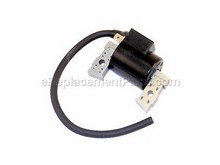
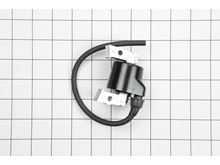
The ignition coil takes the energy created by the flywheel when the starter cord is pulled and converts it into the high voltage required for the spark plug to create a spark.
The initial energy coming from the flywheel is generated with magnets. The magnets on the flywheel spin over inductors, which generates the initial current the ignition coil needs in order to do its job. This is all a very precise operation, the timing needs to be perfect so the spark plug can fire at the exact right moment to light the fuel air mixture. If any part of this sequence is off, the engine will be hard to start or it will not run at full capacity. You will have an engine that is misfiring.
There are a couple of ways to test your ignition coil; the easiest is with a spark tester. First, you need to attach the tester. The process might vary depending on the tester you have. Some are inline with the spark plug and spark plug boot. Others will plug into the spark plug boot and you will need to ground by clipping or touching the tester to metal. Once you have the tester properly installed you will pull the starter cord and look for a spark in the tester window. If there is no spark, or a weak spark, which is often orange in color, then the ignition coil is bad.
If you do not have a spark plug tester here is how to test your lawn mower ignition coil:
- Take the spark plug out of the engine.
- Reconnect the spark plug wire to the spark plug.
- You then will need to ground the spark plug, this means you will need to hold the metal threads of the spark plug directly against metal of the engine block. It is important that you make sure there is no plastic, paint, or rust.
- Pull the starter cord and look for a spark. You are hoping to see a white or blue spark. If there is no spark, or a weak spark that is a sign your ignition coil is bad.
You can use a multimeter to test the ignition coil as well, but the above methods are more reliable. Some ignition coils can pass a multimeter test but will fail under load. Testing with a spark tester or spark plug will show you how the ignition coil performs in real world conditions.

More Repair Parts
Still not sure which part is broken? We can offer you custom troubleshooting help if you search with your model number.