



 My Orders




WCF12W3 Crosley Freezer - Overview
Diagrams for WCF12W3
See every part. Know exactly what you need.


Enter a part description. DIY Heroes keep it simple, eg. "belt" or "pump".
Search filter:
Clear Filter
Your search term must have 3 or more characters.

$15.00
In Stock
Fan Blade and Spring Clip
Part #WPW10445742
If you notice an unusual noise coming from your freezer, the evaporator fan blade might be the problem. Frost-free freezer models use evaporator fans to move air through the evaporator for more efficient cooling. If the evaporator fan blade gets damaged or worn it may become noisy. If the blade is loose on the motor shaft or if the fins a...Read morere damaged, it should be replaced. Be sure to remove power to the appliance before attempting any repair. The evaporator fan assembly is located behind the air grille or evaporator cover and can normally be accessed by simply removing a few mounting screws. The fan blade is normally pressed on to the motor shaft and secured by a spring clip.
Read less

$7.47
In Stock

$7.47
In Stock
Refrigerator Cabinet Mount Screw
Part #WP489491
Sold Individually - 2 screws needed to mount each handle.

$7.47
Special Order

$104.33
In Stock
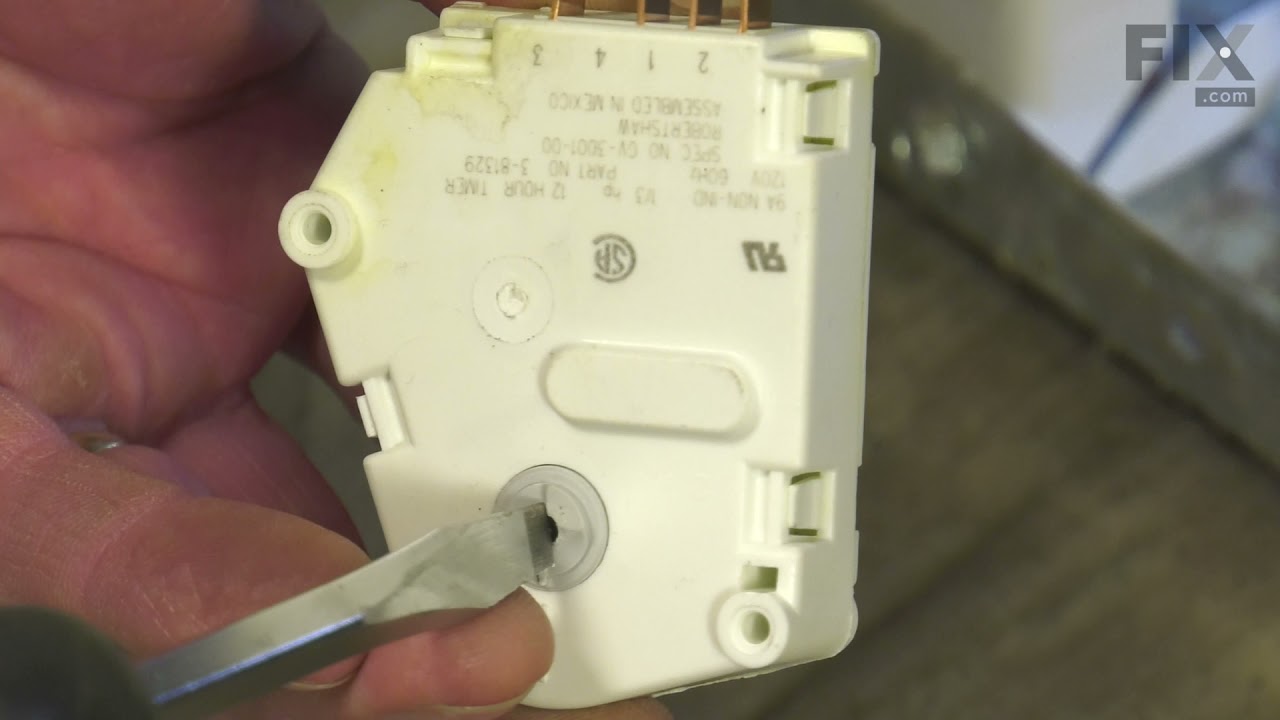
Defrost Timer
Part #WP3-81329
This device acts like a clock. It continually advances and alternates between activating the cooling cycle and the defrost heater.

$60.51
In Stock
Bimetal Defrost Thermostat
Part #WP1-81801-001
This part is a temperature sensing devise. It senses the rise in evaporator temperature during a defrost cycle and cycles the defrost heater off after all frost is melted. It is calibrated to permit a defrost cycle only when the temperature is below a preset temperature

No Longer Available
Gate Support - Right Hand
Part #4357293
This gate support is designed to support the gate or fence on your vertical freezer. This part is designed for the right-hand side and differs from the left-hand side gate support. Be sure to note which side of your gate support is damaged before ordering this part. This product is sold individually. It is white in color and is made entir...Read moreely of plastic. The gate support is approximately 6.5 inches in length and slightly less than an inch in width. This is an OEM part sourced directly from the manufacturer.
Read less

No Longer Available
Evaporator Fan Motor
Part #3-80411-103
This evaporator fan motor circulates air over the coils. These coils will convert the heat into cool air, which is then circulated.

$9.62
In Stock
Refrigerator Thermostat Sensor Barrier
Part #WP2196003
The thermostat sensor barrier covers and insulates the temperature control thermostat capillary tube.

$20.36
Special Order
Gate Support - Left Hand
Part #4-80576-202
$15.00
Special Order
Air Duct Baffle
Part #WP3-80414-103

No Longer Available
Common Symptoms of the WCF12W3
How this model fails, and the parts that fix it.
Noisy
Fixed by
these parts
these parts

Show All
Frost buildup
Fixed by
these parts
these parts


Show All
Too warm
Fixed by
these parts
these parts

Show All
Watch our pros, then fix it yourself.
See how others fixed this model. Time, tools, difficulty, and steps that lead to victory!
View More