













PCE23NHTDFBB General Electric Refrigerator - Instructions
Keep searches simple. Use keywords, e.g. "leaking", "pump", "broken" or "fit".
Fridge too warm, evaporator icing up
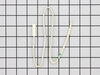
After replacing the defrost heater, main board and thermistor I still had the same problem. Called a repair guy and he (with the help of GE on the phone) diagnosed that the temperature sensor was bad. So I ordered from partselect and installed it and it fixed the problem. Been good for a couple months (knocking on wood). To install I had to cut the 2 wires to the old sensor, crimp the 2 new wires on and snap the new sensor to the clip on the evaporator. Very easy. Make sure you seal the ends of the wire crimps so moisture doesn't get in and corrode the connection.
Parts Used:
-
Gerald from San Clemente, CA
-
Difficulty Level:Easy
-
Total Repair Time:15 - 30 mins
-
Tools:Screw drivers
606 of 736 people
found this instruction helpful.
Was this instruction helpful to you?
Thank you for voting!
my refigerator was warm but the freezer was cold and working correcttly
I went to a GE repair center to explain my problem, the service center reccomended that I have a techinician come out o look at it. $75.00 for the visit and what ever labor and materials wuld cost.
I went on line to see if there were others having this same problem and found that there were many with the same problem.
After reading some of the ways that people found out what was wrong ...it became a matter of three components, the timer, heater or thermostat.
I tried the most common component and the less expensive one first , the thermostat switch I installed it very easily snipping two wires and attaching the news using wire nuts I used the diagram on this website to pinpoint the component and there has not been a problem since.
I went on line to see if there were others having this same problem and found that there were many with the same problem.
After reading some of the ways that people found out what was wrong ...it became a matter of three components, the timer, heater or thermostat.
I tried the most common component and the less expensive one first , the thermostat switch I installed it very easily snipping two wires and attaching the news using wire nuts I used the diagram on this website to pinpoint the component and there has not been a problem since.
Parts Used:
-
michele from North Smithfield, RI
-
Difficulty Level:Really Easy
-
Total Repair Time:15 - 30 mins
-
Tools:Pliers
300 of 394 people
found this instruction helpful.
Was this instruction helpful to you?
Thank you for voting!
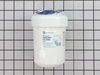
Replace water filter
Unscrew old filter and remove(counterclockwise). Line up arrow on new filter with arrow on connection housing. Turn clockwise till resistance met. Do not overtighten. Follow directions. Simple.
Parts Used:
-
Alfred from Novato, CA
-
Difficulty Level:Really Easy
-
Total Repair Time:Less than 15 mins
226 of 346 people
found this instruction helpful.
Was this instruction helpful to you?
Thank you for voting!
Refrigerator too cold
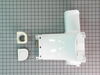
My repair experience was a little more complicated than previous posts, but nothing major. And most importantly replacing the Fresh Food Air Inlet Cover did fix my problem. Here are the steps I followed:
1. You will need to remove a minimum of the top two shelves to get access to the Air Inlet Cover. It runs along the back of the fridge and connects to a hole to the freezer side. It has a little fan inside that sucks the cold air from the freezer and diverts to the top and bottom of the fridge.
2. As mentioned in other posts, there are four screws holding the Inlet Cover in place, 2 lower and 2 upper. To get access to the lower two screws,you simply pop off the lower duct assembly (squeeze the sides). Be careful when removing and installing these screws. If you drop one into the lower duct, you will add a few more steps to the installation to remove more shelves and take out the lower duct to get to where the screw fell. Obviously this happened to me. Not difficult to do, just adds more time.
3. To access the upper two screws I had to remove the top light cover (one screw) and then slide out the top duct/diffuser assy (my name, not GE's).
4. Finally to get clearance to pull out the Inlet Cover, I had to remove the water filter and cover. When you pull away the Inlet Cover, you will see the electrical connection that is simple to disconnect.
5. After I removed my Inlet Cover, it was obvious that it was broken because it rattled and I could peek inside to see that the plastic air diverter/flapper thingy was broken.
6. One final surprise was that the replacement Air Inlet Cover did not exactly match the one I removed. The replacement only had one upper air outlet, while my old one had three upper outlets, left, right and center. I noticed there was a plastic cover over one of the side outlets on the replacement, so I just popped that off and hoped for the best.
7. The replacement Air Inlet Cover Kit came with sticky back insulation that you attach to where the Inlet Cover meet the freezer access hole to make sure snug fit to limit extra cold air leaking into the fridge side.
8. Installation of the replacement Air Inlet Cover was fairly easy, just follow the above steps in reverse and make sure you don't drop any screws.
It's been a couple of weeks since I performed this installation and my fridge has been maintaining temperature perfectly. No more frozen milk or lettuce. The wife is very happy.
1. You will need to remove a minimum of the top two shelves to get access to the Air Inlet Cover. It runs along the back of the fridge and connects to a hole to the freezer side. It has a little fan inside that sucks the cold air from the freezer and diverts to the top and bottom of the fridge.
2. As mentioned in other posts, there are four screws holding the Inlet Cover in place, 2 lower and 2 upper. To get access to the lower two screws,you simply pop off the lower duct assembly (squeeze the sides). Be careful when removing and installing these screws. If you drop one into the lower duct, you will add a few more steps to the installation to remove more shelves and take out the lower duct to get to where the screw fell. Obviously this happened to me. Not difficult to do, just adds more time.
3. To access the upper two screws I had to remove the top light cover (one screw) and then slide out the top duct/diffuser assy (my name, not GE's).
4. Finally to get clearance to pull out the Inlet Cover, I had to remove the water filter and cover. When you pull away the Inlet Cover, you will see the electrical connection that is simple to disconnect.
5. After I removed my Inlet Cover, it was obvious that it was broken because it rattled and I could peek inside to see that the plastic air diverter/flapper thingy was broken.
6. One final surprise was that the replacement Air Inlet Cover did not exactly match the one I removed. The replacement only had one upper air outlet, while my old one had three upper outlets, left, right and center. I noticed there was a plastic cover over one of the side outlets on the replacement, so I just popped that off and hoped for the best.
7. The replacement Air Inlet Cover Kit came with sticky back insulation that you attach to where the Inlet Cover meet the freezer access hole to make sure snug fit to limit extra cold air leaking into the fridge side.
8. Installation of the replacement Air Inlet Cover was fairly easy, just follow the above steps in reverse and make sure you don't drop any screws.
It's been a couple of weeks since I performed this installation and my fridge has been maintaining temperature perfectly. No more frozen milk or lettuce. The wife is very happy.
Parts Used:
-
Marc from Orlando, FL
-
Difficulty Level:A Bit Difficult
-
Total Repair Time:1- 2 hours
-
Tools:Screw drivers
156 of 163 people
found this instruction helpful.
Was this instruction helpful to you?
Thank you for voting!
refrigerator was getting too cold
I removed the old temperature sensor by cutting the wires. I attached the wires of the new sensor with wire nuts and mounted it in the same bracket.
Parts Used:
-
Larry from Menomonie, WI
-
Difficulty Level:A Bit Difficult
-
Total Repair Time:15 - 30 mins
149 of 217 people
found this instruction helpful.
Was this instruction helpful to you?
Thank you for voting!
Warm freezer and no ice
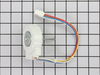
This story starts with a GE side-by-side refrigerator that has always had wide temperature swings and a temperamental water dispenser. The ice maker was not making ice, and the built in digital thermometer showed it was running warm. I suspected that the heat exchanger was full of dust and so looked there. What I found was that the condenser tank was hot to the touch and the fan wasn’t running. As an experiment, I aimed a fan at the it for a while I saw that the freezer temperature dropped back to normal.
.The fan is marked as 11.2 DC so I checked for voltage at the fan and found some. With three wires and no wiring diagram I wasn’t sure this answered all the questions, but hooking the fan to a 12 volt power supply didn’t get it to spin.
I priced parts at a couple websites before using partselect.com . They also have a good diagram to look at (Sears diagrams are really poor). I ordered the part with 2-day shipping; it arrived on time, was correct and fixed the problem.
.The fan is marked as 11.2 DC so I checked for voltage at the fan and found some. With three wires and no wiring diagram I wasn’t sure this answered all the questions, but hooking the fan to a 12 volt power supply didn’t get it to spin.
I priced parts at a couple websites before using partselect.com . They also have a good diagram to look at (Sears diagrams are really poor). I ordered the part with 2-day shipping; it arrived on time, was correct and fixed the problem.
Parts Used:
-
Paul from Suwanee, GA
-
Difficulty Level:Easy
-
Total Repair Time:30 - 60 mins
-
Tools:Nutdriver
95 of 133 people
found this instruction helpful.
Was this instruction helpful to you?
Thank you for voting!
fan not running
Removed rear and front grills,brushed and vacuumed area- probably caused the fan motor to fail- unplugged fan, removed fan,motor,and shroud in 1 piece, carefully slipped fan off motor shaft, unscrewed shroud and motor. assembled in reverse order. Frige is in tight area, .I'll now roll it out and clean often
Parts Used:
-
Ray from Bensalem, PA
-
Difficulty Level:A Bit Difficult
-
Total Repair Time:15 - 30 mins
-
Tools:Nutdriver, Socket set
74 of 104 people
found this instruction helpful.
Was this instruction helpful to you?
Thank you for voting!
Will not dispense water
The Top Filter Housing on this refrigerator contains some sort of Excess Flow Check Valve to prevent water flow if there is no filter installed. When the spring on this valve weakens over time, the valve closes unnecessarily with normal flow and chatters. This sounds like a woodpecker hammering on the side of your house and water flow is almost non-existant. You may have heard the same thing after you changed the filter if there was air in the system. The noise stops and you have normal water flow once the air is vented out of the filter. If you start hearing this noise unprovoked (filter has not been recently changed), the Top Filter Housing needs to be replaced. To replace this part, you will need a 1/4" and 5/16" nut drivers or sockets and two 1/2" open ended wrenches. You might also need plumber's putty. Shut off the water and have a bucket ready to drain the water into. Remove the lower cover from the back of the refrigerator. Disconnect the two hoses going to/from the top filter housing. One is connected to the main water line, the other is connected to the Water Fill Valve located in back of the refrigerator on the bottom left corner. Un-screw the cover plate from the back of the refrigerator and pull the plumbers putty out (can be re-used if still pliable). On the inside of the refrigerator, pull the plastic cap off the Top Filter Housing to expose the two screws holding it in place. Remove the two screws and pull out the Top Filter Housing with Tubing. Replacement is the reverse of what you just did. If the tubing is a little short, you will want to unbolt the Water Fill Valve from the refrigerator prior to re-connecting it to ensure a water tight connection.
Parts Used:
-
Thomas from Leland, NC
-
Difficulty Level:Easy
-
Total Repair Time:Less than 15 mins
-
Tools:Nutdriver, Wrench set
62 of 75 people
found this instruction helpful.
Was this instruction helpful to you?
Thank you for voting!
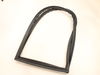
Gasket wasn't sealing
Replaced gasket. No tools requires. Just pull the old one out and press new one in channel with hands. TIP: heat the new one slightly with a hair dryer or a heat gun on low. Makes it more flexible
Parts Used:
-
Joe from Succasunna, NJ
-
Difficulty Level:Really Easy
-
Total Repair Time:Less than 15 mins
51 of 59 people
found this instruction helpful.
Was this instruction helpful to you?
Thank you for voting!
water and ice maker stopped working
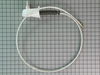
Removed the cover on the bottom of the rear of the fridge and the top left of the fridge where the tubbes exit.. Then just simply disconnect the tube coming from the fridge and the supply line. Next go inside the fridge, remove the cover of the filter mount, and remove the 2 screws securing the filter mount in place. Now pull the tubes through the opening and reinstall in reverse order.
Parts Used:
-
Robert from Sandston, VA
-
Difficulty Level:Really Easy
-
Total Repair Time:30 - 60 mins
-
Tools:Screw drivers, Socket set
47 of 51 people
found this instruction helpful.
Was this instruction helpful to you?
Thank you for voting!
fridge side freezes some items
went to your website and viewed exploded view to find the sensor( there are two I just picked one to replace for now), pried the cover off carfully and pulled out the sensor. I snipped the wire in the middle leaving plenty to work with. I shortened the wire on the new piece, spliced the wires together and with some 3M rubberized, tape wrapped them up, replaced the sensor back into the cover and snapped in place.
Parts Used:
-
Anthony from Murfreesboro, TN
-
Difficulty Level:Really Easy
-
Total Repair Time:Less than 15 mins
-
Tools:Screw drivers
55 of 77 people
found this instruction helpful.
Was this instruction helpful to you?
Thank you for voting!
freezer cold / fridge warm
put fridge into test mode, failed One sensor. Took it out, Tested it, Ordered part also picked up splice kit from electric store spliced it truned on and good to go
Parts Used:
-
Mark from Mancos, CO
-
Difficulty Level:Easy
-
Total Repair Time:30 - 60 mins
-
Tools:Screw drivers
46 of 54 people
found this instruction helpful.
Was this instruction helpful to you?
Thank you for voting!
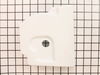
The partion between the tub and dispenser broke
Once I got the correct part, (the expanded view of the icemaker is confusing as it shows the partition at the back of the diagram) I removed the ice dispenser from the tub by removing the screws and disengage the tabs holding the dispenser assembly in the tub. The most difficult step was getting the disenser disengaged from the tub. I used two kitchen knives to wedge between the walls of the tub. It was then easy to remove and replace the broken inside partition and reassemble the dispenser. Works like new.
Parts Used:
-
Mark from Brandon, MS
-
Difficulty Level:A Bit Difficult
-
Total Repair Time:15 - 30 mins
-
Tools:Screw drivers
36 of 41 people
found this instruction helpful.
Was this instruction helpful to you?
Thank you for voting!
Water if refigerator door is really slow. Ice making is really slow.
Used by pass filter and problem disappeared. Of course wayer is now unfiltered. This is a GE design flaw. Also replacement filters are outrageously expensive and do not last long. We have good water here and I'll stick with the bypass.
Parts Used:
-
Fred from Edgartown, MA
-
Difficulty Level:Really Easy
-
Total Repair Time:Less than 15 mins
41 of 60 people
found this instruction helpful.
Was this instruction helpful to you?
Thank you for voting!
Freezer would not defrost correctly
Took panel off back of inside of freezer section, took off old sensor from the evaporator, spliced new sensor into the existing wires, waterproofed spliced connections, snapped sensor back onto evaporator, then put panel back on the inside of the freezer. Really, it took only 10 minutes to fix. Now refrigerator defrosts like it used to, and temps have settled in at specified temps.
Parts Used:
-
Michael from Milton, FL
-
Difficulty Level:Really Easy
-
Total Repair Time:Less than 15 mins
-
Tools:Pliers
32 of 34 people
found this instruction helpful.
Was this instruction helpful to you?
Thank you for voting!