Your coupon for will be reflected when you check out!
✖
Your coupon for
✖
Hello!
You're visiting the PartSelect site in U.S.
Would you like to shop on the Canadian site?
Stay on this site
Go to Canadian site
✖
Model Number Locations
1Select Category Type
Select Category Type
2Select Product Type
Select Product Type
3Select {MODEL} Type
Select {MODEL} Type
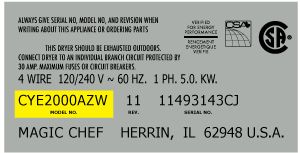
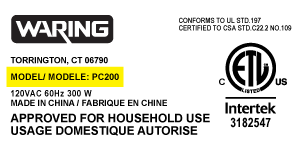
Sample Model Number Tags
Model numbers can be made up of numbers (1005400, for example) or a combination of letters and numbers (LAT1000AAE). The model number will most likely appear on either a paper sticker or a metal plate. Your appliance's model number tag may look similar to the sample model number tags shown here (model number highlighted in yellow):
Model has been saved to My Models. If you're not signed in, your lists are available on this device and will expire within 30 days.
Model has been saved to My Models.
The hose clamp is used to hold the water hose in place which will prevent the hose from leaking water. Sometimes the clamp may lose its ability to latch on, causing a leaking washer. For the installat...
This electrically operated propeller causes water to flow through your dishwasher's pump. This impeller is located above the dishwasher's mascerator blade.
This part is sold individually. This nut can be found in various appliances including a dishwasher, air conditioner, washer, dryer, range/cooktop, oven, freezer, range hood, and refrigerator. There is...
This water tubing clamp keeps the 3/16-inch diameter water tubing mounted to your refrigerator. Its purpose is to prevent shifting, kinking, or loosening of the tubing, ensuring a consistent water flo...
DISASSEMBLY - Switch off circuit breaker for dishwasher. - Remove lower front covers from washer to observe motor (for later steps) and to clean-up water. - Remove top and bottom dishracks. -You may want to take pics of the placement/orientation of components in the following steps as you d
... Read moreisassemble them for reference during reassembly. - Remove spray-arm base from pump housing. - Remove and discard impeller— put a screwdriver in the impeller grooves to prevent it turning as you loosen the screw. - Remove impeller, O-ring, and blade. Discard impeller and O-ring, but keep blade (I couldn’t find the O-ring; it had probably disintegrated). - Remove pump housing, pump plate, and gasket. - Use two flat-head screwdrivers on opposite sides of the rotor to pry it off the motor shaft. Be cautious not to damage the area around the motor shaft—wood can be used to protect the area and provide better leverage. If the rotor can’t be removed, a chisel or hacksaw can be used to split it before prying it up— be cautious of the motor shaft when splitting the rotor. Discard the rotor. - Locate the upper seal, note its orientation (cup-side-down), remove it, and discard it (my upper seal was in the recess in the bottom of the rotor). -Drive the shaft-key (small metal tab) out of the shaft groove using a hammer and flat-head screwdriver and discard it— the new rotor has a molded-in tab that will slide into the groove in place of the shaft-key. - Remove ceramic ring from motor shaft and discard it (my leak was caused because the ceramic ring was broken in half). - Use a flat-blade screwdriver to pry loose the lower seal—before removing it from the shaft, note its orientation (wide-side-down). Be caution not to damage the area around the motor shaft—wood may again be used for protection and leverage.
CLEANING/PREP - Clean shaft with wire brush, white vinegar, and a rag (you may not need the wire brush if the shaft is in good shape, but my motor shaft was heavily corroded/rusted and I needed to smooth it to prevent it damaging the seals). Clean groove in motor shaft with flat-head screwdriver and rag. - Use a rag and white vinegar to clean motor shaft recess and pump housing seat. The bottom of the motor shaft recess must be clean and smooth for the lower seal to seat properly. - Clean pump plate, gasket, blade, pump housing, and screws with white vinegar and a plastic-bristled brush.
ASSEMBLY -Wet new rubber seals, new ceramic ring, and new rotor with water to help them slide into place. -Refer to pics taken during disassembly as needed for the following steps. - Place new lower seal (wide-side-down) over motor shaft in bottom of recess. -Push new upper seal (cup-side-down) into recessed area in the bottom of the new rotor. -Push new ceramic ring into upper seal (cup-side) in bottom of rotor. -Align groove on motor shaft with tab in rotor (a mark on the outside of the rotor shows the tab’s location) and seat rotor on the motor shaft by hand. Verify that the motor turns when the rotor is turned by hand. If not, remove the rotor and reposition it so that its tab slides into the groove in the motor shaft. -Place gasket, pump plate, and pump housing in position. Start pump housing screws, but leave them loose. - Place blade and new O-ring on rotor. - Place new impeller on rotor and insert screw. Tighten moderately — overtightening could cause leaks. Hold the impeller by hand to prevent it turning as the screw is tightened— do not use a screwdriver to prevent the impeller turning. - Finish tightening pump housing screws. - Seat spray-arm base on pump housing and insert/tighten its mounting screws. - Switch on circuit breaker for dishwasher. - Start washer and watch motor to verify that shaft seal is not leaking. Run a full cycle to rinse the new parts and remove debris and vinegar residue. Continue to observe motor shaft area for leaks during cycle. -Replace lower front covers.
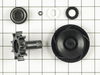
After I received the Motor Shaft Kit I removed the spray arm tower and removed all screws, the center screw would not come out of the impeller, was stripped. Used a hammer and chisel to split the center of impeller and was able to remove. Also had to split the bottom impeller because it would not come out. All the parts that came in kit
... Read more fit perfectly. Thank you Very much.
put back together with parts ordered. Parts arrived in 2 days!!!! and saved my large dinner party the following day from being ruined. Thank you so much for your parts inventory and for Jenn Air supplying only the part needed and not the entire door. It was a life saver!