The tub dampening straps support the wash tub and reduce vibration by keeping the tub at the center of the cabinet. If your washer shakes and moves, or is making a loud banging noise during the wash cycle, the washing machine tub could be off-balance, meaning one or more of these straps may be loose, or broken. Other symptoms include: the...Read more washer leaking, not agitating, or pumping but not spinning. These straps are sold individually. However, we recommend that you replace all 4 straps at the same time. It is also recommended that you check the tub for cracks where these straps mount.
The drain hose is black in color and made of flexible material. This is a part for your top-load washer. The hose measures 57 inches long. This part moves the water out of the washer and into the drain. If this parts cracks or becomes damaged it will leak during the drain cycle of your wash and you may find water on the floor. To access t...Read morehe hose, you will need to move the washer away from the wall to get to the back of the appliance. There will be two screws holding it in place that will need to be removed.
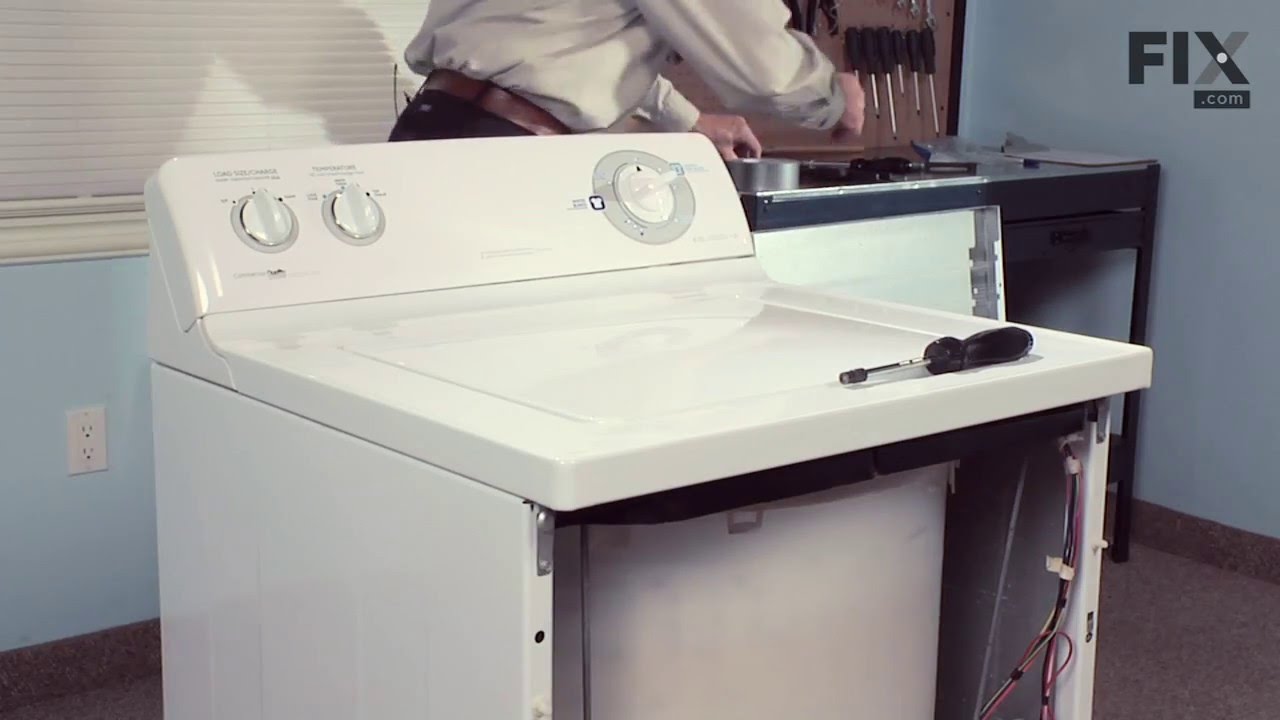
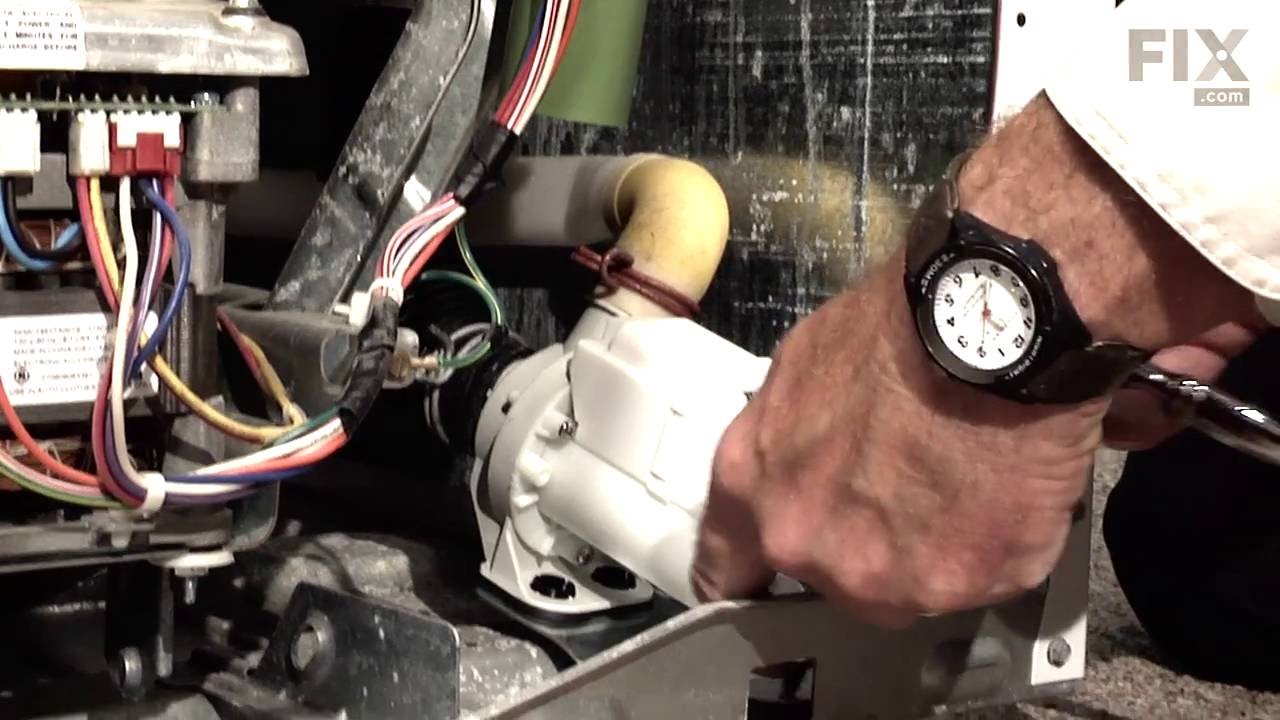
This pump helps expel water from the washing machine and is activated after the spin speed is maintained for a specific period of time. If you notice that your washing machine will not drain, there is a good chance that you will have to replace the drain pump. The drain pump is located inside the washing machine, near the bottom. To acces...Read mores the drain pump for this repair, you will need to remove the front panel. Before you begin this repair, be sure that the power source is disconnected and the water source is shut off.
The main tub seal is located between the transmission and the outer tub. Its the primary water seal in the outer tub for the transmission-shaft. If your washer is leaking during the fill cycle, or at agitation time, your tub seal may need to be replaced. You can check if the tub seal needs to be replaced by watching that area during an ac...Read moretual fill cycle. Take off the front panel, or if it is a front-loading washer, the rear panel. Without touching the washing machine, observe the place where the shaft of the transmission comes into the tub and the weep holes at the housing of the rear bearing. If there is water leaking, the tub seal is at fault.
NOTE: This seal is difficult to replace and should probably be installed by a qualified technician.
This is a tub bearing and it is meant to work in conjunction with your washing machine. The purpose of this part is to aid in keeping the inner tub of your washing machine spinning smoothly during a wash cycle. The most common reasons for needing to change your tub bearing is if your appliance is noisy or shaking/moving during the wash cy...Read morecle, another common symptom is leaking water. This part is sold individually and measures to have an inner diameter of roughly 1 inch, and an outer diameter of roughly 2 inches.
This split ring is supplied by the original equipment manufacturer, and it is designed to secure the tub bearing in washing machines. It is a circular metal ring, with an outer diameter of 2 inches. The ring has a split or gap, which allows it to expand and contract for easy installation and removal. It is typically located on the inner s...Read moreide of the washing machine outer tub, where it provides stability and prevents the washer from excessively shaking during use. It is normal for the split ring to become worn, corroded, or damaged due to age, exposure to moisture, and excessive stress. A faulty split ring will lead to a noisy, unstable washer and eventually cause the tub assembly to fall out of alignment. Remove the washer panels to access the outer tub and split ring. Carefully detach the damaged split ring from the tub and position the new split ring in its place. Ensure that it is properly aligned and securely fastened before reattaching the panels.
This tub bearing goes in your washing machine. You will find it on the bottom of the outer tub, where the transmission goes through the tub. If you hear metal on metal when the washer is spinning, you may need to replace the tub bearing. This bearing is made of metal, and is approximately 3 inches wide and 2 inches tall.
This replacement inlet drain hose connects your washer's water pump to its tub. This hose is seven and a half inches in length and only two inches wide.
This is the start/stop button for your washer. If your washer will not start after the button is depressed, you may need to replace it. However, you may also want to check your door switch, because when the washer will not start, the door switch is often the issue. This part is made of rubber and is gray in color. It is a little bigger than 1 inch in diameter and is sold individually.
This part is a replacement socket rod support for your washer. The socket rod support is found at the top of the washer frame in the front part of the washer. It supports the suspension rod, so the rod can prevent the tub from shaking too much during operation. If your washer is shaking excessively or emitting an odd sound during use, it ...Read moremay be because the rod support is broken, and the suspension rod is not able to do its job. This part is made of white plastic and is sold individually.
Ask our experts a question about this model and we'll get back to you as soon as possible!
We may have answered a similar question already! Search questions and answers left by others using simple keywords like "fit", "broken", "easy", or "quality" to find questions that match.
Search filter:
Clear Filter
Your search term must have 3 or more characters.
Sort by:
Prev
1
2
3
Next
Sorry, we couldn't find any existing answers that matched.Try using some different or simpler keywords, or submit your new question by using the "Ask a Question" button above!
Joe - For model number WPRE6150K2WT
February 9, 2020
I have an issue with my washer not agitating during the wash cycle, and then not spinning after it drains the water.... the wash cycle will run the full time selected . i found a video on youtube that showed me a way to reset the motor. i'm finding that i have to do it more frequently. does the issue have something to do with the lid switch, since it is the key part involved in resetting or could it be something else like the controller ?
Hi Joe, thank you for your question. From what you are describing and the fact that when you specifically reset the motor and switch your appliance starts working, that might actually be the case. If your lid switch is malfunctioning then it will not allow your appliance to go into the spin cycle. That would be the first part to check. If that part is fine then it sounds like it might be the motor itself that is the issue. Though most of the time it is just the switch. Good luck with your repair.
2 peoplefound this instruction helpful.
Was this helpful?
Thank you for voting!
Bruce - For model number WPRE6150K2WT
January 30, 2023
The unit makes a grinding noise only when agitating
Hi Bruce, thank you for reaching out. The most common cause of a washer making a loud noise during the agitation cycle is a worn-out drum bearing, we would recommend checking it, the part number is PS271510. If that does not take care of the issue, we would suggest checking the Drive Pulley, part number PS1482349. Please reach out to customer service if you need help placing an order, anyone will be happy to assist you. We hope that helps.
Hello Wordna, thank you for your question. This model has 4.1 IEC Cu. Ft. We hope this helps.
1 personfound this instruction helpful.
Was this helpful?
Thank you for voting!
Leland - For model number WPRE6150K2WT
January 26, 2025
Is there a parts list available for this unit I don't know what the name of the part is that I need but I know what it looks like
Hello Leland, Thank you for reaching out. Yes, once you enter the model number into the site you will see the parts diagrams for each section and once you click the appropriate diagram you will see a parts list. We are available by phone to answer any questions or concerns you might have. Please do not hesitate to contact us.
1 personfound this instruction helpful.
Was this helpful?
Thank you for voting!
Carol - For model number WPRE6150K2WT
May 13, 2023
Extraction water leaves thin, black debris in the laundry sink sometimes on the clothes in washer. What is causing this?
Hello Carol, thank you for reaching out. Black flakes combine dirt, oil, mold, detergent, and other compounds. It is a common build-up for non-maintained cleaning machines. To wash our clothes, these devices consume lots of dirt, oil, fabrics, and detergent. If you do not clean the bowl timely, small particles start gathering the space and making black flakes in the future. To remove black particles, follow these steps to clean the Washing Machine:
1. Fill the Washing Machine with 3/4 of water.
2. Add 1 to 2 liters of Clorox/Bleach.
3. Leave it overnight.
4. On the next day, do a clean tub or quick wash to wash away the molds (do not put in any clothing). You may want to wash the tub a few times to remove the Clorox smell.
We hope this helps!
1 personfound this instruction helpful.
Was this helpful?
Thank you for voting!
Prev
1
2
3
Next
✖
Ask a Question
Ask our experts a question on this model and we'll respond as soon as we can.
See how others fixed this model. Time, tools, difficulty, and steps that lead to victory!View More
Search repair tips from other customers using simple keywords like "replace", "fit", "remove", "inspect". DIY doesn't mean you have to do it alone!
Search filter:
Clear Filter
Your search term must have 3 or more characters.
Washing Machine was not draining water from tub.
304 of 334 peoplefound this instruction helpful.
Gerald from Midlothian, VA
Easy
30 - 60 mins
Nutdriver, Pliers
1. Drained the wash tub by taking the drain hose from the back of the washing machine and dropping it below the tub - water flowed out of hose a lot easier than trying to suck water out of tub using a pump (tried this on the first time I tried to fix washer). (Washing machine on 2nd floor of house and didn't want water running on floor)<
... Read morebr />2. Removed the 2 bolts holding the Pump/Motor assembly to the machine. 3. Removed both hose clamps on the Pump/Motor assembly and removed Pump. 4. Attached the new drain inlet hose to the pump and then to the tub with the original hose clamps. 5. Attached the drain hose to the pump and then plugged in the 2 wires for the pump. 6. Plugged in the washing machine and everything worked.
NOTES: 1. Hardest part was working with hose clamps (spring type clamps) in the tight space under the machine. 2. Easier to fix since I pulled machine apart a few days before - removing the clog in the pump/motor assembly only to get everything back together to find out that the motor was dead. Still well worth the time and effort due to not having to go out and buy a new Machine...
machine would not drain all other functions seemed o.k
88 of 92 peoplefound this instruction helpful.
douglas from danby, VT
Easy
30 - 60 mins
Socket set
Aside from getting the wet clothes and most of the water out,the toughest part of the job for me was to figure out how to get inside the machine. I nearly wrecked the thing trying to lift the top panel. After some frustration I removed the star-type screws on back of the control panel and found, tucked away neatly, the documentation/parts
... Read more list complete with instructions on how to remove the FRONT panel. Once I got inside it was easy to locate the pump. I ran the drain cycle for a moment to see if the pump turned at all. The original had an exposed fan so it was easy to see that indeed the motor was not turning. I inspected all the hose and electrical connections to make sure I had the tools I'd need and the savvy to replace the part(s) if I could locate them. I'm not much of a web-head, so I was a little surprised when I typed G.E. appliances and the search took me to partselect.com where I was pretty much coached through the procedure before I even ordered the part. The box arrived ahead of schedule (yay) and when I looked at the pump it didn't look much like the one I was replacing. But then I realized it was the same thing just ten years more advanced. I used a small pair of vise grips to pinch and lock the pipe clamps open. I know there is a plier made for this, but... Anyways, after loosening the clamps and sliding them away from the pump I pulled the hoses off and let the last of the rinse water still in them run down my shirt sleeve to my elbow. (optional, not recommended) Thus refreshed I then rummaged through my socket set and found what I needed to remove the 2 sheet metal mounting screws and disconnected the 2 power leads. I removed the faulty pump and proudly showed it to my wife. Unimpressed, she asked how much longer. I quickly reversed the procedure to install the new unit and confidently piled in a load of laundry. The cycle completed just fine and has done so since. I will and have recommmended partselect.com to friends and will use it again for sure.
Read less
Was this helpful?
Thank you for voting!
broken drive belt
96 of 120 peoplefound this instruction helpful.
jon from barry, IL
A Bit Difficult
15 - 30 mins
Nutdriver
To diagnose, first I unhooked the washer: power, water supply, and drain pipe. I then slid the washer out, laying it on its front. With nutdriver, I unscrewed two screws that held the other end of the drain tube and removed it completely. Then, again with the nutdriver removed 4 screws from the back near the legs, two in between the leg
... Read mores in the middle, and approx. 4 to 6 on the bottom. This let me pull the bottom off partially to access the motor area. (I did did not take the bottom completely off, only about 2/3 off and let it bend over, as it was flexible tin) The belt was broken. After receiving the new belt, I positioned it between the pulley and the motor and between the drum and the big pulley. Then I rotated the big pulley, pulling the belt onto it as I rotated. At the same time, as I rotated, I pulled the other end of the belt on to the little pulley. Once it was on, I would put pressure on it as I turned the pulley, to jump the belt to the appropriate grooves on the little pulley. Note: the replacement belt had been modified, so it had one less groove than the pulley. I would have known this if I had read the insert that came with the belt first! Anyway, this was not a problem, only a design change. Also it was important to start the belt on the inside, so if it slipped, you didnt loose your bite. Total diagnostic, repair, and reassembly time: 30 minutes plus or minus. I had read other online forums that said you had to loosen the motor, etc. And I do know some type of a belt installation tool was offered on line, but I got along fine with my installation method. An extra set of hands would have been helpful, but not necessary.



 My Orders