


 My Orders




MWX445MBW0 Tappan Washer - Overview
Diagrams for MWX445MBW0
See every part. Know exactly what you need.


Enter a part description. DIY Heroes keep it simple, eg. "belt" or "pump".
Search filter:
Clear Filter
Your search term must have 3 or more characters.

$24.41
In Stock
Drive V-Belt
Part #134511600
This rubber V-style drive belt slips on the motor pulley to bring the basket to the required speed. If you notice a burning rubber smell or grinding noises coming from your washer, your washer does not start, drain, spin properly (will not spin/spins slowly/will not agitate properly), or if your washer shakes or moves during the cycle; ch...Read moreeck your drive belt for signs of wear and tear. Replace the drive belt if you notice that the belt looks damaged. This OEM part is approximately 35 inches in length, and sold individually.
Read less

$26.35
Special Order
Screw-In Plastic Leveling Leg
Part #134548800
This is a screw in leveling leg for your washing machine. It supports the appliance by screwing in place to create a stable and flat surface. Take note that you are able to adjust the height of your appliance to make it leveled. This model is made entirely of plastic and is white in color. It is just under 2.5 inches long, 1.5 inches wide, and the head has a diameter of roughly 1.5 inches.

No Longer Available
Tub Seal Assembly
Part #5303279394
If you have a leaky washer, then your tub seal may be the culprit. The tub seal assembly may also be known as the washer tub seal, and is a part for your washer. The function of this piece is to make sure water does not lead from between the outer tub and the spin basket from around your basket drive shaft within your washer. To replace y...Read moreour old part with this one you will need a flathead screwdriver, Phillips head screwdriver, pliers, putty knife, 7/16 socket, spanner wrench, and a hammer.
Read less

No Longer Available
Tension Idler Pulley
Part #131862900
The idler pulley on your washing machine allows the drive belt to operate smoothly. If your washer is not spinning or agitating, makes too much noise, or you notice a burning smell when it is operating, you might need to replace the tension idler pulley. The tension idler pulley works in conjunction with the drive belt, so you might need ...Read moreto replace the belt as well as the pulley. Once the old pulley has been removed from the washer, you will need to transfer the spring and bushing from the old pulley to the new one before re-attaching it to the washer.
Read less

$25.25
In Stock
Screw
Part #131302800
This is a replacement screw for your washer or dryer. The screw is approximately half an inch in length and is a Phillips-head screw. It screws in from the outside of the drum, into the vane/baffle. The main reason you would replace this screw is if the old screw is missing or damaged. This part is sold individually and is an OEM part sourced directly from the manufacturer.

$26.35
In Stock

No Longer Available
Washer Lid Lock with External Safety Switch
Part #134101800
Mounting bracket on this part replaces old style ( You may need to drill off old bracket before mounting new lock).

No Longer Available
Agitator Drive Block
Part #134418700
The agitator drive block rotates the agitator assembly in your washer. If the drive block breaks down due to wear and tear the agitator will stop working. If you notice that your washer is making loud noises while washing, this may indicate an issue with the agitator block. You will find this part underneath the dispenser cover and cup. Y...Read moreou will need a 1/2-inch socket to remove the agitator bolt and then simply lift off the agitator (this may require some effort to lift off). Use a flat-head screwdriver to remove the old drive block, push the new one into place with firmness. This part is made of metal and measures about 2 inches long and 1 inch wide.
Read less

$85.75
In Stock
Spin Bearing
Part #3204405
The spin bearing, used for your washer, is located at the bottom of the outer tub near the transmission. The spin bearing carries the transmission shaft in the drive system, therefore ensuring the shaft is spun properly during its spin cycle. If your spin cycle makes loud or odd noises, replacing the bearing could be a solution to your pr...Read moreoblem. Refer to the diagram provided by the manufacturer for further installation instructions. As a safety precaution make sure to unplug appliance from the power source.
Read less

$25.14
Special Order
Upper Spin Bearing Washer
Part #5308002401
The upper spin bearing for a washer can solve many issues such as loud and odd noises, or leaking water. Replacing the spin bearing could solve these issues. The tools needed for this replacement are screwdrivers, a socket set, and a putty knife. To repair, first lift the top of the washer and remove the screws at the bottom of the front ...Read morepanel to pull away. Next, pull off the dispenser cover, cup, and agitator. Detach switch tube from the tub cover and remove tub cover, then use the 1/2 inch socket to remove the trunnion bolts and pull out inner tub. For the rest of the installation instructions, refer to the diagram provided by the manufacturer. Remember to unplug the appliance from the power source as a safety precaution.
Read less

No Longer Available
Tension Spring
Part #3204425
This tension spring works in conjunction with the idler pulley. The spring is part of your top load washing machine assembly. The most likely reasons for needing to replace the tension spring is if you notice that your washer is not spinning or agitating, the drive belt has come loose, and the idler pulley is no longer secure. To access t...Read morehis part, you will need to remove the front of your washer. The spring is located underneath the bottom of the tub. This is a genuine OEM part that comes right from the manufacturer.
Read less

$57.44
Special Order
Lid Strike - White
Part #131390000
This part is used to activate the lid switch when the lid opens/closes.
Common Symptoms of the MWX445MBW0
How this model fails, and the parts that fix it.
Burning smell
Fixed by
these parts
these parts


Show All
Leaking
Fixed by
these parts
these parts


Show All
Will not agitate
Fixed by
these parts
these parts

Show All
Will not drain
Fixed by
these parts
these parts
Show All
Spins slowly
Fixed by
these parts
these parts
Show All
Will Not Start
Fixed by
these parts
these parts

Show All
Noisy
Fixed by
these parts
these parts
Show All
Spinning Issues
Fixed by
these parts
these parts
Show All
Watch our pros, then fix it yourself.
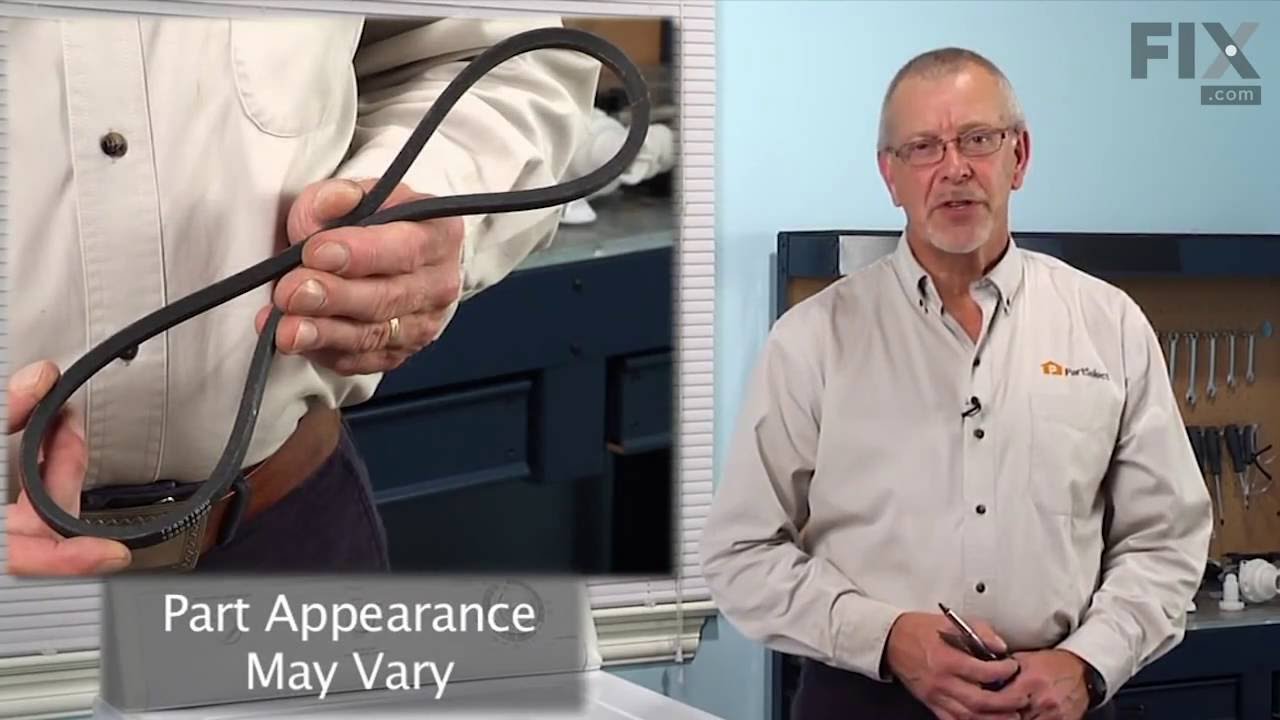
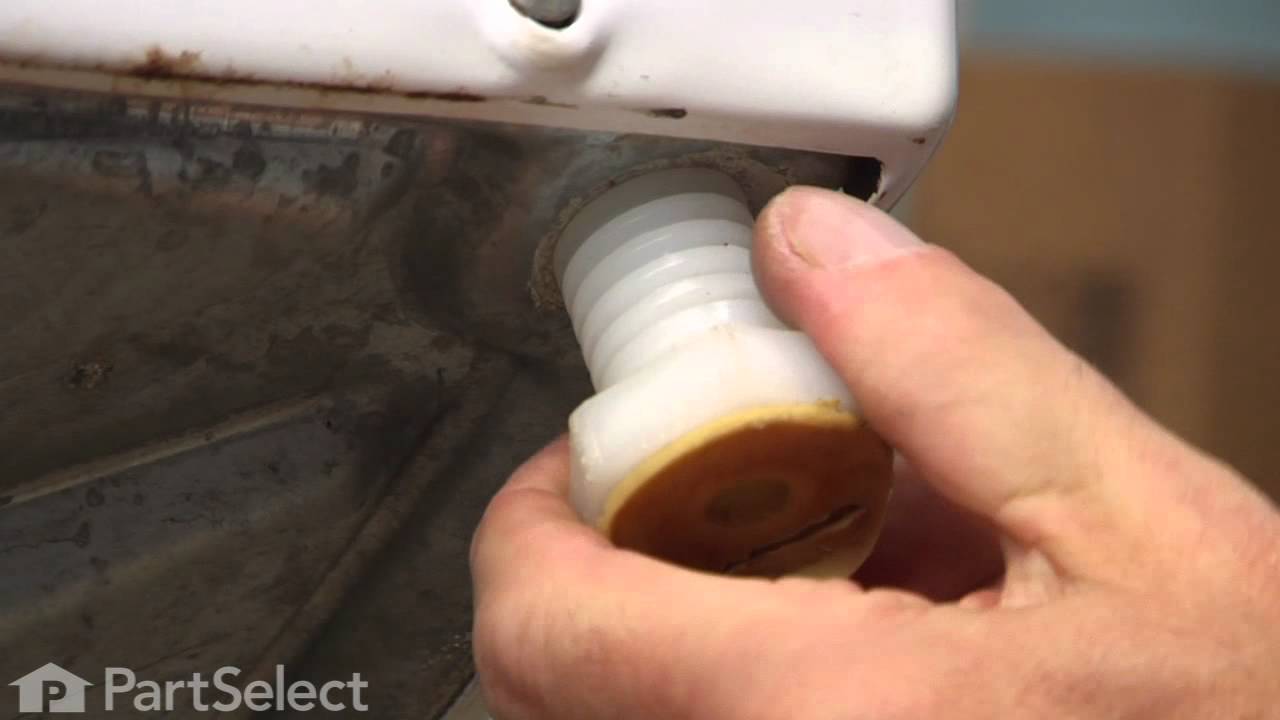

See how others fixed this model. Time, tools, difficulty, and steps that lead to victory!
View More
Search repair tips from other customers using simple keywords like "replace", "fit", "remove", "inspect". DIY doesn't mean you have to do it alone!
Search filter:
Clear Filter
Your search term must have 3 or more characters.
Washer wouldn't spin.
55 of 70 people
found this instruction helpful.
The problem with my very old washer was that the tension spring had broken long ago and I had jerry-rigged it in place with a cable tie. It would work, but you had to give the drum a spin by hand when it hit the spin the cycle. This probelm further caused the premature wearing of the drive belt, due to slippage. I ordered both a new sp
... Read more
ring and a new belt. Upon their arrival, I removed the two screws holding the front panel and lowered it off and out of the way. The old, worn belt was very easy to remove, as there was very little tension on it. Next I attempted to remove the washer that holds the idle arm on. It is in a very awkward spot, and it appears the the washing machine is sort of built around it. I bent it gradually with locking pliers until I could force it off with the blade of a flat screwdriver. Then the idler arm was easy to lower of its axle by twisting the drum a bit and pulling it to one side. I put the new spring into the idler arm, making sure the plastic bushing was in place and replaced the arm. I then repositioned to belt and replaced the front panel. It works great now.
Read less
Other Parts Used:


Was this helpful?
Thank you for voting!