 My Orders




12A-998Q301 (2004) MTD Lawn Mower - Overview


Enter a part description. DIY Heroes keep it simple, eg. "belt" or "pump".
Search filter:
Clear Filter
Your search term must have 3 or more characters.

$28.56
In Stock
Tiller Forward Drive Belt
Part #954-04090
The Forward Drive Belt is a 12.5-inch black, rubber belt, sold individually. Installation of this manufacturer-certified part is rated as "Easy" by customers and will require pliers, a socket set, and a wrench set. This part is used to transfer power from the engine's drive pulley to the transmission. If broken due to wear/fatigue/damage,...Read more the drive wheels will no longer be able to propel the mower, and the part should be replaced. This belt attaches between the engine drive pulley and the transmission's drive pulley. Refer to your make, model and diagrams to ensure this part is right for you.
Read less

$27.09
In Stock
Belt-v Rev Drv 3
Part #954-04091
The Reverse Drive Belt is a 13 x 3/8 inch is a black rubber belt which attaches to the transmission and engine drive pulleys. This belt allows you to drive the unit backwards. If it's broken due to fatigue, or damage, you will no longer be able to drive backwards and the part must be replaced. Installation is rated as "Easy" by customers ...Read moreand requires pliers, a socket set and a wrench set. Refer to your make, model and diagrams to ensure this is the right part for you.
Read less

$71.85
In Stock

$11.14
Special Order
SPRING-FWRD CLUTCH
Part #732-04185
No Longer Available
HKY PART
Part #1916724
This part is sourced from the original equipment manufacturer for MTD, Yard Machines, and Troy-Bilt walk-behind lawn mowers. The spring applies tension on the connected component allowing it to retract. It is an identical replacement for a faulty or a missing hardware that was installed on a new unit. Refer to the diagrams for your model ...Read moreto ensure the correct repair procedure. This high-quality reverse return spring is made of durable metal and is sold as an individual item.
Read less

$10.65
In Stock
Pin-clevis 5/16 Di
Part #911-0813

No Longer Available
Bail-Forward Clutch
Part #1916106001

$6.40
In Stock
Washer-spring Bell
Part #736-0270
This OEM spring bell washer is a small, circular piece of metal that is shaped like a cone and has an inside diameter of 1/4 of an inch. It is also called a Belleville washer or a disc spring, and it is used in lawn equipment to help spread out pressure and absorb shock between parts. If a washer is broken, it may look flattened or distor...Read moreted, and your machine may make unusual vibrations or noises. If you do not replace a damaged spring bell washer, your machine will wear out faster because there will be nothing to cushion its parts. To remove a washer, you can use pliers or a flathead screwdriver to pry it from your machine. If it is difficult to remove, you can use a penetrating oil to loosen it first. To make sure you purchase the correct number of washers, which are sold separately, check your user guide to see where they are needed in your machine.
Read less

$36.23
In Stock
Pulley, Reverse Idle
Part #756-04169

No Longer Available
Bar-drag 12177
Part #1916185001

$118.27
Special Order
ROLLER ASM-HORSE
Part #686-04006
No Longer Available
HKY PART
Part #1916726
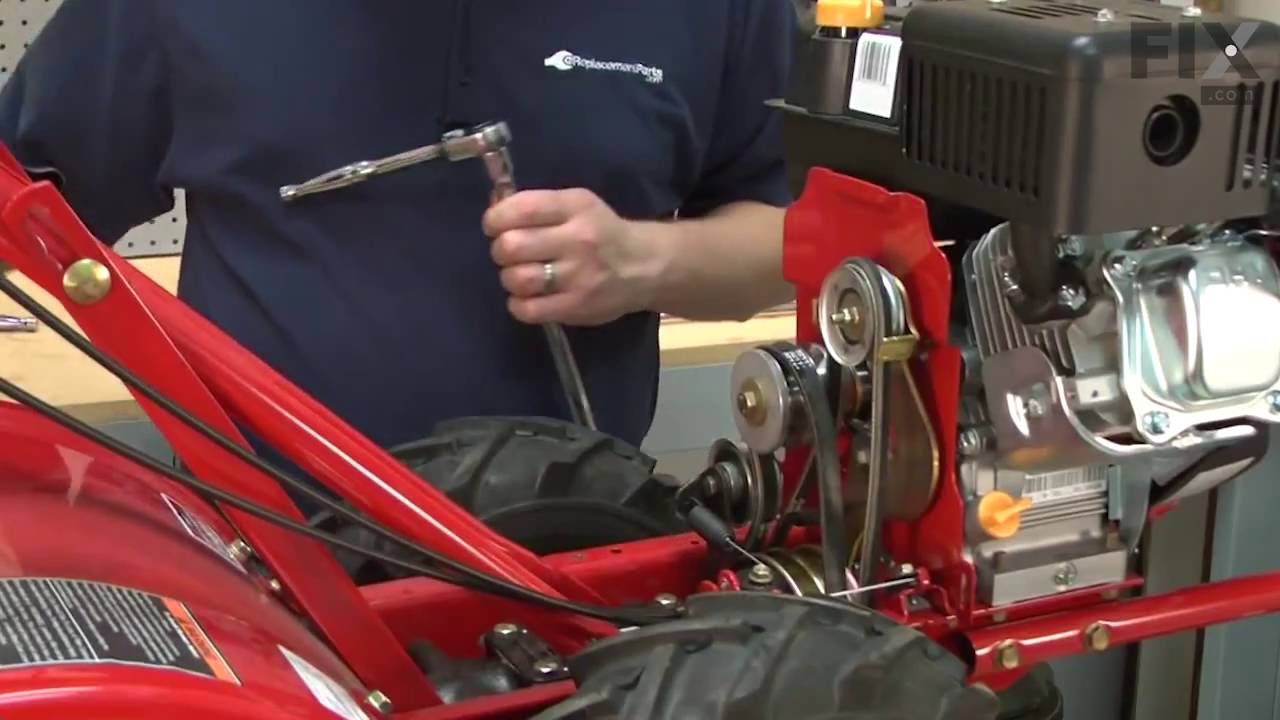
Watch our pros, then fix it yourself.